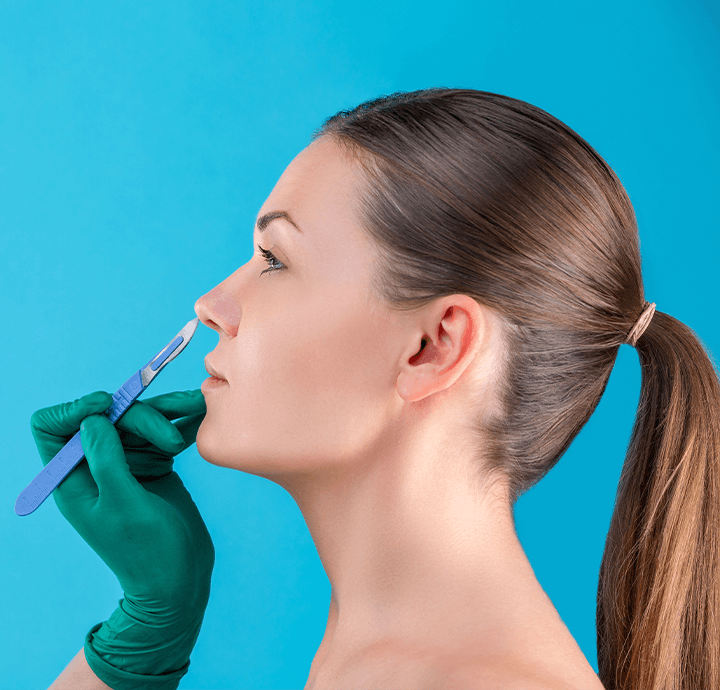
Revision Rhinoplasty
Aesthetic nose surgery is an aesthetic operation applied to
resolve the problems in the form of and the functions of the nose. Permanent
changes are introduced to the bone and cartilage tissues in the nose so that
restorations are performed in the form and the function of the nose. It is
reported in the literature that various problems have emerged in every four
patients who underwent a nasal aesthetic surgery, raising a need for a revision surgery.
Despite undergoing a nasal surgery previously, a revision
aesthetic nose surgery can be performed in these patients who think that their
problems have persisted. The patients may be suffering from the shape of the
newly formed nose or from respiratory difficulties. Some patients may demand
some changes when they saw the newly formed shape of their noses. This is
because a rhinoplasty is an operation unique to each individual. The patient
satisfaction is the measure of the success of the operation. Individuals do not
care this much on the disfigurations they have lived with since their births.
However, they tend to exaggerate the emergent issues after the aesthetic operations they
underwent upon their wills. A revision rhinoplasty will have a more
complex course for both the patient and the physician compared to the first
operation. Nevertheless, the nose surgeon must relieve the concerns of the
patient, provide the necessary information to ensure that there will be no loss
of confidence, and finally must resolve the issues with the revision operation.
When Should be a
Revision Rhinoplasty Should be Performed?
A newly formed nose configuration cannot be observed sooner in
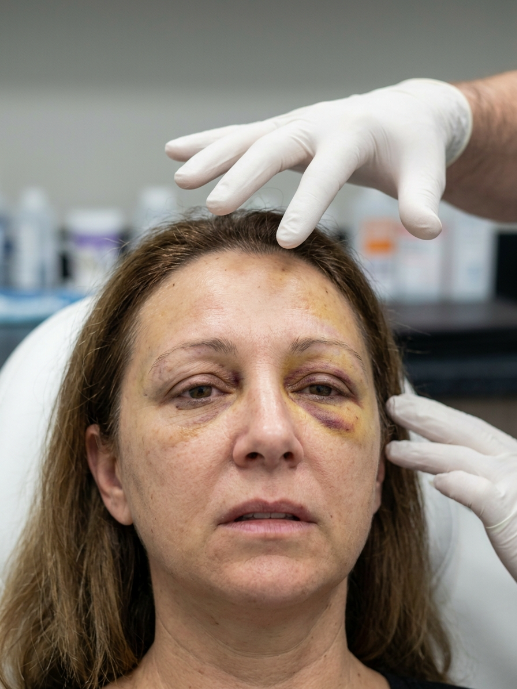
the patients who underwent an aesthetic nasal surgery. The edema and the
bruises on the face developing after the operation will prevent those changes
from being apparent. A certain amount of time will be needed for the patients
for these emerging changes in the outlook to resolve. Patients should not make
immediate decisions on the issues in the newly formed configuration of the
nose.
This means that patients should wait for a duration of at least
6 months or 1 year if they feel a dissatisfaction with the new shape of the
nose associated with the edema.
Therefore, the shape of the nose should be evaluated accordingly
when a complete resolution develops. Repeat operations before this period will
have lower success rates. Revision rhinoplasty should be decided after the new
configuration of the bone settles down. The revision process should be managed
while staying in close contact with the patient.
However, in case of disfigurations in the newly formed bone such
as moving aside or drooping, a revision rhinoplasty can be performed to resolve
these issues at the end of a 3-month period.
Who Should Perform a
Revision Rhinoplasty?
When there is a need for a revision, the most correct approach
would be that the surgeon who performed the aesthetic nose surgery will operate
the patient. If there were no emergent issues in tissue healing at the first
operation, the surgeon who performed the first operation should do the revision
surgery. The reason for this lies in the fact that your surgeon knows the
interventions he performed inside and outside of the nose. This will lead to
the success of further interventions in the revision rhinoplasty.
However, if there is a loss of confidence, lack of empathy or
miscommunication between the surgeon and the patient, the patient can see
another competent surgeon. This second surgeon needs to know the minutes of the
operation and notes in the patient chart exactly and should examine the
photographs of the nose prior to the first surgery. Then, she or he will need
to identify the defective areas and talk with the patient in detail about how
to reconstruct and revise it.
How is the Need for
Tissue Replacement is Met During the Revision Rhinoplasty?
Revision surgeries allow reconstructions on the previously
introduced changes in the configuration of the nose. This means that the nose
will be revised by reconstructing it. Therefore, a need for some cartilage
tissue may arise depending on the procedures to be performed during the
operation. Because the cartilage tissue of the bone has already been used in
the first operation, it may be required to take the cartilage tissue from other
parts of the body. In those cases, the external ear cartilage (cartilage from
the auricle) or the cartilage from the ribs are considered. Taking the
cartilage tissue from the external ear will not cause any issues to emerge. The
only point is that the ears need to stay bandaged during one day after taking
the cartilage tissue. If the cartilage is not sufficient enough in the external
ears, the cartilage tissue of the ribs will meet the demand.
If the patients do not agree with the removal of cartilage from
their own bodies, the cartilage can be supplied from cadavers or from synthetic
products.
However, this decision may create some problems including
rejection of these tissues by the host body or occurrence of volume reductions.
This is why expert surgeons always consider the own tissues of the patients as
the safest. Other procedures may also be relevant in some specific cases.
What are the Grounds
for the Decision to Perform a Revision Rhinoplasty?
The demand of the patient for a second operation may be
associated with the difficulties in breathing or the untoward outlook of the
configuration of the nose. As patient satisfaction is important in aesthetic
nose surgeries, all potential changes are fulfilled in revision rhinoplasties.
What will be Performed
in the Revision rhinoplasty if the Patient Demands a Lower Nose?
This issue may arise if a sufficient amount of tissue was not
excised in the first operation. this is among the most common issues in
aesthetic nose surgeries performed according to the operation plan. The
excessive intranasal tissue is removed in the revision rhinoplasty , meeting the demand of
the patient.
What will be Performed
in the Revision Rhinoplasty if the Patient Demands an Upturned Nose?
If this is the demand, more complex procedures will be performed
in the revision rhinoplasty. Because upturning the nose is a more complex
procedure than lowering the nose. In order to achieve this, an amount of
cartilage tissue may need to be taken from another part of the body.
This cartilage tissue removed from another part of the body will
be placed inside the nose, fulfilling the demand of the patient.
What will be performed in the revision rhinoplasty if the
patient informs that the dorsum of the nose has been removed to a lesser
extent?
A second operation will be needed if the nasal hump persists in
a patient who underwent an aesthetic nose surgery. This revision can be
performed easily.
The excessive bone and cartilage inside the nose are rasped,
eliminating the nasal hump.
What Will be Performed
in the Revision Rhinoplasty if More than a Required Amount of Tissue has Been
Removed From the Nasal Hump?
The excessive tissue removal from the dorsum of the nose during
the previous rhinoplasty will cause a sunken appearance at the dorsum of the
nose with an unpleasant outlook. This should be revised.
As this procedure requires cartilage placement on the dorsum of
the nose, the cartilage tissue taken from the other parts of the body will be
positioned on the nasal dorsum.
Will a Revision be
Required if a Nasal Obstruction Develops After an Aesthetic Nose Surgery?
The structural changes introduced during a rhinoplasty should
ensure that a nasal obstruction will not be experienced. Breathing difficulties
should be resolved by the operation and no nasal obstruction should develop.
If a nasal obstruction problem still persists although the
patient has completed the recovery period, a revision rhinoplasty will be
unavoidable.
The physiology inside the nose will settle down following the
6th month after the operation and any decisions should be made then
accordingly.
Will a New Operation
Plan be Made for a Revision Rhinoplasty?
A complete operation plan should be structured by the nose
surgeon in order to achieve a successful outcome after the second operation.
The revisions in the nose should be determined, the extra need for
supplementary tissues need to be identified, and the regions where the extra
tissues will be obtained should definitely be defined. A precise decision is
usually not possible before exposing the nose in most of the cases, therefore,
the surgeon should be prepared for all kind of possibilities and should have
obtained the consent of the patient before starting the surgery.
Can the Nose be
Reshaped with a Revision Rhinoplasty?
Reshaping the nose completely is not possible by revision
rhinoplasties. Therefore, an experienced nose surgeon must be involved in the
first operation and he or she must do his or her best in making the operation
plan in order to ensure the satisfaction of the patient. Only restorations on
the new configuration made in the first operation are possible in the revision
rhinoplasty. Keeping this in mind, the significance of the first operation
should be acknowledged.
Revision rhinoplasties are always much more complex with lower
success rates compared to the preceding surgeries, however, it should be
remembered that more satisfactory outcomes are achievable at competent hands.
Experienced and competent hands combined with strong
communication skills can ensure favorable results.
If you consider having rhinoplasty surgery, contact
us right away to get a free consultancy service from Prof. Dr. Selçuk İnanlı.