WHAT SHOULD BE CONSIDERED WHEN GETTING A FACELIFT?
Facelift is a plastic surgery operation performed by removing excess sagging skin to make the face and neck look younger. Facelift operations aim to remove deformities that occur with increasing age such as sagging, wrinkles, skin laxity, loss of contour, and jowl. The loss of volume caused by the loss of contour and fat tissue in the face results in sagging skin and wrinkles with the negative contribution of gravity. Smoking, sun damage, stress and hereditary characteristics can also be included in the factors that trigger the signs of aging in the face.
With the facelift procedure, harsh signs of aging can be eliminated and you can regain your natural beauty that you had long time ago. In facelift operations, also called rhytidectomy , the facial tissue is elevated and the skin is pulled back from both sides. The goal is to make the face younger by surgically restoring the subcutaneous tissues. Excess skin is removed and the skin is closed up from the incision site. The incision lines in front of and behind the ear are generally unnoticeable. If necessary, different procedures can also be performed on your face in the same operation. Fat grafting and implants can be used to restore the facial contour. In addition, operations such as neck lift, eyelid surgery, brow lift, forehead lift can also be added to the facelift procedure.
You must have realistic expectations before the facelift procedure . This operation does not change the basic appearance of your face and its results last about ten years. Although it does not halt your aging process, it will yield a satisfactory result for most patients. Pain and discomfort will be minimal in facelift surgeries that are performed under general anesthesia.
In the facelift procedure , sagging facial skin is removed and tightened and the corners of the mouth are lifted up. By making the jawline more defined, sagging of the cheeks in this area are also reduced and the fine lines on the face are eliminated.
Facelift procedure is a cosmetic surgery for people with good mental and physical health. The patient should not be smoking, and should not have any condition that will lead to complications, such as hypertension and diabetes. A comfortable operation and recovery period is aimed. The patient’s skin elasticity and bone structure also affect the success of the operation in direct proportion. Before the facelift operation, the patient should be aware that the operation will not halt the aging process. The patient should have an expectation accordingly and be aware that the face shape will not change. As in every surgery, your medical history and the medication you take will be reviewed before the operation; and if necessary, you may be asked to discontinue some medicines for a while.
Facelift procedure can be individualized, taking the needs of the patient into account. A standard facelift surgery aims at correcting moderate to severe sagging skin and signs of aging. By removing the sagging skin under the chin and tightening the facial skin, the appearance of wrinkles and lines is mitigated. Since the incision scars in front of the ear will remain in natural folds from the hairline, they will not be very visible in the future.
Mini facelift operations aim to remove mild skin sags and wrinkles. The tired look on the face is eliminated and the skin is tightened, giving the patient a youthful appearance. The incision line is shorter. It is an invasive technique that can be performed under either local or general anesthesia, depending on the preference. It can also be performed to prevent deep lines before the wrinkles on the skin become more evident. Mini facelift procedure can allow you to keep your skin looking young without the requirement of a more extensive operation for a long time.
Although the healing period is relatively longer in conventional facelift surgeries compared to mini facelift operations, the results are more pronounced.
What Should Be Considered When Getting a Facelift? A Comprehensive Guide to Facial Rejuvenation
Understanding the Transformation: What Should Be Considered When Getting a Facelift?
A facelift, medically known as a rhytidectomy, is one of the most profound procedures in the field of facial plastic surgery. It is not merely a cosmetic adjustment but a complex surgical intervention designed to restore the youthful contours of the face and neck. When patients begin to notice significant sagging, the formation of jowls, and deep nasolabial folds, they often ask: what should be considered when getting a facelift? The answer lies in a combination of surgical expertise, realistic expectations, and a thorough understanding of the biological aging process.
In the hands of a senior surgeon like Prof. Dr. Selçuk İnanlı, a facelift is an art form. It requires a deep understanding of the five layers of facial anatomy, ranging from the skin to the SMAS (Superficial Musculoaponeurotic System) and the underlying bone structure. To achieve a result that allows you to look 10 years younger, the procedure must be tailored to the individual’s unique bone structure and skin quality.
The Anatomy of Aging: Why a Facelift is Necessary
To understand what to consider, one must first understand what happens as we age. Aging of the face is a three-dimensional process. It involves volume loss (fat atrophy), tissue descent (gravity-induced sagging), and skin inelasticity (loss of collagen and elastin).
Skeletal and Soft Tissue Changes
As we age, the facial skeleton undergoes resorption, providing less support for the overlying soft tissues. Simultaneously, the fat pads in the cheeks move downward, leading to the hollowed appearance under the eyes and the accumulation of fat along the jawline, known as jowls. A successful facelift addresses these issues by repositioning the deeper layers rather than simply pulling the skin tight.
The Role of the SMAS
The SMAS is the engine of the facelift. It is a layer of tissue that covers, surrounds, and attaches to the deeper facial muscles. Modern techniques focus on the SMAS plication or SMASectomy to provide a long-lasting lift. When considering a facelift, patients must discuss with their surgeon which various surgical techniques will be employed to ensure the results look natural and not “wind-swept.”
Essential Pre-Operative Considerations
1. Choosing the Right Surgeon
The most critical factor in your journey is the surgeon’s credentials and experience. Prof. Dr. Selçuk İnanlı is an ENT and Facial Plastic Surgery Specialist certified by the European Academy of Facial Plastic Surgery (EAFPS). This level of certification ensures that the surgeon has met rigorous international standards. A surgeon who specializes in the head and neck area has a superior grasp of the complex nerve networks and vascular structures of the face, minimizing risks and maximizing aesthetic outcomes.
2. Realistic Expectations and Psychological Readiness
A facelift can turn back the clock, but it cannot stop it. Patients must have a healthy psychological outlook. The goal is improvement, not perfection. During the initial consultation, a thorough facial analysis is performed to determine if a facelift is the most appropriate solution or if non-surgical interventions like dermal fillers or Botox should be considered first.
3. Medical History and Physical Health
Candidates for a facelift should be in good overall health. Chronic conditions such as uncontrolled high blood pressure or diabetes can impede the healing process. Surgeons will require a full medical clearance, including blood tests and sometimes an EKG. It is also vital to disclose any history of keloid scarring or blood clotting disorders.
The Impact of Lifestyle: Smoking and Nutrition
One of the most emphasized points in pre-operative counseling is the negative effects of smoking. Nicotine causes vasoconstriction, which reduces blood flow to the skin incisions. This can lead to skin necrosis (tissue death), delayed healing, and prominent scarring. Most surgeons require patients to stop smoking at least 4 to 6 weeks before and after the surgery.
Nutritional Support
Proper nutrition is the fuel for recovery. Increasing protein intake and ensuring adequate levels of Vitamin C and Zinc can significantly improve the body’s ability to synthesize collagen and repair surgical sites. Avoiding herbal supplements like Ginkgo Biloba or Vitamin E, which can increase bleeding, is also a standard pre-operative requirement.
Deep Dive into Surgical Techniques
When researching what should be considered when getting a facelift, the terminology can be overwhelming. Here is a breakdown of the primary approaches:
The Deep Plane Facelift
This is considered the gold standard for many senior surgeons. Unlike traditional lifts that separate the skin from the muscle, the Deep Plane Facelift goes beneath the SMAS layer. This allows the surgeon to move the entire unit of skin and muscle together, releasing the tension on the skin and providing a much more natural, tension-free result. It is particularly effective for correcting the mid-face and deep nasolabial folds.
The Mini-Facelift
Ideal for younger patients with mild to moderate sagging, the mini-facelift uses smaller incisions, usually around the ears. It focuses on the lower third of the face and the jawline. While the recovery is faster, the results are less dramatic than a full facelift.
Neck Lift Integration
In almost all cases, a facelift surgery is combined with a neck lift. Aging rarely affects the face without affecting the neck. Addressing the platysmal bands (the vertical cords in the neck) and removing excess fat through submental liposuction ensures a harmonious transition between the face and the body.
The Surgical Experience: Safety and Anesthesia
Anesthesia Protocols
A facelift is typically performed under general anesthesia or deep intravenous sedation. Safety is paramount; therefore, the procedure should always be conducted in a fully accredited hospital or surgical center with a dedicated anesthesiology team. The duration of the surgery can range from 3 to 6 hours depending on the complexity and combined procedures.
Incision Placement and Scar Management
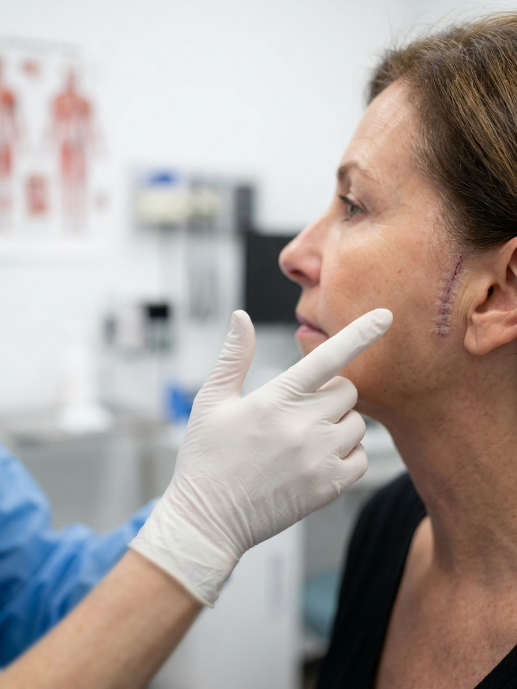
Surgeons strategically place incisions within the hairline and in the natural contours of the ear to ensure they are virtually invisible once healed. Proper wound care and the use of silicone-based scar gels post-operatively are essential components of the recovery process that patients must be prepared for.
The Recovery Journey: What to Expect
Recovery is a marathon, not a sprint. Patients should plan for at least two weeks of downtime.
The First 48 Hours
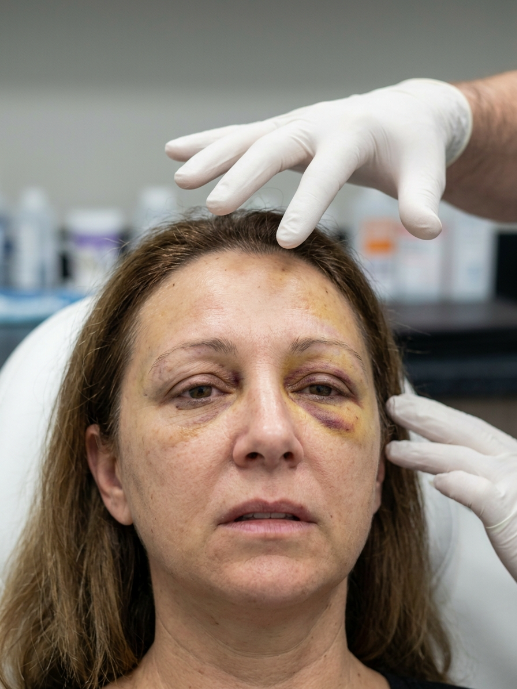
Swelling and bruising are at their peak during the first two days. Patients will likely wear a compression garment to minimize fluid accumulation (edema) and support the new contours. Pain is generally manageable with prescribed medications.
The First Week
Most sutures are removed between days 5 and 7. While you may feel well enough to move around the house, heavy lifting and strenuous exercise are strictly forbidden, as they can cause a hematoma (blood collection under the skin), which may require surgical drainage.
The One-Month Mark
By the end of the first month, the majority of the swelling has subsided, and the “tight” feeling begins to relax. This is when patients start to see the true potential of their results. However, residual swelling can take up to six months to fully disappear.
Long-Term Maintenance and Results
A facelift does not stop the aging process; it resets the clock. To maintain the results of your facial rejuvenation, a strict skincare regimen is necessary. This includes daily SPF application, medical-grade moisturizers, and potentially non-surgical touch-ups like laser resurfacing or chemical peels to address skin texture and pigmentation.
The Longevity of a Facelift
Generally, the results of a well-performed facelift last between 10 to 15 years. Factors such as genetics, sun exposure, and significant weight fluctuations will influence how long the lift remains optimal. Maintaining a stable weight and a healthy lifestyle is the best way to protect your surgical investment.
Complementary Procedures for a Holistic Result
Often, a facelift alone isn’t enough to achieve total facial harmony. Many patients choose to combine their lift with other procedures:
* Blepharoplasty (Eyelid Surgery): To remove bags under the eyes and lift drooping upper lids.
* Brow Lift: To correct a heavy forehead and reposition the eyebrows.
* Fat Grafting: Using the patient’s own fat to restore lost volume in the temples and lips.
* Rhinoplasty: To refine the nose, which can appear longer as the tip drops with age.
Navigating the Financial Aspect
Cost is a valid consideration, but it should never be the primary one. The price of a facelift in Istanbul reflects the surgeon’s expertise, the facility’s quality, and the complexity of the case. Choosing a “budget” option often leads to the need for revision surgery, which is significantly more expensive and difficult. Investing in a senior specialist like Prof. Dr. Selçuk İnanlı ensures that the procedure is done correctly the first time.
Global Standards in Health Tourism
For international patients traveling to Turkey, it is important to look for clinics approved by the Ministry of Health with a Health Tourism Authorization Certificate. This ensures that the facility adheres to international standards of care and patient safety. Prof. Dr. Selçuk İnanlı’s clinic provides comprehensive services for international guests, including consultation, surgery, and post-operative follow-ups, ensuring a seamless experience from start to finish.
Facial rejuvenation is a journey of self-confidence. By carefully considering your choice of surgeon, understanding the technical aspects of the procedure, and committing to the recovery process, you can achieve a refreshed, natural appearance that reflects how you feel on the inside. The decision to undergo a facelift is a personal one, and being well-informed is the first step toward a successful and satisfying outcome.
Sıkça Sorulan Sorular
How do I choose the best surgeon for a facelift?
Choosing the right surgeon is the most critical decision in the facelift process. You should look for a specialist who is board-certified by recognized international bodies, such as the European Academy of Facial Plastic Surgery (EAFPS). A surgeon like Prof. Dr. Selçuk İnanlı, who has extensive experience in both ENT and facial plastic surgery, offers a unique advantage because they understand both the aesthetic and functional anatomy of the face. Always review before-and-after galleries, read patient testimonials, and ensure the surgeon has a clear, honest communication style during the consultation to align expectations with surgical possibilities.
What is the difference between a SMAS facelift and a Deep Plane facelift?
The SMAS (Superficial Musculoaponeurotic System) facelift focuses on tightening the layer of tissue and muscle beneath the skin, often by folding or cutting and stitching it (plication or SMASectomy). The Deep Plane facelift goes a step further by entering the space beneath the SMAS and releasing the ligaments that hold the facial tissues in place. This allows the surgeon to reposition the entire facial structure as a single unit without creating tension on the skin. While the Deep Plane technique is more complex and requires advanced surgical skill, it often yields a more natural, longer-lasting result with less risk of a ‘pulled’ appearance.
How long is the actual recovery time before I can return to work?
Most patients can return to a non-strenuous office job within 10 to 14 days after a facelift. By this point, the initial bruising has usually faded enough to be covered with camouflage makeup, and the major swelling has subsided. However, it is important to remember that ‘social’ recovery (when you feel comfortable attending major events) may take 3 to 4 weeks. Full healing, where all residual swelling disappears and the tissues completely settle into their new position, can take up to six months. Patients are advised to avoid strenuous exercise and heavy lifting for at least one month to prevent complications.
Will there be visible scars after my facelift surgery?
Scars are an inevitable part of any surgery, but in a professionally performed facelift, they are strategically hidden within the natural contours of the face and hair. Incisions typically start in the hairline at the temples, continue around the front of the ear, and extend behind the ear into the lower scalp. Over time, these scars fade to thin, pale lines that are very difficult to detect. Prof. Dr. Selçuk İnanlı uses advanced suturing techniques to minimize tension on the skin, which is the primary factor in producing discreet, high-quality scars. Following post-operative scar management protocols is also vital for the best results.
How long do the results of a facelift typically last?
On average, the results of a comprehensive facelift last between 10 and 15 years. While the surgery effectively ‘turns back the clock,’ the natural aging process continues from a new, younger starting point. The longevity of your results depends heavily on lifestyle factors; patients who protect their skin from the sun, maintain a stable weight, avoid smoking, and follow a medical-grade skincare routine will enjoy their results much longer. Some patients choose to undergo minor non-surgical treatments like fillers or laser therapy in the years following their surgery to maintain the vibrancy and volume of their facial tissues.