Things You Should Know About Facelift Surgery
Things You Should Know About Facelift Surgery: A Comprehensive Guide by Prof. Dr. Selçuk İnanlı
Understanding the Evolution of Facial Rejuvenation
Facelift surgery, medically known as rhytidectomy, is no longer just about pulling skin tight; it is a sophisticated architectural restoration of the face. As we age, the structural integrity of our facial tissues diminishes due to a combination of gravity, sun exposure, genetics, and lifestyle factors. For those seeking to restore a youthful contour, understanding the nuances of this procedure is vital. Prof. Dr. Selçuk İnanlı, an internationally recognized ENT and Facial Plastic Surgery Specialist, emphasizes that a successful facelift should never look “operated on.” Instead, it should reflect a refreshed, rested, and naturally younger version of the patient.
In the modern era of aesthetic medicine, the focus has shifted from the surface skin to the deeper layers of the face. To achieve longevity and natural results, surgeons must address the SMAS (Superficial Musculoaponeurotic System), which is the fibrous layer that connects the facial muscles to the skin. By repositioning this layer, surgeons can lift the underlying structures that have sagged over time, rather than simply stretching the skin, which often led to the “wind-swept” look of decades past.
The Philosophy of Natural Beauty
At the clinic of Prof. Dr. Selçuk İnanlı, the guiding principle is that aesthetics is the art of concentrating on the beautiful. A facelift is not merely a medical operation; it is a physician’s philosophy of art coming to life on living tissues. When considering Things You Should Know About Facelift Surgery, the most important takeaway is that the goal is harmony. The face must remain expressive and balanced. This requires a surgeon who is not only a technical expert but also possesses a keen artistic eye to evaluate the unique proportions of each patient’s face.
When is a Facelift Necessary and Who is the Ideal Candidate?
Deciding to undergo surgery is a significant milestone. Many patients ask, when is a facelift necessary? Generally, the ideal candidates are individuals who have noticed significant sagging in the mid-face, deep creases under the lower eyelids, deep nasolabial folds (the lines extending from the nose to the corners of the mouth), and jowls along the jawline.
While there is no “perfect” age for a facelift, most patients are between 40 and 70 years old. However, the biological age of the skin and the degree of tissue laxity are more important than the chronological age. Candidates must be in good general health, as conditions like uncontrolled high blood pressure or diabetes can affect the healing process. Furthermore, having realistic expectations is paramount. A facelift can certainly help you look 10 years younger with a facelift, but it does not stop the aging process entirely; it simply sets the clock back.
Psychological Readiness
The decision to undergo facial plastic surgery often has a profound psychological component. Patients frequently report a disconnect between how they feel internally—energetic and vibrant—and how they appear in the mirror—tired or aged. Bridging this gap can significantly boost self-confidence. During the consultation, Prof. Dr. Selçuk İnanlı evaluates not only the physical anatomy but also the patient’s motivations to ensure they are pursuing surgery for the right reasons.
Types of Facelift Techniques Explained
Not all facelifts are created equal. The technique chosen depends on the patient’s specific concerns and anatomical needs. Understanding these variations is one of the key Things You Should Know About Facelift Surgery.
1. Full Facelift (Traditional Facelift)
This procedure addresses the entire lower two-thirds of the face. It is ideal for patients with significant sagging in the cheeks, jawline, and neck. The incisions typically start in the hairline at the temples, continue around the ear, and end in the lower scalp.
2. Mini Facelift
Often referred to as a “weekend lift,” the mini facelift is designed for younger patients with mild jowling. It involves shorter incisions and focuses primarily on the lower face. While the recovery is faster, the results are less dramatic than a full facelift.
3. Deep Plane Facelift
This is a more advanced technique where the surgeon works beneath the SMAS layer. By releasing certain ligaments, the surgeon can move the entire composite of muscle and fat as a single unit. This results in a very natural look and is particularly effective for lifting the mid-face and smoothing the nasolabial folds.
4. Mid-Facelift
Focusing exclusively on the cheek area, the mid-facelift restores the volume of the cheekbones and reduces the appearance of the hollows under the eyes. It is often combined with eyelid aesthetics for a comprehensive upper-face rejuvenation.
5. Neck Lift
A facelift is almost always accompanied by a neck lift to ensure the jawline is crisp and the neck is free of “turkey wattle” or vertical bands. This involves tightening the platysma muscle and removing excess skin under the chin.
The Role of the SMAS in Modern Surgery
The SMAS is the “engine” of the facelift. In the past, surgeons only removed skin. Today, we know that the skin is merely the envelope; the structural problem lies in the SMAS. By lifting and anchoring this layer to the stable structures of the face (like the fascia over the ear), the weight of the face is supported by strong connective tissue rather than thin skin. This is why modern facelifts last longer—often 10 to 15 years—and avoid the stretched appearance.
Preparing for Your Facelift Surgery
Preparation is the foundation of a smooth recovery. Once you have decided to move forward with Prof. Dr. Selçuk İnanlı, you will receive a detailed pre-operative plan. This includes:
* Medical Evaluation: Blood tests and a physical exam to ensure you are fit for general anesthesia.
* Medication Adjustments: You must avoid blood-thinning medications like aspirin, ibuprofen, and certain herbal supplements for at least two weeks before surgery to minimize bruising.
* Skincare Optimization: Using high-quality medical-grade skincare can improve the health of your skin tissues prior to the procedure.
The Critical Impact of Smoking
One of the most vital Things You Should Know About Facelift Surgery is the danger of nicotine. Smoking constricts blood vessels and significantly reduces the oxygen supply to the healing tissues. This can lead to skin necrosis (tissue death), poor scarring, and infection. Patients are strictly required to stop smoking at least 4 weeks before and 4 weeks after the operation. For more details, read about the negative effects of smoking after facelift surgery.
The Surgical Experience: What Happens on the Day?
Facelift surgery is typically performed under general anesthesia in a hospital setting. The duration of the surgery varies between 3 to 6 hours, depending on whether it is combined with other procedures like blepharoplasty (eyelid surgery) or fat transfer.
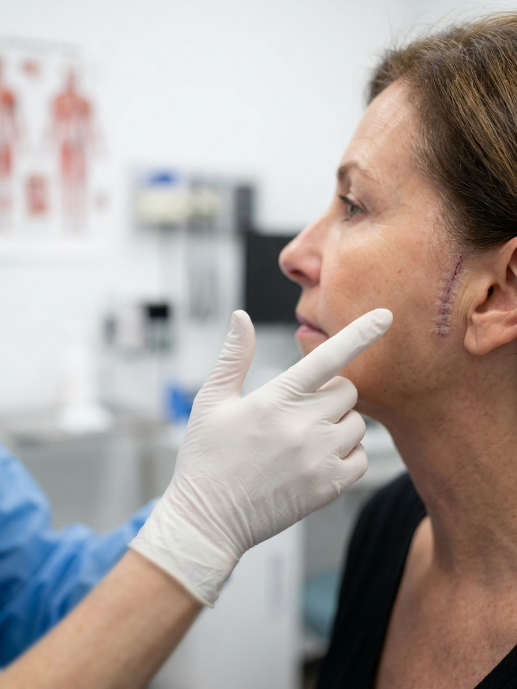
Prof. Dr. Selçuk İnanlı utilizes meticulous incision techniques designed to hide scars within the natural contours of the ear and the hairline. Once the incisions are made, the skin is gently lifted, and the deeper tissues are repositioned. Excess fat may be redistributed or removed, and the SMAS is tightened. Finally, the skin is redraped, and the excess is carefully trimmed away before closing with fine sutures.
The Recovery Journey: What to Expect
Recovery is a process of patience. While most patients are pleasantly surprised that there is very little actual pain, there is a significant amount of swelling and tightness. Understanding the recovery process after a facelift is essential for a stress-free experience.
The First 48 Hours
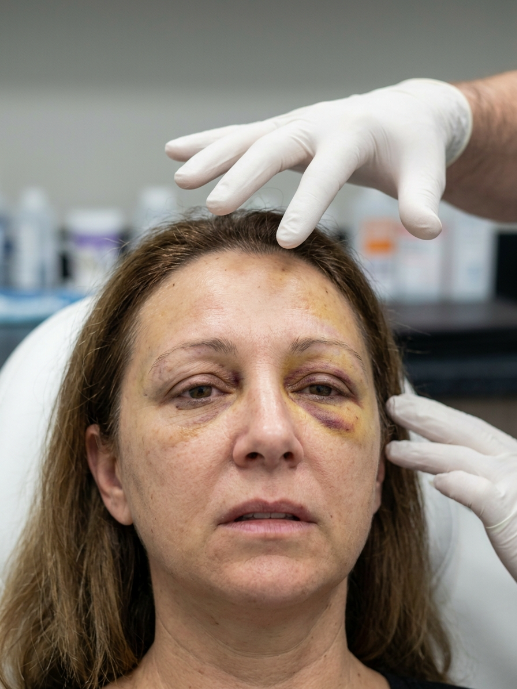
During the first two days, you will likely wear a supportive chin strap or bandage. Keeping your head elevated, even while sleeping, is critical to reducing edema. Bruising around the neck and behind the ears is normal and will peak around day three.
The First Week
By the end of the first week, the initial bandages are removed. You may begin to see the new contours of your jawline, though swelling will still obscure the final result. Most sutures are removed between days 7 and 10.
Weeks Two to Four
During this phase, most of the visible bruising disappears. Many patients feel comfortable returning to work and social activities by day 14, using a bit of camouflage makeup if necessary. However, heavy exercise and sun exposure must still be avoided.
Long-Term Healing
It can take 6 to 12 months for the very last bit of swelling to resolve and for the scars to fully mature and fade. During this time, the tissues settle into their new, permanent positions.
Managing Risks and Ensuring Safety
As with any major surgery, rhytidectomy carries potential risks, including hematoma (blood collection under the skin), nerve injury, and scarring issues. However, when performed by a board-certified specialist like Prof. Dr. Selçuk İnanlı, who is certified by the European Academy of Facial Plastic Surgery (EAFPS), these risks are minimized.
Choosing a surgeon with extensive experience in facial plastic surgery is the single most important factor in ensuring your safety. A specialist understands the complex anatomy of facial nerves and the vascular system, allowing them to navigate the deep planes of the face with precision.
Complementary Procedures for Total Rejuvenation
Often, a facelift alone isn’t enough to achieve the desired results because aging affects different areas of the face in different ways. Things You Should Know About Facelift Surgery include the possibility of combining treatments for a more balanced look:
* Fat Transfer: As we age, we lose facial volume. Injecting the patient’s own purified fat into the cheeks or temples can restore a youthful fullness that a lift alone cannot provide.
* Eyelid Aesthetics: Sagging eyelids or under-eye bags can make a person look tired even after a facelift. Performing a blepharoplasty at the same time ensures the upper face matches the rejuvenated lower face.
* Brow Lift: If the eyebrows have descended, a brow lift can open up the eye area and smooth forehead wrinkles.
* Laser Resurfacing: A facelift tightens the structure, but it doesn’t change the texture of the skin. Lasers or chemical peels can address fine lines, sun spots, and skin quality.
Maintaining Your Results for the Future
A facelift turns back the clock, but the clock keeps ticking. To protect your investment, a long-term maintenance plan is necessary. This involves:
- Sun Protection: UV rays are the primary cause of skin aging. Daily use of SPF 50 is non-negotiable.
- Medical-Grade Skincare: Using products with retinoids, vitamin C, and hyaluronic acid helps maintain skin elasticity.
- Healthy Lifestyle: A balanced diet rich in antioxidants and staying hydrated supports tissue health.
- Non-Surgical Touch-ups: Occasional use of botox or dermal fillers can help manage minor lines that appear as the years go by.
The Importance of the Consultation
Your journey begins with a comprehensive consultation. This is the time to be open about your goals and medical history. Prof. Dr. Selçuk İnanlı uses this time to perform a detailed facial analysis, looking at bone structure, skin thickness, and the degree of sagging. He will explain exactly what can be achieved and, equally importantly, what cannot. This transparency builds the trust necessary for a successful surgical outcome.
In conclusion, a facelift is a life-changing procedure that offers more than just physical rejuvenation; it offers a renewed sense of self. By understanding the techniques, the recovery, and the importance of choosing the right surgeon, you can move forward with confidence toward a more youthful and vibrant future.
Sıkça Sorulan Sorular
What is the best age to get a facelift surgery?
There is no specific chronological age that serves as a universal benchmark for a facelift. Instead, the decision is based on the biological condition of the skin and the degree of structural sagging. Most patients begin considering the procedure in their late 40s or 50s when non-surgical treatments like fillers no longer provide satisfactory results. However, some patients with significant genetic predispositions to aging may seek surgery earlier, while others in their 70s remain excellent candidates if they are in good health. The goal is to perform the surgery when the patient has enough tissue laxity to warrant a lift but still possesses enough skin elasticity to ensure optimal healing and natural-looking results.
Will I have visible scars after a facelift?
One of the primary concerns for facelift patients is the visibility of scars. Prof. Dr. Selçuk İnanlı utilizes advanced surgical techniques to ensure that incisions are as discreet as possible. Typically, incisions are placed within the natural hairline at the temples, continue down along the front of the ear (often hidden inside the tragus), and wrap around the earlobe into the crease behind the ear. This placement allows the scars to be camouflaged by the ear’s natural anatomy and hair. Over time, these fine lines fade significantly and become nearly invisible to the naked eye, allowing patients to wear their hair up or short without fear of detection.
How long do the results of a facelift typically last?
A well-performed facelift, particularly one that addresses the SMAS or deep plane layers, typically lasts between 10 and 15 years. While the surgery effectively resets the clock, it does not stop the natural aging process. Factors such as genetics, sun exposure, weight fluctuations, and skin quality will influence how the face continues to age over time. Patients who maintain a healthy lifestyle, follow a strict sun protection regimen, and use medical-grade skincare often enjoy their results for a significantly longer period. Many patients find that even 20 years later, they still look better than they would have if they had never had the surgery.
Is the recovery process for a facelift painful?
Most patients are surprised to find that a facelift is not a particularly painful procedure. Rather than sharp pain, patients typically describe a sensation of tightness, numbness, and general discomfort during the first few days. This is due to the repositioning of tissues and the presence of post-operative swelling. Any discomfort can usually be managed effectively with mild prescription or over-the-counter pain medication. The feeling of tightness and numbness is temporary and gradually resolves as the nerves heal and the swelling subsides. Most patients feel quite comfortable and mobile within a few days of the operation, although they may look more ‘bruised’ than they feel.
Can I achieve the same results with non-surgical ‘liquid’ facelifts?
While non-surgical treatments like dermal fillers and Botox are excellent for addressing fine lines and minor volume loss, they cannot replicate the results of a surgical facelift. A ‘liquid facelift’ adds volume to camouflage sagging, but it does not remove excess skin or tighten the underlying muscle structure. In cases of significant jowling or neck laxity, adding more filler can actually lead to an unnatural, ‘puffy’ appearance. A surgical facelift is the only definitive way to physically lift and remove sagging tissue. For many patients, a combination of surgery to address structure and non-surgical treatments to address skin texture and fine volume details provides the most comprehensive and natural rejuvenation.