When is a facelift necessary and for whom is it a sensible option?
When is a facelift necessary and for whom is it a sensible option?
Understanding the Science of Facial Aging
Facial aging is a multi-dimensional process that involves changes in the skin, soft tissues, fat pads, and even the underlying bone structure. To determine when is a facelift necessary and for whom is it a sensible option?, one must first understand what happens beneath the surface. As we age, the production of collagen and elastin—the building blocks of youthful, resilient skin—begins to decline. This leads to a loss of skin elasticity and the development of fine lines.
However, the most significant changes occur in the deeper layers. The SMAS (Superficial Musculoaponeurotic System), which is a layer of tissue that surrounds the facial muscles, begins to lose its tension. Simultaneously, the fat pads in the cheeks (malar fat pads) descend due to gravity, leading to the formation of deep nasolabial folds and a loss of volume in the mid-face. When these structural shifts occur, non-invasive treatments like fillers often reach their limit, making a surgical facelift the most effective solution for long-term rejuvenation.
The Role of the SMAS Layer and Deep Tissues
In modern aesthetic surgery, we no longer simply pull the skin. A high-quality result depends on repositioning the SMAS layer. By lifting the deeper structures, a surgeon can restore the facial contours to their original position without creating a “wind-blown” or unnatural appearance. Prof. Dr. Selçuk İnanlı emphasizes that the goal of a facelift is not to change the patient’s identity but to restore the youthful version of themselves. This deep-tissue approach ensures that the results are both natural and enduring.
Recognizing the Signs: When is a Facelift Necessary?
Deciding when to undergo surgery is a highly personal choice, but there are specific clinical indicators that suggest a surgical intervention is the most logical path. A facelift becomes “necessary” in an aesthetic sense when the degree of sagging cannot be corrected by non-surgical means. For many, this realization comes when they look in the mirror and see a reflection that looks more tired or aged than they feel internally.
Jowls and Jawline Definition
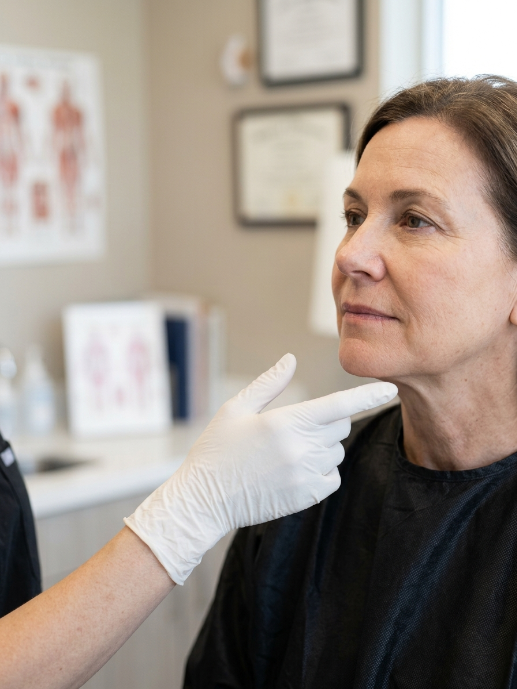
One of the hallmark signs of facial aging is the appearance of jowls. As the skin and fat of the lower face migrate downward, the once-sharp jawline becomes blurred. This creates a heavy look in the lower third of the face. If you find that the skin along your jawline is hanging below the bone, a facelift is often the only way to surgically excise this excess tissue and tighten the underlying muscle. This procedure can help patients look 10 years younger by restoring a crisp, defined profile.
Mid-Face Sagging and Nasolabial Folds
While dermal fillers are excellent for early-stage volume loss, they cannot correct significant tissue ptosis (sagging). When the cheeks descend, they create deep grooves between the nose and the corners of the mouth. If filling these grooves only makes the face look “puffy” rather than lifted, it is a clear sign that the structural foundation needs to be surgically repositioned. A mid-facelift or a comprehensive full facelift addresses this by elevating the malar fat pads back to the cheekbones.
The “Turkey Neck” and Platysmal Bands
A facelift is rarely performed in isolation; it is almost always combined with a neck lift. The neck often shows age faster than the face. Signs include vertical cords (platysmal bands), horizontal rings, and an accumulation of fat under the chin (double chin). When the skin on the neck becomes loose and begins to resemble a “turkey neck,” surgery becomes a sensible option to restore a smooth, youthful neck contour.
Determining the Sensible Option: Who is the Ideal Candidate?
A facelift is a sensible option for individuals who are in good overall health and have realistic expectations about the outcome. While there is no “perfect” age, most candidates are between 40 and 70 years old. However, younger patients may opt for a mini-facelift as a preventative measure, while older patients may require more extensive reconstruction.
Health Status and Lifestyle Factors
To be a good candidate, a patient must be a non-smoker or willing to quit well in advance of the procedure. We cannot overstate the negative effects of smoking on the healing process. Nicotine constricts blood vessels, which significantly increases the risk of skin necrosis and poor scarring. Additionally, chronic medical conditions like uncontrolled hypertension must be managed before surgery to minimize the risk of hematoma.
Skin Elasticity and Bone Structure
The best surgical results are seen in patients who still retain some degree of skin elasticity. If the skin is extremely thin or sun-damaged, the surgeon must be even more meticulous with the deep-plane lifting to ensure the skin is not under tension. Furthermore, a strong bone structure (high cheekbones and a prominent jaw) provides a better foundation for the lifted tissues, leading to more dramatic and lasting results.
Psychological Readiness and Realistic Expectations
A sensible candidate understands that a facelift stops the clock but does not prevent it from ticking again. It is a tool for rejuvenation, not a cure for all life’s problems. During the consultation, Prof. Dr. Selçuk İnanlı evaluates the patient’s motivations. A successful facelift should boost self-confidence and provide a refreshed appearance that matches the patient’s internal energy levels.
Modern Facelift Techniques: More Than Just Skin Tightening
The evolution of surgical techniques has moved away from the “skin-only” lifts of the past. Today, we utilize advanced methods that prioritize longevity and natural movement.
SMAS Facelift vs. Deep Plane Facelift
The SMAS facelift involves lifting and tightening the muscular layer under the skin. This is the gold standard for most patients. The Deep Plane facelift, however, goes even deeper, releasing the ligaments that hold the tissues in place. This allows for a more significant lift of the mid-face and jawline without any tension on the skin itself. This technique is particularly beneficial for older patients with significant sagging.
Mini Facelift for Early Intervention
For younger patients (often in their late 40s) who are just starting to see jowls, a mini-facelift is a sensible and less invasive option. It involves smaller incisions, usually around the ears, and focuses specifically on the lower face. The recovery is faster, making it an attractive choice for professionals who cannot afford long periods of downtime.
Combining Procedures for Total Rejuvenation
Often, a facelift alone is not enough to achieve a harmonious result. If the lower face is tightened but the eyes remain heavy and sagging, the face may look “unbalanced.” This is why many patients choose to combine their facelift with other procedures.
Facelift and Eyelid Aesthetics
Blepharoplasty (eyelid surgery) is the most common companion to a facelift. By removing excess skin and fat from the upper and lower lids, we can brighten the eyes and eliminate a tired appearance. This holistic approach ensures that the entire face ages at the same rate.
Fat Grafting and Volumetric Restoration
Aging isn’t just about sagging; it’s also about losing volume. A modern facelift often includes fat grafting, where fat is harvested from the patient’s own body (usually the abdomen or thighs) and injected into the hollows of the temples, under the eyes, and into the cheeks. This adds a soft, youthful glow that surgery alone cannot provide.
The Recovery Journey: What to Expect
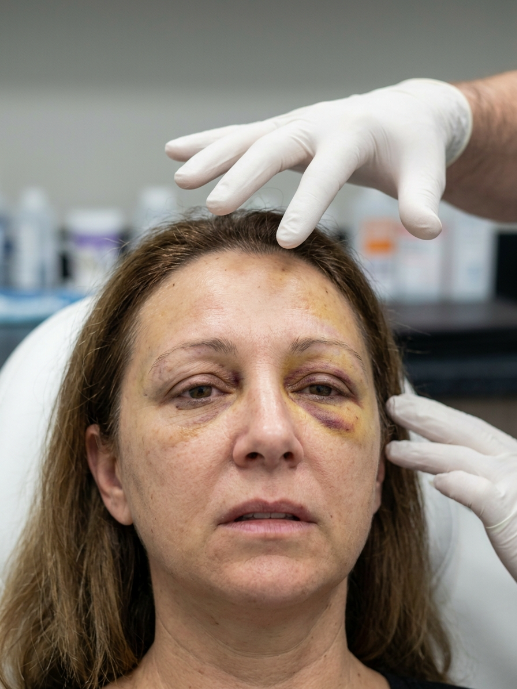
Understanding the post-operative recovery is crucial for anyone considering this procedure. The first few days involve wearing a compression garment to minimize swelling and support the new contours. While pain is usually manageable with medication, patients should expect some bruising and a feeling of tightness for 10 to 14 days.
Most patients can return to social activities and work within 2 to 3 weeks. However, complete healing—where the final results are fully visible and the scars begin to fade—can take several months. Following the surgeon’s instructions regarding sun protection, activity levels, and skincare is essential for protecting your investment.
Why Expertise Matters: Choosing Your Surgeon
A facelift is one of the most complex procedures in plastic surgery. It requires a deep understanding of facial anatomy, a keen eye for aesthetics, and a surgical hand that can navigate delicate nerves and vessels. Prof. Dr. Selçuk İnanlı, with his extensive background as an ENT Specialist and certification from the European Academy of Facial Plastic Surgery (EAFPS), offers a unique level of expertise. His philosophy is rooted in the “art of concentrating on the beautiful,” ensuring that every patient receives a bespoke surgical plan tailored to their unique facial structure.
When you choose a senior surgeon with international experience, you are not just paying for a procedure; you are paying for the safety, precision, and artistry that only decades of experience can provide. Whether you are dealing with the early signs of aging or significant sagging, a consultation is the first step in determining if a facelift is the right path for you.
Sıkça Sorulan Sorular
What is the difference between a mini-facelift and a full facelift?
A mini-facelift is a less invasive procedure that primarily targets the lower third of the face, specifically the jawline and early jowl formation. It involves smaller incisions and is ideal for younger patients with mild to moderate sagging. In contrast, a full facelift addresses the mid-face, lower face, and often the neck, repositioning the deep SMAS layer and fat pads for a more comprehensive rejuvenation. The choice between the two depends on the degree of tissue laxity and the patient’s specific aesthetic goals.
How long do the results of a facelift typically last?
While a facelift cannot stop the natural aging process, its effects are long-lasting, typically ranging from 10 to 15 years. The longevity of the results depends on several factors, including the surgical technique used (deep-plane lifts generally last longer), the patient’s skin quality, and their lifestyle choices. Maintaining a stable weight, protecting the skin from UV damage, and avoiding smoking are critical factors in extending the youthful appearance achieved through surgery.
Is a facelift a painful procedure?
Most patients are surprised to find that a facelift is not particularly painful. The procedure is performed under general anesthesia or deep sedation, ensuring no discomfort during the surgery. Post-operatively, patients typically experience a sensation of tightness, numbness, and mild soreness rather than sharp pain. These symptoms are easily managed with prescribed analgesics. Most patients find that they no longer need pain medication within 3 to 5 days following the operation.
Where are the incisions placed, and will the scars be visible?
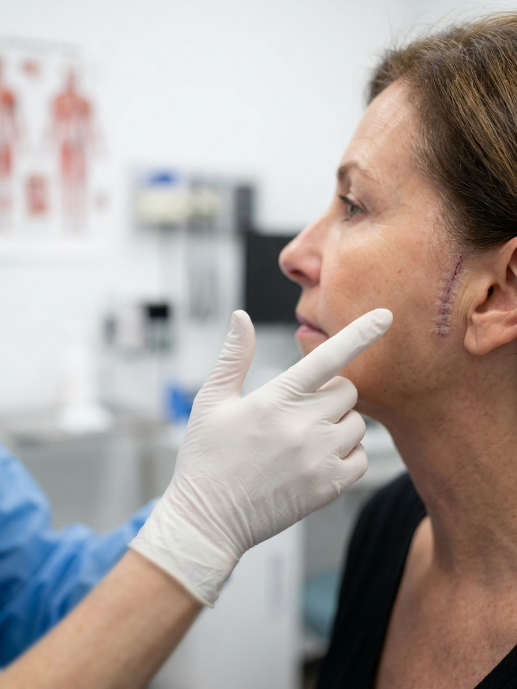
Modern facelift techniques prioritize hiding scars within the natural contours of the face. Incisions usually begin in the hairline at the temples, continue around the front of the ear, and extend behind the ear into the scalp. Because the incisions follow the natural creases of the ear and are hidden by hair, they are virtually invisible once fully healed. Prof. Dr. Selçuk İnanlı uses meticulous suturing techniques to ensure that scars remain thin and discreet, allowing patients to wear their hair up with confidence.
Can I achieve facelift-like results with non-surgical treatments?
Non-surgical treatments like dermal fillers, Botox, and thread lifts are excellent for addressing early signs of aging, such as fine lines and minor volume loss. However, they cannot replicate the results of a facelift when there is significant skin sagging or deep structural changes. Fillers add volume but do not remove excess skin or tighten the SMAS layer. Once tissue ptosis reaches a certain stage, continuing with non-surgical methods can lead to an overfilled, unnatural look. At this point, a surgical facelift becomes the only sensible option for a natural and effective lift.