What should be considered during the post-operative recovery of facelift surgery?
Following a facelift surgery, patients may
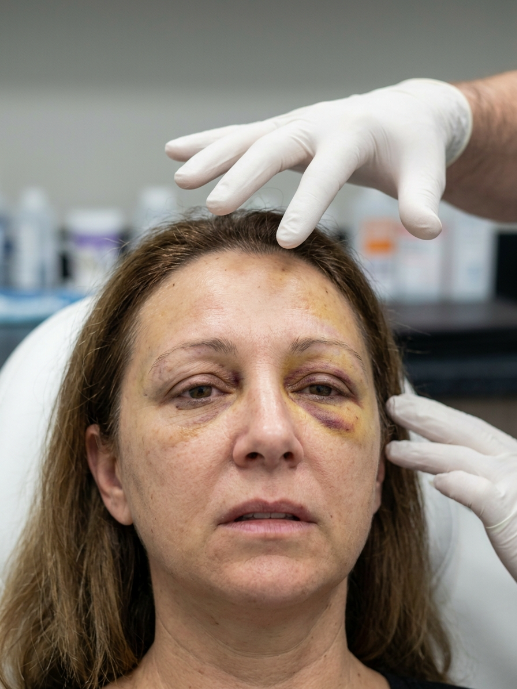
experience swelling and bruising, occasionally accompanied by mild localized
discomfort. These side effects are considered normal and tend to diminish over
time. While the duration of the recovery process can vary from person to
person, noticeable improvements typically become evident within a few weeks.
During the initial days, it is essential for the patient to get adequate rest,
adhere to prescribed medications consistently, follow the guidance provided by
the physician, and ensure appropriate skincare is not neglected.
What Should Be Considered During the Post-Operative Recovery of Facelift Surgery?
Facelift surgery, medically known as rhytidectomy, is a transformative procedure designed to address visible signs of aging in the face and neck. While the surgical skill of a board-certified specialist like Prof. Dr. Selçuk İnanlı is paramount, the ultimate success of the procedure heavily depends on the patient’s commitment to the healing process. Understanding what should be considered during the post-operative recovery of facelift surgery is essential for minimizing complications and ensuring that the results—ranging from tightened skin to restored facial contours—last for many years. This comprehensive guide explores the physiological, lifestyle, and clinical aspects of the recovery journey.
The Biological Foundation of Facelift Recovery
To appreciate the nuances of recovery, one must understand what happens beneath the skin during a facelift surgery. Modern techniques often involve manipulating the SMAS (Superficial Musculo-Aponeurotic System) layer. When these deep tissues are repositioned, the body initiates a complex inflammatory response to heal the incisions and integrate the tissues in their new locations.
During the first few days, the body sends white blood cells and growth factors to the surgical site. This naturally results in edema (swelling) and ecchymosis (bruising). Patients must recognize that these are signs of an active healing system. However, managing this inflammation through proper rest and clinical guidance is what separates a standard recovery from an exceptional one. Choosing an expert certified by the European Academy of Facial Plastic Surgery (EAFPS) ensures that your surgical plan is tailored to minimize trauma, but the post-operative phase remains a partnership between the surgeon and the patient.
Immediate Post-Operative Phase: The First 48 Hours
The first 48 hours are the most critical in the recovery timeline. This is when the risk of hematoma (a collection of blood under the skin) is at its highest. Patients usually wake up with a supportive bandage or a light compression garment around the face and neck to reduce fluid accumulation.
Pain Management and Medication
Most patients describe the sensation after a facelift as ‘tightness’ or ‘discomfort’ rather than sharp pain. Prof. Dr. Selçuk İnanlı will prescribe specific analgesics to manage this. It is vital to avoid over-the-counter medications that contain aspirin or ibuprofen unless specifically cleared, as these can thin the blood and increase the risk of bleeding. Instead, prescribed paracetamol-based medications are typically preferred. Additionally, antibiotics may be administered to prevent infection, and it is imperative to complete the full course even if you feel perfectly fine.
The Importance of Head Elevation
Gravity is your best friend during the initial post-operative recovery of facelift surgery. Keeping the head elevated at a 30 to 45-degree angle—even while sleeping—is non-negotiable. This facilitates lymphatic drainage and prevents blood from pooling in the facial tissues. Using a recliner or stacking three to four firm pillows can help maintain this position. Failure to keep the head elevated can lead to prolonged swelling, which puts unnecessary tension on the sutures.
Week One: Managing the Peak of Inflammation
By the third or fourth day, swelling and bruising usually reach their peak. This can be a psychologically challenging time for patients as they look ‘worse’ before they look better. Understanding that this is temporary is key to a stress-free recovery.
Incision Care and Hygiene
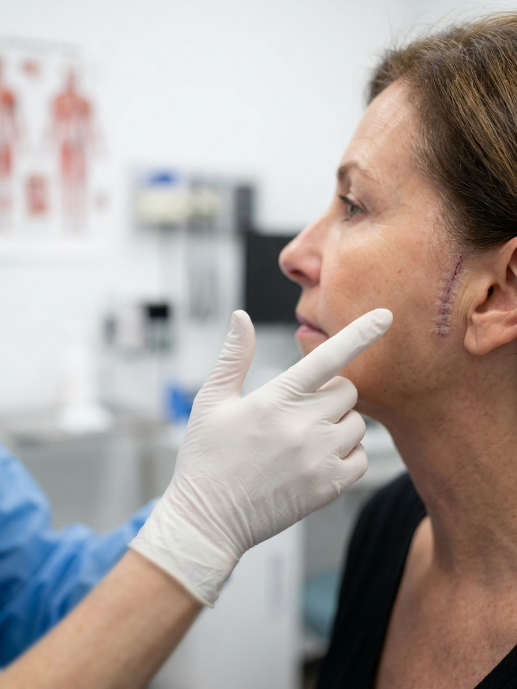
Keeping the incision lines clean is paramount. Your surgeon will provide instructions on how to gently clean the areas around the ears and hairline using a dilute hydrogen peroxide solution or plain saline. You should avoid picking at any crusting that forms, as this can lead to wider scarring. Most surgeons allow a gentle hair wash after 48 to 72 hours, but the water must be lukewarm, and you must avoid high-pressure showerheads or rubbing the incision sites. Drying the hair should be done with a ‘cool’ setting on the blow dryer, as the skin may be temporarily numb and susceptible to burns without you realizing it.
Drain Removal and First Follow-up
In some cases, small surgical drains are placed to remove excess fluid. These are typically removed within 24 to 48 hours. The first follow-up appointment usually occurs within the first week to check the viability of the skin flaps and ensure there are no signs of infection, such as excessive redness, heat, or unusual discharge.
Weeks Two and Three: The Turning Point
During the second week, most patients begin to feel a significant increase in energy. The ‘tight’ sensation persists, but the visible bruising begins to transition from purple/blue to yellow/green. This is the stage where you can truly begin to visualize how you will look 10 years younger with a facelift.
Suture Removal and Camouflage
Sutures are generally removed in stages between days 6 and 10. Once the incisions have closed sufficiently, your surgeon may give you the green light to use concealer or mineral makeup to hide residual bruising. However, it is essential to use high-quality, non-comedogenic products and to be extremely gentle during application and removal. Avoid tugging at the skin near the ears.
Gradual Return to Social Life
Many patients feel comfortable returning to work or light social engagements by the end of the second week. While you may still have some subtle swelling, it is often not noticeable to the casual observer. However, it is still crucial to avoid strenuous activities. Light walking is encouraged to promote circulation, but anything that raises your heart rate significantly or requires bending over should be avoided.
Lifestyle Adjustments for Optimal Healing
What you do in your daily life significantly impacts the speed and quality of your recovery. A facelift is an investment in your appearance, and protecting that investment requires discipline.
The Impact of Nutrition and Hydration
Healing requires energy. A diet rich in protein, Vitamin C, and Zinc supports collagen synthesis and tissue repair. Leafy greens, lean meats, and citrus fruits should be staples of your post-op diet. Equally important is hydration. Drinking plenty of water helps the body process the anesthesia and reduces the concentration of sodium in the blood, which can exacerbate swelling. Reducing salt intake is also highly recommended to prevent fluid retention.
Smoking and Alcohol: A Strict Prohibition
There is no factor more detrimental to facelift recovery than smoking. Nicotine causes vasoconstriction, narrowing the blood vessels and depriving the healing skin of oxygen. This can lead to skin necrosis (tissue death), delayed healing, and permanent scarring. For a detailed look at these risks, patients should review the negative effects of smoking after facelift surgery. Alcohol should also be avoided for at least two weeks post-op, as it can increase swelling and interact poorly with pain medications.
Long-Term Recovery: Months One to Six
While you will look great after a month, the ‘final’ result of a facelift takes time to settle. The tissues need to soften, and the scars need to mature.
Sun Protection and Scar Management
New scars are highly sensitive to ultraviolet (UV) radiation. Exposure to the sun can cause the incision lines to darken permanently (hyperpigmentation). For the first six months, you must wear a broad-spectrum SPF 50 sunscreen and use hats or scarves when outdoors. Once the incisions are fully healed, your surgeon might recommend silicone-based scar gels or sheets to further flatten and fade the marks.
Sensory Changes
It is common to experience numbness or a ‘pins and needles’ sensation around the cheeks and ears for several months. This occurs because small sensory nerves are disrupted during the skin undermining process. These nerves almost always regenerate, but the process is slow. Patience is vital during this period of sensory recalibration.
Potential Complications and When to Call the Doctor
While complications are rare with a senior surgeon like Prof. Dr. Selçuk İnanlı, being proactive is essential. You should contact the clinic immediately if you experience:
- Sudden Swelling: Especially if it is only on one side of the face (potential hematoma).
- High Fever: A sign of systemic infection.
- Shortness of Breath: Though rare, this could indicate a blood clot.
- Severe Pain: Pain that is not controlled by the prescribed medication.
Exercise and Physical Activity Guidelines
One of the most frequent questions regarding what should be considered during the post-operative recovery of facelift surgery concerns exercise.
- Weeks 1-2: Only very light walking around the house. No heavy lifting (nothing heavier than a gallon of milk).
- Weeks 3-4: Light cardio, such as brisk walking on a flat surface. Avoid weightlifting or high-impact aerobics.
- Week 6 and Beyond: Most patients can return to their full exercise routine, including yoga, running, and strength training. However, always listen to your body; if you feel throbbing in your face, you are pushing too hard.
The Psychological Journey
Recovery is not just physical; it is emotional. Many patients experience a brief period of ‘post-operative blues’ around day 4 or 5. This is often due to the combination of physical discomfort, the effects of anesthesia, and the temporary distortion of one’s appearance. Surrounding yourself with a supportive environment and maintaining open communication with your surgical team can help you navigate these feelings. Remember, the journey to a more youthful version of yourself is a marathon, not a sprint.
Maintaining Your Results
A facelift ‘turns back the clock,’ but it does not stop it. To maintain your results, you should adopt a medical-grade skincare routine, avoid excessive sun exposure, and maintain a stable weight. Non-surgical treatments like Botox or dermal fillers can be used in the following years to touch up fine lines and maintain the volume that surgery alone does not address.
By following these guidelines and adhering to the personalized recovery plan provided by Prof. Dr. Selçuk İnanlı, you can ensure a safe, efficient, and successful recovery. The goal is not just to heal, but to thrive and enjoy your rejuvenated appearance with confidence.
Sıkça Sorulan Sorular
How long does it take for the swelling to fully disappear after a facelift?
While the vast majority of visible swelling (about 80%) subsides within the first 2 to 3 weeks, allowing patients to return to social activities, the remaining 20% can take several months to fully resolve. This residual ‘micro-swelling’ is often only noticeable to the patient and the surgeon. Most patients see their final, settled result between 6 to 12 months post-operatively as the internal tissues fully heal and the skin adapts to its new contours.
When can I safely wear makeup and resume my skincare routine?
Generally, you can begin wearing camouflage makeup or concealer about 10 to 14 days after surgery, provided the incisions have closed and the sutures have been removed. It is crucial to use clean brushes and high-quality mineral makeup to avoid irritation. For your regular skincare routine, you should wait until your surgeon gives the explicit ‘green light,’ usually around the 3-week mark, and you must avoid products with active acids (like Retinol or Vitamin C) near the incision sites until they are fully matured.
What is the best sleeping position during the facelift recovery period?
The best and safest position is sleeping on your back with your head significantly elevated. This position, maintained for at least the first 2 to 4 weeks, is essential for reducing swelling and preventing accidental pressure on the incisions. Sleeping on your side or stomach can cause asymmetrical swelling and potentially pull on the sutures, which may affect the final aesthetic outcome. Many patients find that using a travel neck pillow helps keep their head centered and prevents them from rolling over during the night.
How long do I need to take off from work after a facelift?
Most patients require approximately 10 to 14 days of downtime before returning to a desk job or a role that does not involve heavy physical labor. By this time, bruising can usually be covered with makeup, and the initial ‘tight’ feeling has become manageable. If your job is physically demanding or involves significant public speaking/presentation, you may want to consider taking 3 weeks off to ensure you feel fully confident and physically capable.
Are the scars from a facelift surgery very noticeable?
Expert surgeons like Prof. Dr. Selçuk İnanlı place incisions in discreet locations, such as within the natural creases of the ear and along the hairline, making them very difficult to see once healed. Initially, the scars will appear pink or slightly raised, but over 6 to 12 months, they typically fade into thin, white lines that blend with the surrounding skin. Following strict sun protection and using recommended scar treatments are the best ways to ensure the scars become nearly invisible.