Nasal Shape & Facial Balance
Concerns involving the bridge, tip, width, projection, rotation or overall nasal proportions.
SEPTORHINOPLASTY
A combined approach to nasal appearance, structural support and breathing function.
Septorhinoplasty combines aesthetic and functional nasal surgery within one individual plan. It may be considered when concerns about the external shape of the nose coexist with structural or functional problems such as septal deviation, nasal obstruction or reduced support.

FORM & FUNCTION TOGETHER
Septorhinoplasty is an operation in which the external nose and the internal nasal framework are assessed and treated within the same surgical plan. Depending on the patient's anatomy and clinical findings, surgery may combine changes to nasal shape with correction of the septum and other structural factors that affect breathing or support.
The objective is not simply to perform rhinoplasty and septoplasty at the same time. The external nose, septum, nasal support and airway are planned as interconnected parts of one structure.
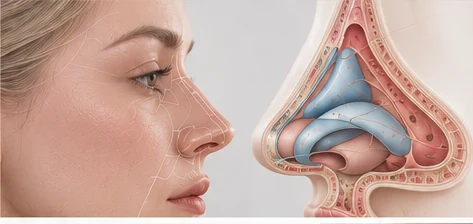
WHEN AESTHETIC AND FUNCTIONAL CONCERNS COEXIST
Septorhinoplasty may be considered when a patient would like to address the appearance of the nose and there are also structural or functional findings that need attention. The combination and importance of these concerns vary from patient to patient.
Concerns involving the bridge, tip, width, projection, rotation or overall nasal proportions.
A deviated septum may contribute to obstruction and may also influence the external alignment or support of the nose.
Difficulty breathing may relate to the septum, nasal valves, turbinates or a combination of structural factors.
Weakness or deformity of the nasal framework may affect both appearance and airway stability.
Previous trauma or developmental asymmetry may involve both the external nose and internal structures.
Some patients have both aesthetic goals and functional symptoms that are best assessed together rather than as separate problems.
CANDIDACY
Suitability is assessed individually. Facial proportions, external nasal anatomy, septal alignment, nasal airflow, valve support, turbinate size, skin characteristics, general health and the patient's priorities are considered before deciding whether a combined approach is appropriate.

REAL CONSULTATION
A pre-operative consultation explores the patient's aesthetic priorities alongside nasal obstruction, septal anatomy and other structural factors that may affect breathing.
BEFORE & AFTER
Septorhinoplasty outcomes vary according to external nasal anatomy, septal and airway findings, skin characteristics, surgical goals and individual healing. Results should be understood in relation to each patient's starting point and treatment plan.
A COMBINED ASSESSMENT
The nose is assessed in relation to the forehead, eyes, lips, chin and overall facial balance.
The bridge, tip, width, projection, rotation, symmetry, skin and structural support are examined.
The position and shape of the septum are assessed in relation to both airflow and nasal support.
Internal and external valve support is evaluated where relevant to breathing.
Turbinate size and other factors contributing to nasal obstruction are considered clinically.
Aesthetic goals and functional symptoms are discussed together to define realistic individual objectives.
THE INTERNAL AIRWAY
Nasal breathing depends on more than the septum alone. In patients with obstruction, assessment may include septal alignment, the internal and external nasal valves, turbinate size and the relationship between internal support and the external nasal framework. Treatment is directed only to the structures that are clinically relevant in the individual patient.
Septal correction, valve support or turbinate treatment may be incorporated when indicated; they are not automatic components of every septorhinoplasty.
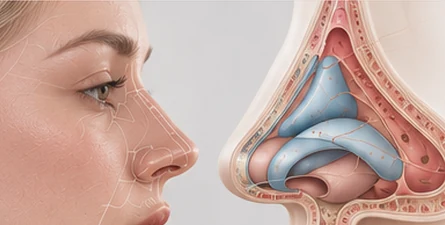
SHAPE, SUPPORT & AIRFLOW
Changes to the external nose can influence structural support and airflow, while correction of internal structures can affect the shape and stability of the nose. Septorhinoplasty planning therefore considers aesthetic goals, septal anatomy, support and breathing as parts of the same system.
The aim is to create a plan that addresses the patient's priorities without separating nasal appearance from the structures that support function.
SURGICAL PLANNING
Planning begins with understanding how the external nose, septum, airway and facial proportions relate to one another. The surgical strategy is then developed around the findings that are relevant to the individual patient.
Facial proportions and the external shape, symmetry and support of the nose are assessed.
Nasal obstruction, side-to-side differences, previous trauma, prior treatment and other relevant symptoms are reviewed.
The septum, nasal valves, turbinates and airway are evaluated according to clinical findings.
The relationship between septal correction, support and planned external changes is mapped before surgery.
Aesthetic priorities and functional concerns are discussed together, with realistic expectations.
The final plan integrates the external nose, internal anatomy, structural support and breathing function where clinically appropriate.
RECOVERY & HEALING
Recovery is gradual. Swelling, bruising and nasal congestion are usually most noticeable during the early postoperative period and improve progressively. Because septorhinoplasty may involve both external and internal nasal structures, the pace of recovery depends on the extent of surgery, individual anatomy and healing response. Residual swelling, particularly at the nasal tip, can continue to refine over the following months.
Swelling, bruising and congestion decrease progressively as initial healing advances.
Timing varies according to the procedure, visible signs, work requirements and individual recovery.
Nasal shape and tissue definition continue to evolve as residual swelling settles over time.
SEPTORHINOPLASTY FAQ
Rhinoplasty primarily refers to surgery that changes the external shape of the nose, although functional factors may also be considered. Septorhinoplasty specifically describes a combined approach in which external nasal changes and clinically relevant septal or structural issues are addressed within the same surgical plan.
Septoplasty focuses on the nasal septum and is generally performed to address septal deviation and related obstruction without intentionally changing the external appearance of the nose. Septorhinoplasty also addresses the external nose when aesthetic or structural correction is required.
It may improve breathing when obstruction is related to structural problems that can be surgically addressed, such as septal deviation or nasal valve weakness. The cause of obstruction is assessed before surgery, and functional treatment is based on individual findings.
No. Turbinate treatment is considered only when turbinate enlargement or another clinically relevant finding contributes to nasal obstruction. It is not a routine requirement for every patient.
Yes, when external nasal changes are part of the agreed surgical plan. The extent and nature of those changes depend on the patient's anatomy, goals and structural requirements.
The incision pattern depends on the surgical approach. When an external columellar incision is used, it is positioned discreetly and typically becomes less noticeable as healing progresses.
The timing varies according to the extent of surgery, swelling, bruising, work requirements and individual healing. A personalised recovery plan is discussed around the procedure.
The result develops gradually as swelling resolves and tissues remodel. Visible changes are apparent earlier, while finer definition can continue to evolve over several months.
RELATED PROCEDURES

TAKE THE FIRST STEP
Send your photographs for an initial assessment or arrange a consultation to discuss your nasal appearance, breathing concerns and whether a combined aesthetic and functional approach may be appropriate.