What are the different types of forehead lift surgery?
What Are the Different Types of Forehead Lift Surgery?
Understanding Forehead Lift Surgery (Brow Lift)
As we age, the upper third of our face often shows the first signs of time. Gravity, sun exposure, and the repetitive movement of facial muscles lead to sagging eyebrows, deep horizontal furrows, and vertical frown lines between the eyes. A forehead lift, also known as a brow lift, is a surgical procedure designed to reposition the brow to a more youthful level, smooth out wrinkles, and rejuvenate the entire upper face.
In the modern era of facial plastic surgery, there is no “one-size-fits-all” approach. Depending on your anatomy, the position of your hairline, and the severity of tissue laxity, different techniques may be employed. Prof. Dr. Selçuk İnanlı, an expert in ENT and facial plastic surgery, emphasizes that the goal of any forehead lift is to create a natural, refreshed look rather than a “surprised” or “pulled” appearance. This article explores the various types of forehead lift surgeries in exhaustive detail to help you understand which method might be best for your aesthetic goals.
Why Do People Choose Forehead Lifts?
The forehead serves as the frame for the eyes. When the brow descends (a condition known as brow ptosis), it can make a person look tired, angry, or sad, even when they are well-rested. Furthermore, a heavy brow can push down on the upper eyelids, sometimes necessitating a combined approach with blepharoplasty (eyelid surgery) to achieve full rejuvenation. By lifting the forehead tissues, surgeons can also soften the glabellar lines (the “11” lines) and horizontal forehead creases.
The Main Types of Forehead Lift Surgery
There are several distinct surgical techniques used today. Each has specific advantages regarding incision placement, recovery time, and the degree of lifting achieved.
1. Endoscopic Forehead Lift
The endoscopic forehead lift is currently the most popular and preferred method for both patients and surgeons. This technique utilizes minimally invasive technology to achieve significant results with much smaller incisions than traditional methods.
How It Works
During an endoscopic lift, the surgeon makes three to five small incisions (usually less than an inch long) hidden within the hair. A thin tube with a camera at the end (endoscope) is inserted through one of the incisions. This allows the surgeon to view the underlying muscles and tissues on a television monitor. Using specialized instruments, the surgeon releases the tissues and muscles causing the wrinkles and lifts the entire forehead structure. The forehead is then secured in its new, higher position using temporary or permanent fixation devices like endotines or sutures.
Advantages
* Minimal Scarring: The incisions are tiny and completely hidden in the hair.
* Faster Recovery: Because it is less invasive, there is usually less bruising and swelling after a forehead lift compared to other types.
* Lower Risk of Numbness: There is a reduced risk of damaging the supraorbital nerves, which provide sensation to the scalp.
2. Coronal Forehead Lift (Traditional Technique)
The coronal brow lift was once the gold standard of forehead rejuvenation. While it has been largely replaced by the endoscopic method, it remains an essential tool for patients with severe sagging or specific anatomical needs.
How It Works
A single, long incision is made from ear to ear, across the top of the head, well behind the hairline. The surgeon then lifts the forehead skin, removes a small strip of excess scalp, and sutures the remaining skin back together. This effectively “pulls” the forehead upward.
Considerations
This method is highly effective for smoothing deep wrinkles, but it has a significant drawback: it physically moves the hairline higher. Therefore, it is generally not recommended for individuals with high foreheads or receding hairlines. It also involves a longer recovery period and a higher likelihood of temporary or permanent numbness at the top of the head.
3. Pretrichial (Hairline) Forehead Lift
The pretrichial forehead lift is a strategic variation designed for patients who want the lifting power of a coronal lift but already have a high forehead and do not want their hairline to move back any further.
How It Works
The incision is made right at the junction where the forehead skin meets the hairline. By removing excess skin from the forehead rather than the scalp, the surgeon can lift the brows while actually lowering the hairline slightly or keeping it in place. This technique requires meticulous suturing to ensure the scar is as inconspicuous as possible.
Who Is It For?
This is an ideal choice for women with high foreheads or men who are not concerned about future hair loss. It provides excellent control over the height of the brow and the shape of the forehead.
4. Temporal or Limited Incision Brow Lift
A temporal brow lift focuses specifically on the outer third of the eyebrows. It is often performed in conjunction with eyelid surgery or as part of more comprehensive facelift surgeries.
How It Works
Small incisions are made in the temple area, hidden within the hair. The surgeon lifts the outer corners of the brows to address “hooding” at the outer edges of the eyes. This does not address the central forehead or the area between the eyes, but it provides a beautiful, subtle lift to the eyes.
Advantages
It is a relatively quick procedure with a very short recovery time. It is perfect for younger patients who only have sagging at the tail of the brow.
5. Direct Brow Lift
The direct brow lift is a more functional approach often used for older patients or those with medical conditions like facial nerve paralysis that cause severe brow drooping.
How It Works
The surgeon makes an incision directly above the eyebrow hairs. A small amount of skin is removed, and the brow is sutured into a higher position. While this is the most direct way to lift the brow, it leaves a scar right above the eyebrow. For patients with thick eyebrow hair or deep forehead furrows, this scar can be well-hidden, but it is rarely the first choice for younger cosmetic patients.
6. Mid-Forehead Lift
Similar to the direct lift, the mid-forehead lift utilizes existing deep horizontal wrinkles to hide the incision.
How It Works
The surgeon places incisions within the deep creases of the mid-forehead. This allows for direct access to the muscles and tissues. It is highly effective for men with very deep forehead lines and receding hairlines where a traditional scalp incision would be visible.
Comparing Techniques: Which One Is Right for You?
Choosing the right type of forehead lift requires a detailed consultation with a qualified specialist like Prof. Dr. Selçuk İnanlı. Several factors will influence the decision:
- Hairline Height: If you have a high forehead, a pretrichial lift is better than a coronal lift. If you have a low forehead, a coronal lift might actually improve your facial proportions.
- Hair Density: Patients with thinning hair may need endoscopic techniques to avoid visible scarring.
- Degree of Sagging: Mild sagging is often treated with endoscopic or temporal lifts, while severe tissue laxity may require a traditional or pretrichial approach.
- Anatomy of the Brow: Some people only need the “tail” of the brow lifted, while others need the entire forehead repositioned.
For more guidance, you can read more about which forehead lift method is more suitable for you on our specialized blog page.
The Procedure: What Happens During Surgery?
Regardless of the type, most forehead lifts are performed under general anesthesia or intravenous sedation. The surgery typically takes between one to three hours.
* Step 1 – Anesthesia: Ensuring the patient is comfortable and pain-free.
* Step 2 – Incision: Based on the chosen method (Endoscopic, Coronal, etc.).
* Step 3 – Tissue Modification: The surgeon releases the periosteum (the membrane covering the bone) and modifies the muscles (like the frontalis or corrugator) to smooth lines.
* Step 4 – Repositioning and Fixation: The brow is moved to its new position and secured.
* Step 5 – Closing the Incisions: Using sutures, skin adhesive, or surgical clips.
Recovery and Post-Operative Care
After the surgery, your forehead may be loosely wrapped to minimize swelling. A thin tube might be present to drain any excess blood or fluid.
The First 48 Hours
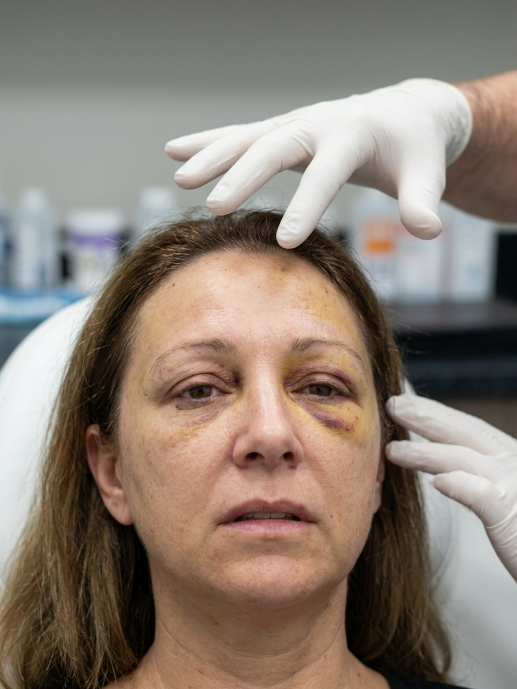
Patients are encouraged to keep their heads elevated at all times, even while sleeping. Cold compresses can help reduce swelling. Most patients experience a sensation of tightness rather than sharp pain.
The First Two Weeks
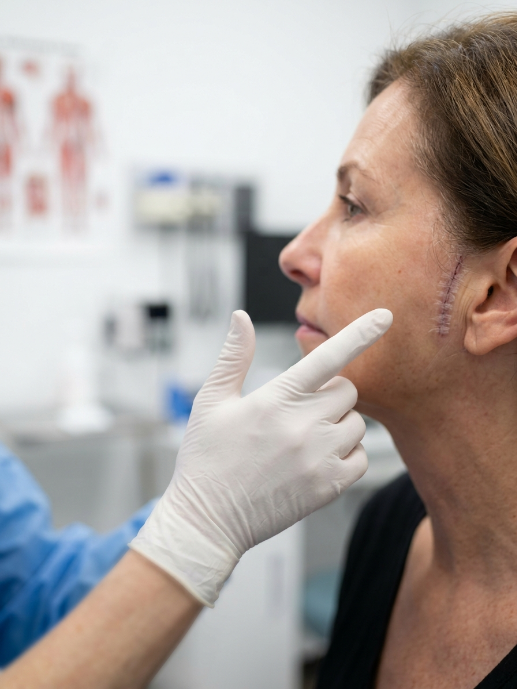
Sutures or clips are usually removed within 7 to 10 days. Most patients can return to work within 10 to 14 days, though some bruising may still be visible, which can often be camouflaged with makeup. Strenuous exercise and heavy lifting should be avoided for at least three to four weeks to prevent complications.
Potential Risks and Considerations
Like any surgical procedure, a forehead lift carries some risks, including infection, scarring, and reaction to anesthesia. Specific risks for this surgery include:
* Nerve Injury: Temporary or permanent loss of sensation or movement in the forehead.
* Hairline Changes: As discussed, some techniques can raise the hairline.
* Asymmetry: While surgeons strive for balance, slight differences between the two sides can occur.
* Hair Loss: Temporary thinning of hair around the incision sites is possible.
Choosing a board-certified surgeon with extensive experience in facial plastic surgery is the most important step in minimizing these risks.
Combining Forehead Lifts with Other Procedures
It is very common to combine a forehead lift with other facial rejuvenation procedures. The forehead lift addresses the upper face, but it does not fix sagging jowls or a loose neck. To achieve a comprehensive “10 years younger” look, patients often opt for a facelift or neck lift at the same time. Additionally, because the brow and upper eyelids are so closely related, many patients find that a forehead lift alone provides enough lift that they may not need as much skin removed during a blepharoplasty, or vice versa.
The Role of Non-Surgical Options
For patients with very mild signs of aging, non-surgical options like Botox or dermal fillers can provide a temporary “chemical brow lift.” Botox works by relaxing the muscles that pull the brow down, allowing the upward-pulling muscles to dominate. However, these results only last 3 to 6 months and cannot address significant skin sagging. For long-term, structural changes, surgery remains the definitive solution.
Why Choose Prof. Dr. Selçuk İnanlı?
Prof. Dr. Selçuk İnanlı is a highly respected surgeon with international certifications, including the European Academy of Facial Plastic Surgery (EAFPS). With decades of experience in both the functional and aesthetic aspects of the face, he approaches every forehead lift with a surgeon’s precision and an artist’s eye. His philosophy focuses on maintaining the unique character of the patient’s face while restoring a youthful, vibrant appearance.
Whether you are bothered by deep frown lines or a heavy, drooping brow, there is a forehead lift technique that can help. By understanding the different types of forehead lift surgery, you are better prepared to make an informed decision about your path to facial rejuvenation. Contact our clinic today to schedule a consultation and discover how we can help you look as young as you feel.
Sıkça Sorulan Sorular
How long do the results of a forehead lift typically last?
The results of a surgical forehead lift are long-lasting, typically ranging from 10 to 15 years. While the surgery effectively ‘resets’ the clock by removing excess skin and repositioning tissues, the natural aging process continues. Factors such as skin quality, lifestyle choices (like sun protection and not smoking), and genetics will influence how long the rejuvenated look remains optimal. Most patients, however, continue to look younger than they would have without the surgery for the rest of their lives.
Will I have visible scars after my brow lift surgery?
The visibility of scars depends entirely on the technique used. In an endoscopic forehead lift, the scars are very small and hidden entirely within the hair, making them virtually invisible. In a pretrichial lift, the scar is located at the hairline; while it is a longer incision, it is meticulously placed and usually heals into a fine, faint line that is easily camouflaged by hair. Prof. Dr. Selçuk İnanlı uses advanced suturing techniques to ensure that any resulting scars are as discreet as possible.
Is the recovery process for a forehead lift painful?
Most patients describe the recovery from a forehead lift as involve more discomfort and tightness than actual pain. You may feel a sensation of pressure or numbness in the forehead and scalp area for a few weeks. Surgeons typically prescribe mild pain medication for the first few days to manage any discomfort. Swelling and bruising are normal and usually peak at 48 to 72 hours before gradually subsiding over the next two weeks.
What is the best age to consider a forehead lift surgery?
There is no ‘perfect’ age, as people age at different rates. Most patients who seek a forehead lift are between the ages of 40 and 65. However, younger patients in their 30s may choose the procedure if they have genetically heavy brows or deep frown lines that make them look older or more tired than they are. The decision is based more on the anatomical condition of the forehead and the patient’s aesthetic goals rather than a specific chronological age.
Can a forehead lift replace the need for upper eyelid surgery?
In some cases, yes. When the brow is very heavy and sags downward, it pushes excess skin onto the upper eyelids, creating a hooded appearance. Lifting the brow can sometimes pull that excess skin upward, clearing the eye area and making eyelid surgery unnecessary. However, if there is significant true excess skin and fat on the eyelid itself, a combination of a forehead lift and blepharoplasty is often the best way to achieve a bright, open-eyed look. A thorough consultation will determine which approach is right for you.