Which Forehead Lift Method Is More Suitable for You?
Which Forehead Lift Method Is More Suitable for You?
The eyes and eyebrow area are the first window to the outside world in a person’s interaction with other people. Eyebrow and eye shape are as powerful as words in expressing their emotions. The forehead area, which is based on the person’s gaze and eyebrow structure, can cause the person to look more tired and older, either due to genetic factors or the signs of aging over the years. A sagging and wrinkled forehead makes the person miserable. In such cases, it is possible to reverse the adverse effects of aging quickly with a forehead lift operation.
The forehead lift operation’s primary purpose is to provide the person with a younger and lively look. If the person has sagged in the forehead area, the forehead skin is stretched, and the eyebrows are lifted upwards. In some cases,this procedure is so effective even in removing droopy eyelids that the necessity for extra eyelid surgery can be avoided. Yet, most of the time, better results can be accomplished by combining forehead lift operations with eyelid surgery. A forehead lift, which can be performed for everyone regardless of women or men over 40, is suitable for all kinds of face and forehead shapes.
Aesthetic forehead lift operations are performed in two different methods. The first is classical forehead lift surgery and the other is endoscopic forehead lift surgery.
In traditional forehead lift surgery, the forehead skin is lifted and pulled up with a thin incision made in both temples’ scalp. The muscles that create wrinkles on the forehead and cause the eyebrows to fall are also stretched upwards. The forehead skin is freed from the orbit’s upper bone arch, and the excess skin is removed and discarded. Many patients fear that there will be a scar on their forehead. Still, the thin incision will be hidden under the scalp so that the patient can enjoy the new look of his forehead comfortably.
Another method, endoscopic forehead lift surgery is when technological methods and classical methods are applied together. In this method, 4-5 vertical incisions of 2 cm in length are applied to the scalp. With the Endoscope micro cameras that givethe procedure’s name, the forehead area is relaxed and made tenser. In this method, which is performed with endoscope devices and special surgical tools, the bone structure under the forehead and eyebrow tissue is also detected. Endoscopic forehead lift surgery is suitable for patients whose hairline is low and forehead distance is narrower than 5 cm. The endoscopic forehead lift technique is a much more convenient option for patients in the early stages of forehead aging.
In patients where the eyebrows are genetically located at the forehead’s upper bone arch level, eyebrow drop due to forehead sagging becomes evident. In these patients, remarkable results can be obtained with an early endoscopic forehead lift. But in patients who have not undergone any surgical intervention, towards the end of their 40s, the lines on the forehead begin to deepen, and the forehead skin becomes abundant and sagging. In this case endoscopic forehead lift adequate results may not be obtained with endoscopic forehead lift because some skin removal is required from the forehead. Then the forehead stretched with the classical forehead stretching method.
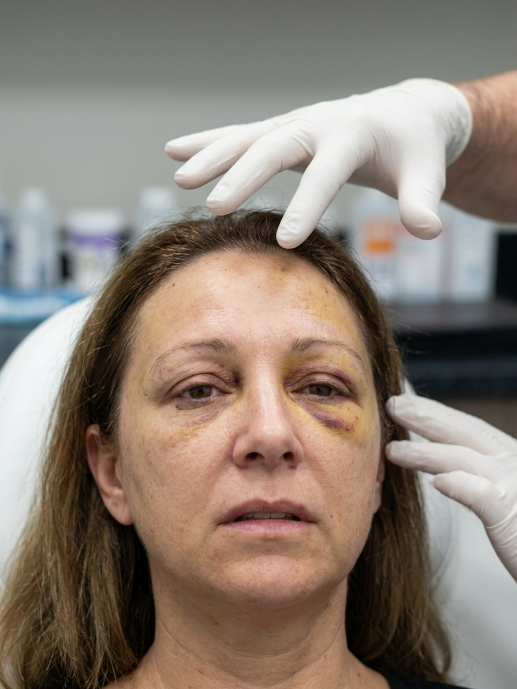
Forehead lift surgery is completed within a maximum of 3 hours. The operation is performed under general anesthesia. Swelling and bruising can be seen in the forehead area for 3 to 4 days after forehead lift surgery. The patient may experience mild pain that can be avoided with painkillers. When the recovery period of less than a week is finished, the patient begins to express her feelings with a much more vigorous gaze, with her renewed and rejuvenated appearance. If you consider having rhinoplasty surgery, contact us right away to get a free consultancy service from Prof. Dr. Selçuk İnanlı.
Which Forehead Lift Method Is More Suitable for You?
Understanding the Dynamics of Forehead Aging
The forehead is one of the most expressive parts of the human face. It communicates joy, surprise, anger, and concern through a complex interplay of muscles and skin. However, as time passes, this constant movement, combined with the effects of gravity and a decrease in skin elasticity, leads to the formation of permanent lines, deep furrows, and sagging brows. When the brow area descends, it doesn’t just create wrinkles; it can make a person look tired, stern, or older than they actually feel. This is where the Forehead Lift, also known as a Brow Lift, becomes a transformative procedure.
Choosing the right method is not a one-size-fits-all decision. The structural differences in bone density, the height of the hairline, the thickness of the skin, and the specific goals of the patient all play a critical role. Under the expertise of Prof. Dr. Selçuk İnanlı, a certified specialist by the European Academy of Facial Plastic Surgery (EAFPS), patients are guided through a comprehensive analysis to determine which surgical approach will yield the most natural and long-lasting results. Whether you are looking to combine this with Facelift Surgeries or seeking it as a standalone rejuvenation, understanding the nuances of each technique is the first step toward your aesthetic goals.
The Anatomy of the Upper Face
To understand Which Forehead Lift Method Is More Suitable for You, one must first understand the anatomy of the region. The forehead consists of the frontalis muscle, which is responsible for raising the eyebrows and creating horizontal wrinkles. Between the eyebrows lie the corrugator and procerus muscles, which create the vertical “11” lines or frown lines.
With age, the soft tissues and fat pads that once provided volume begin to thin or shift. The supraorbital ridge (the brow bone) becomes more prominent as the skin sags over it. A forehead lift aims to reposition these tissues, weaken the muscles that cause deep furrows, and remove excess skin to create a smoother, more youthful appearance. The choice of method depends heavily on how much of this tissue needs to be moved and where the resulting scars can be most effectively hidden.
Common Methods: An Overview of Your Options
There are several surgical pathways to achieve a rejuvenated upper face. Each has its own set of advantages and specific indications. For a detailed look at the categories, you can explore the types of forehead lift surgery available in modern clinical practice.
1. The Endoscopic Forehead Lift
The Endoscopic Forehead Lift is currently the most popular and modern approach. It involves the use of an endoscope—a thin tube with a camera attached—inserted through several small incisions hidden within the hair.
* How it works: The surgeon views the internal structures on a monitor, allowing for precise manipulation of the muscles and tissues without the need for large incisions. The forehead skin is lifted and anchored into a higher position using specialized devices or sutures.
* Who it is for: This method is ideal for patients with moderate sagging and those who want minimal scarring and a faster recovery. It is highly effective for lifting the brows and smoothing out frown lines.
2. The Coronal (Traditional) Forehead Lift
Once the gold standard, the Coronal Forehead Lift involves an incision that typically runs from ear to ear, hidden behind the hairline.
* How it works: The surgeon lifts the forehead skin and removes the excess, then sutures the scalp back together. Because the incision is longer, it allows for the most significant amount of skin removal and tissue repositioning.
* Who it is for: It is generally reserved for patients with severe skin laxity or those who are not concerned about a slightly longer incision. However, it can raise the hairline, so it is often avoided in patients with high foreheads.
3. The Pretrichial (Hairline) Forehead Lift
For patients who have a high forehead or a receding hairline, the Pretrichial Lift is often the most suitable choice.
* How it works: The incision is made right at the junction of the forehead and the hairline. By removing skin from the forehead itself rather than the scalp, the surgeon can actually lower the hairline while lifting the brows.
* Who it is for: Individuals who want to reduce the height of their forehead while simultaneously treating wrinkles and sagging.
4. The Temporal (Limited Incision) Lift
Sometimes, the aging process is most visible at the outer corners of the eyes and the tails of the eyebrows.
* How it works: Smaller incisions are made in the temple area, hidden in the hair. This allows the surgeon to lift the outer part of the brow specifically.
* Who it is for: Often combined with eyelid surgery, this is perfect for younger patients or those whose primary concern is “hooding” at the outer edges of the eyes.
Factors That Determine the Best Method for You
When you consult with Prof. Dr. Selçuk İnanlı, several clinical factors are evaluated to customize the surgical plan. Identifying a suitable candidate for an eyebrow lift involves looking at the following:
Hairline Height and Density
If you have a high forehead, a traditional coronal lift might make it look even larger. In such cases, a pretrichial lift is preferred. Conversely, if you have thick hair and a low forehead, the endoscopic method is excellent because it hides small scars perfectly.
Degree of Brow Ptosis (Sagging)
Minor sagging can often be addressed with an endoscopic or temporal lift. However, if there is significant excess skin that has lost all elasticity, a more invasive traditional method might be necessary to achieve a smooth result without the risk of the tissue “bunching up.”
Bone Structure
The shape of your skull and the prominence of your brow bone influence how the skin will drape after it is lifted. A surgeon with an artistic eye, like Prof. Dr. Selçuk İnanlı, considers the Golden Ratio to ensure the new brow position complements your eyes and nose.
Skin Thickness
Thicker skin may require more robust anchoring techniques, whereas thinner skin requires extreme precision to ensure that no internal sutures or irregularities are visible through the surface.
The Surgical Experience: What to Expect
Regardless of the method chosen, the procedure is typically performed under general anesthesia or deep sedation to ensure patient comfort. The duration of the surgery varies between 1 to 3 hours depending on the complexity and whether other procedures, such as Rhinoplasty or Blepharoplasty, are being performed simultaneously.
Modern techniques prioritize tissue preservation. Instead of simply pulling the skin tight, the underlying SMAS layer and muscle structures are reorganized. This prevents the “surprised” or “wind-blown” look that was common in older surgical styles. The goal is a refreshed, rested appearance where the brows sit at a natural, youthful level.
Recovery and Post-Operative Care
Recovery is a vital phase of the journey. While techniques like the endoscopic lift offer a quicker return to daily life, all surgical interventions require a period of rest. Patients often ask about bruising and swelling after a forehead lift. Generally, most swelling peaks within the first 48 to 72 hours and begins to subside significantly after the first week.
* First 24 Hours: Use cold compresses and keep the head elevated to minimize edema.
* First Week: Stitches or staples are usually removed. Most patients can return to sedentary work.
* First Month: Strenuous exercise should be avoided. The final contours of the forehead begin to settle.
It is important to follow all instructions provided by the clinic to ensure that the healing process is smooth and that the scars mature as invisibly as possible.
Non-Surgical Alternatives: Are They Enough?
For some patients, surgery might not be the immediate answer. Botox and Dermal Fillers can provide a temporary “chemical brow lift.” By relaxing the muscles that pull the brow down, the forehead appears smoother. However, non-surgical options cannot remove excess skin or permanently reposition deep tissues. They are best suited for younger patients with early signs of aging or as a maintenance tool after a surgical lift.
Why Expertise Matters
Performing a forehead lift requires a deep understanding of facial nerves and aesthetics. Prof. Dr. Selçuk İnanlı brings decades of experience as an ENT and Facial Plastic Surgery Specialist. His background in both the functional and aesthetic aspects of the head and neck ensures that while you achieve a beautiful look, the functionality and health of the facial tissues are never compromised.
Choosing the right method is a collaborative process between the patient’s desires and the surgeon’s clinical judgment. By selecting a surgeon certified by the European Board Certification in Facial Plastic Surgery, you ensure that you are receiving care that meets international standards of excellence.
Investing in a forehead lift is not just about erasing wrinkles; it is about restoring the harmony of your facial expressions. When the upper face is open and bright, the eyes appear more vibrant, and the entire face looks rejuvenated. Take the time to discuss your options and choose the method that aligns with your unique anatomy and lifestyle.
Sıkça Sorulan Sorular
How long do the results of a forehead lift typically last?
The results of a surgical forehead lift are long-lasting, typically ranging from 10 to 15 years. While the procedure ‘sets back the clock,’ the natural aging process will continue. Factors such as skin quality, sun protection, and lifestyle choices like smoking can influence the longevity of the results. Most patients find that even as they age further, they still look significantly younger than they would have without the surgery.
Will a forehead lift leave visible scars?
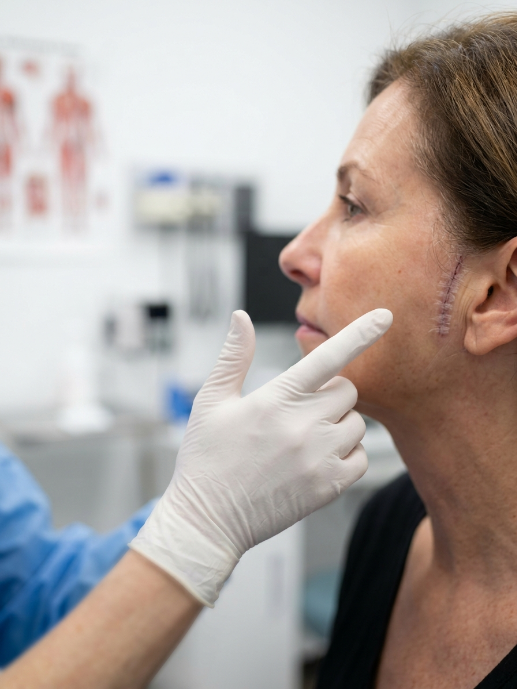
The visibility of scars depends on the method used. In an endoscopic lift, scars are tiny and completely hidden within the hair. In a pretrichial lift, the incision is at the hairline, and with expert suturing, it becomes a very fine line that is often camouflaged by new hair growth. Prof. Dr. Selçuk İnanlı uses advanced techniques to ensure that incisions are placed in natural creases or hair-bearing areas to maximize discretion.
Is there an ideal age for this procedure?
There is no ‘perfect’ age, as aging varies per individual. Most patients seeking a forehead lift are between 40 and 65 years old. However, younger patients with naturally low brows or deep frown lines due to genetics may also benefit. The decision is based on the physical condition of the forehead and brow area rather than chronological age.
Can I combine a forehead lift with eyelid surgery?
Yes, combining a forehead lift with blepharoplasty (eyelid surgery) is very common. Often, what appears to be excess skin on the upper eyelids is actually caused by sagging brows pushing down. By addressing both areas simultaneously, the surgeon can provide a more comprehensive and harmonious rejuvenation of the entire eye area, often leading to a much more satisfied patient result.
Is the recovery process painful?
Most patients report that the recovery involves more discomfort and a feeling of ‘tightness’ rather than intense pain. Any post-operative soreness can usually be managed effectively with prescribed pain medication. Some numbness in the scalp or forehead is common and temporary. Following the surgeon’s advice on head elevation and cold compresses significantly helps in reducing discomfort and speeding up the healing process.