



Septal Perforation Specialist
- Açıklama
- Değerlendirmeler (0)
Açıklama
Septal Perforation Specialist: Advanced Solutions for Nasal Septum Repair
# Septal Perforation Specialist: Advanced Solutions for Nasal Septum Repair
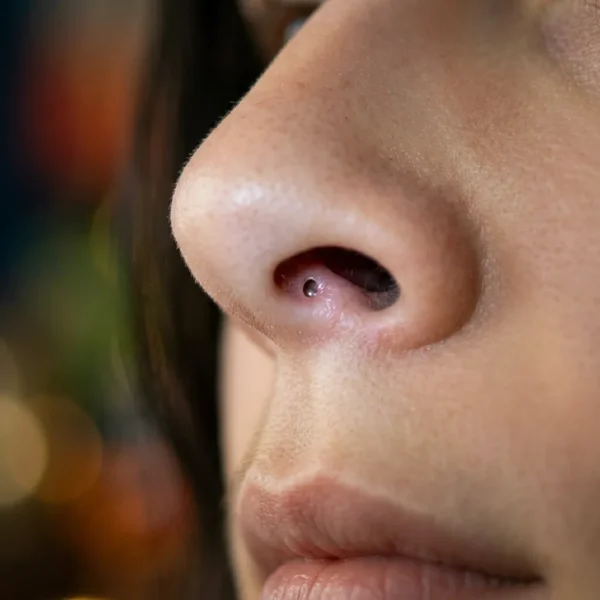
A septal perforation is a medical condition characterized by a hole in the nasal septum, the cartilaginous and bony wall that divides the nostrils. This condition can lead to a variety of distressing symptoms, ranging from chronic crusting and nosebleeds to a characteristic whistling sound during breathing. When the structural integrity of the nose is compromised, it requires the expertise of a dedicated Septal Perforation Specialist to restore both function and aesthetics. Prof. Dr. Selçuk İnanlı, with his extensive background in facial plastic surgery and otorhinolaryngology, stands as a leading authority in managing these complex cases.
Repairing a perforation is widely considered one of the most challenging procedures in nasal surgery. Unlike a standard Septoplasty, which involves straightening the bone and cartilage, perforation repair requires the recruitment of healthy tissue (flaps) to close a gap that often lacks a sufficient blood supply. This is why patients seeking relief must consult a specialist who understands the delicate balance of nasal blood flow and structural support.
Understanding the Anatomy of the Nasal Septum
Understanding the Anatomy of the Nasal Septum Get an expert opinion.
Your initial assessment is free.
To understand why a perforation is so problematic, one must first understand the anatomy of the nasal septum. The septum is composed of three primary parts: the quadrangular cartilage at the front, the vomer bone, and the perpendicular plate of the ethmoid bone at the back. It is covered by a thin layer of vascular tissue called the mucoperichondrium and mucoperiosteum.
This tissue is the lifeblood of the septum. It provides the necessary nutrients and oxygen to the underlying cartilage. Cartilage itself does not have its own blood vessels; it relies entirely on the overlying mucosa. When this mucosa is damaged or stripped away—whether through trauma, surgery, or disease—the cartilage underneath dies, leading to the formation of a hole. A Septal Perforation Specialist focuses on restoring this mucosal lining to ensure the long-term health of the nasal structure.
The Physiological Role of the Septum
The Physiological Role of the Septum Get an expert opinion.
Your initial assessment is free.
The septum is not just a divider; it plays a crucial role in nasal aerodynamics. It helps direct airflow in a streamlined fashion, ensuring that air is properly humidified, filtered, and warmed before it reaches the lungs. When a hole is present, the air becomes turbulent. This turbulence dries out the surrounding mucosa, leading to the formation of scabs and crusts, which further irritates the site and can cause the hole to enlarge over time.
Common Causes of Septal Perforation
Common Causes of Septal Perforation Get an expert opinion.
Your initial assessment is free.
Identifying the root cause of the perforation is the first step for any Septal Perforation Specialist. Without addressing the underlying cause, surgical repair is likely to fail.
1. Previous Nasal Surgeries
1. Previous Nasal Surgeries Get an expert opinion.
Your initial assessment is free.
The most common cause of septal perforation is a complication from a previous What is a Deviated Septum correction or a cosmetic Rhinoplasty. If the mucosal flaps are torn on both sides of the septum during surgery and the tears align, a permanent hole can form. This is often seen in cases that require Revision Rhinoplasty, where the tissue is already scarred and less resilient.
2. Digital Trauma and Nasal Picking
2. Digital Trauma and Nasal Picking Get an expert opinion.
Your initial assessment is free.
Chronic nose picking, often referred to as rhinotillexomania, can lead to repeated injury to the delicate Kiesselbach’s plexus (a vascular area in the front of the septum). Over time, this repeated trauma can cause ulceration and eventually a full-thickness perforation.
3. Substance Abuse and Medication
3. Substance Abuse and Medication Get an expert opinion.
Your initial assessment is free.
The intranasal use of drugs, particularly cocaine, is a well-documented cause of septal holes. Cocaine is a potent vasoconstrictor, meaning it shrinks blood vessels. Repeated use starves the septal cartilage of oxygen, leading to rapid tissue death. Similarly, the long-term overuse of over-the-counter decongestant nasal sprays or certain prescription steroid sprays can thin the mucosa and increase the risk of perforation.
4. Systemic Diseases and Infections
Certain inflammatory conditions, such as Wegener’s granulomatosis (now known as Granulomatosis with Polyangiitis), sarcoidosis, and lupus, can manifest as septal erosions. Infectious diseases like tuberculosis or syphilis, though rarer today, can also cause significant septal destruction. A Septal Perforation Specialist will often work with a rheumatologist if a systemic cause is suspected.
Identifying the Symptoms: When to Seek Help
Not every septal perforation is symptomatic. Small holes located in the back of the nose (posterior) might go unnoticed for years. However, anterior perforations (near the nostrils) are almost always problematic. Common symptoms include:
* Whistling: A high-pitched sound occurs when air passes through the small opening during inhalation or exhalation.
* Crusting and Scabbing: The turbulent airflow dries out the nasal lining, leading to thick, often painful crusts.
* Epistaxis (Nosebleeds): When crusts fall off or are removed, the underlying raw tissue often bleeds.
* Nasal Obstruction: Paradoxically, even though there is an extra hole, patients often feel congested because the normal airflow patterns are disrupted.
* Foul Odor: Bacteria can colonize the crusts, leading to an unpleasant smell (ozena).
* Saddle Nose Deformity: In severe cases where the perforation is large, the bridge of the nose may lose its support and collapse, creating a sunken appearance.
The Complexity of Septal Perforation Repair
Why is this surgery so difficult? The nasal cavity is a small, rigid space with limited access. To close a hole, a Septal Perforation Specialist must mobilize tissue from other parts of the nose without creating a new problem. This requires advanced knowledge of mucoperichondrial flaps.
The Role of the Specialist
Prof. Dr. Selçuk İnanlı utilizes his decades of experience to perform meticulous reconstructions. As a member of the European Academy of Facial Plastic Surgery (EAFPS), he employs techniques that go beyond basic ENT training. The goal is to provide a tension-free closure with a robust blood supply. If the closure is too tight, the stitches will pull through the delicate tissue, and the hole will reopen.
Diagnostic Procedures
A comprehensive evaluation is essential. During your consultation, the following steps are typically taken:
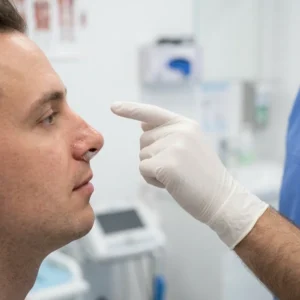
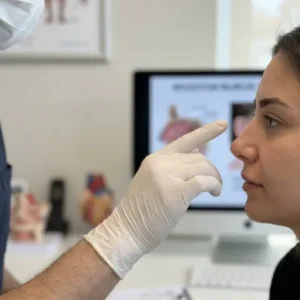
- Nasal Endoscopy: Using a thin, flexible camera, the doctor examines the size, location, and condition of the perforation edges.
- CT Scan: This imaging helps determine the health of the surrounding bone and sinuses, which is crucial for surgical planning.
- Biopsy: If the cause of the perforation is unclear, a small tissue sample may be taken to rule out autoimmune diseases or malignancy.
- Laboratory Tests: Blood work may be ordered to check for inflammatory markers or specific antibodies.
Treatment Options: From Conservative to Surgical
Not every patient requires surgery. The treatment plan is tailored to the severity of the symptoms and the patient’s overall health.
Conservative Management
For those who are not candidates for surgery or have minimal symptoms, conservative measures can provide relief:
* Saline Irrigations: Keeping the nose moist reduces crusting.
* Emollient Ointments: Applying antibiotic or petroleum-based ointments to the edges of the hole prevents drying.
* Nasal Septal Button: This is a medical-grade silicone prosthesis (similar to a large shirt button) that is inserted into the hole. It blocks the whistling and reduces crusting, but it is not a permanent cure and requires regular cleaning.
Surgical Reconstruction (The Gold Standard)
For a permanent solution, surgical closure is required. The most successful techniques involve interposition grafts and sliding mucosal flaps.
* Bilateral Flaps: The specialist creates flaps from the floor of the nose or the upper part of the septum and slides them over the hole. Closing both sides of the hole is vital for success.
* Interposition Grafts: To provide extra support, a piece of tissue (such as temporal fascia, ear cartilage, or a synthetic matrix) is placed between the two mucosal layers. This acts as a scaffold for the new tissue to grow across.
* Endoscopic Repair: For smaller, more posterior holes, advanced endoscopic techniques allow the specialist to work with high precision without external incisions.
* Open Approach: For large perforations, an open rhinoplasty approach may be necessary to gain full access to the septal framework.
For more information on the specific surgical process, visit the Septal Perforation service page.
Why Choose Prof. Dr. Selçuk İnanlı?
Choosing the right surgeon is the most important decision a patient can make. Prof. Dr. Selçuk İnanlı is not just an ENT; he is a Professor with global recognition. His background includes training at Harvard University and board certification from the European Academy of Facial Plastic Surgery.
His approach combines the precision of a surgeon with the eye of an artist. He understands that a Septal Perforation often affects the external appearance of the nose. By addressing both the internal hole and any external saddle nose deformity, he ensures that his patients can breathe well and feel confident in their appearance.
The Importance of Experience in Revision Cases
Many patients come to Dr. İnanlı after failed attempts at closure elsewhere. Revision surgery for septal perforation is significantly more difficult due to scar tissue and depleted donor sites. Dr. İnanlı specializes in these high-stakes cases, often utilizing rib cartilage grafts or complex local flaps to achieve closure where others could not.
The Recovery Process
Recovery from septal perforation surgery requires patience. The first few weeks are critical for the survival of the flaps.
* Internal Splints: Silicone splints are often placed inside the nose for 1–3 weeks to support the flaps and prevent them from shifting.
* Moisture is Key: Patients must use saline sprays and ointments religiously to keep the surgical site from drying out.
* Activity Restrictions: No heavy lifting, nose blowing, or strenuous exercise for at least 4 weeks to avoid pressure on the delicate sutures.
* Follow-up Care: Frequent visits to the Septal Perforation Specialist are necessary to clean the nose and monitor the healing process.
Long-Term Outlook
When performed by a skilled specialist, the success rate for septal perforation repair is high. Success is defined as the complete closure of the hole and the resolution of symptoms like whistling and crusting. Patients often report a significant improvement in their quality of life, as they are no longer burdened by chronic nasal discomfort and can breathe effortlessly through both nostrils.
Conclusion (Natural Ending)
Addressing a septal perforation is a journey that requires expertise, precision, and a deep understanding of nasal physiology. Whether the hole was caused by a previous surgery, trauma, or medical conditions, the primary goal remains the same: restoring the integrity of the nasal airway. By seeking a consultation with a true Septal Perforation Specialist, patients can move past the discomfort of chronic crusting and whistling toward a future of healthy, unobstructed breathing. Prof. Dr. Selçuk İnanlı continues to lead the field in Istanbul, providing world-class care for those facing this complex surgical challenge.
Sıkça Sorulan Sorular
Can a septal perforation heal on its own without surgery?
Generally, a septal perforation cannot heal on its own because the edges of the hole undergo a process called epithelialization, where the skin grows over the edge of the hole, effectively sealing the gap in an open position. Because the nasal septum has a limited blood supply and the cartilage lacks the ability to regenerate across a gap, the hole will either stay the same size or gradually enlarge due to the drying effects of turbulent airflow. While conservative treatments like saline rinses and ointments can manage symptoms, they do not close the hole; only surgical intervention by a specialist can provide a permanent structural repair.
What is the success rate of septal perforation repair surgery?
The success rate of septal perforation repair depends heavily on the size of the hole, its location, and the expertise of the surgeon. Small to medium-sized perforations (under 2 cm) typically have a success rate of 80% to 90% when performed by a Septal Perforation Specialist using advanced flap techniques. Large perforations (over 2 cm) are more challenging because there is less healthy tissue available to bridge the gap. However, with the use of interposition grafts and meticulous surgical planning, even large holes can be successfully closed or significantly reduced in size to eliminate symptoms like whistling and bleeding.
Will my nose shape change after the perforation is repaired?
In many cases, repairing a septal perforation actually improves the external appearance of the nose, especially if the patient has developed a ‘saddle nose deformity’ due to a loss of structural support. During the repair, a specialist may use cartilage grafts to reinforce the bridge of the nose, restoring a more natural and aesthetic profile. If the perforation is small and does not affect the nasal bridge, the surgery is performed entirely inside the nose, meaning there will be no visible change to your external appearance. The primary focus is always on restoring the internal structure, which naturally supports the external shape.
How long is the recovery period after septal perforation surgery?
Recovery from septal perforation repair is a gradual process that requires careful post-operative management. Most patients need to take 1 to 2 weeks off from work or school. During the first 2 to 3 weeks, internal silicone splints are usually kept in the nose to protect the new tissue flaps. Complete healing of the mucosal lining can take 3 to 6 months. During this time, it is crucial to avoid blowing your nose, lifting heavy objects, or engaging in contact sports. Regular follow-up appointments are necessary to ensure the flaps are receiving adequate blood flow and that no new crusting is developing.
Is the surgery for septal perforation repair painful?
The surgery is performed under general anesthesia, so you will not feel any pain during the procedure. Post-operatively, most patients describe the sensation as a feeling of intense pressure or ‘fullness’ rather than sharp pain, similar to a severe cold or sinus infection. This is largely due to the internal splints and swelling. Pain can be effectively managed with prescribed medications. The most significant discomfort for most patients is the inability to breathe through the nose during the first week while the splints are in place, but this resolves quickly once the splints are removed by the doctor.


Değerlendirmeler
Henüz değerlendirme yapılmadı.