
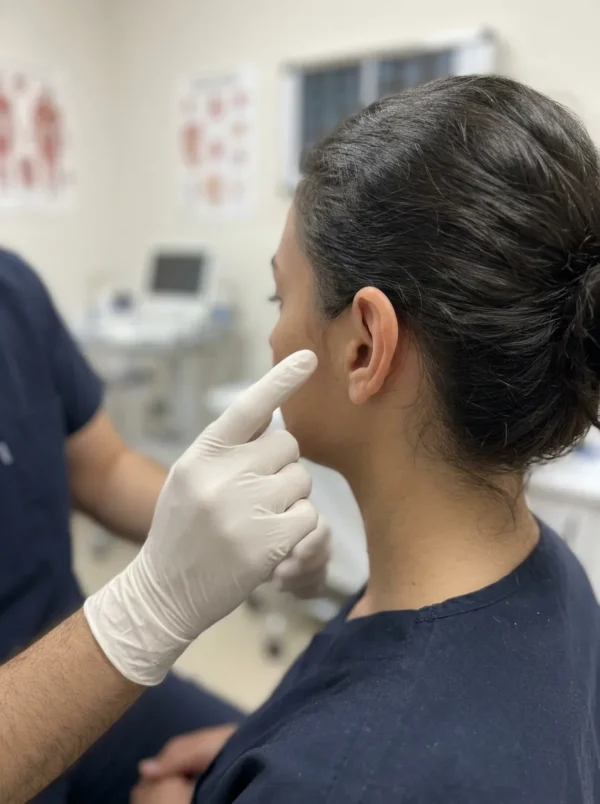


Ear Aesthetics
- Açıklama
- Değerlendirmeler (0)
Açıklama
Comprehensive Guide to Ear Aesthetics: Otoplasty, Recovery, and Artistic Precision
Understanding Ear Aesthetics and Its Impact on Facial Harmony
Understanding Ear Aesthetics and Its Impact on Facial Harmony Get an expert opinion.
Your initial assessment is free.
Ear Aesthetics, scientifically known as otoplasty, is a specialized branch of facial plastic surgery dedicated to improving the shape, position, or proportion of the ear. While the ears may seem like minor features compared to the eyes or nose, they play a critical role in the overall facial harmony and balance. When ears are overly prominent, asymmetrical, or misshapen, they can draw undue attention and lead to significant psychological distress, particularly in children and adolescents.
The goal of modern ear aesthetics is not just to ‘pin back’ the ears but to create a natural look that complements the patient’s unique facial structure. Prof. Dr. Selçuk İnanlı, an expert with decades of experience in facial plastic surgery, emphasizes that the most successful results are those that look unoperated. By meticulously adjusting the auricular cartilage, surgeons can restore a sense of proportion that allows the focus to return to the patient’s more central facial features.
What is Otoplasty? The Science Behind Ear Reshaping
What is Otoplasty? The Science Behind Ear Reshaping Get an expert opinion.
Your initial assessment is free.
If you have ever wondered what is otoplasty and how is it done, it is essential to understand that it is a surgical procedure designed to correct structural deformities. These deformities may be present at birth or become more apparent with development. In some cases, trauma or injury can also necessitate aesthetic intervention.
Otoplasty primarily involves the pinna (the external part of the ear). The procedure can address a variety of issues, including:
- Prominent ears (protruding too far from the head).
- Macrotia (ears that are excessively large).
- Lop ear (where the tip seems to fold down and forward).
- Shell ear (where certain curves or folds of the outer ear are missing).
The surgical process typically involves making an incision behind the ear, where the resulting scar will be well-hidden in the natural crease. Through this incision, the surgeon can reshape the cartilage, remove excess tissue, and use permanent sutures to hold the ear in its new, more aesthetic position.
The Anatomy of the External Ear
The Anatomy of the External Ear Get an expert opinion.
Your initial assessment is free.
To appreciate the complexity of ear aesthetics, one must understand the delicate anatomy of the outer ear. The ear is composed mostly of a single piece of yellow elastic cartilage covered by a thin layer of skin. Key landmarks that a surgeon must consider include:
- The Helix: The prominent outer rim of the ear.
- The Antihelix: The Y-shaped fold of cartilage inside the helix. A lack of this fold is the most common cause of prominent ears.
- The Concha: The deep, bowl-like part of the ear that leads to the ear canal. An overly deep conchal bowl can push the entire ear away from the skull.
- The Tragus: The small, pointed eminence in front of the ear canal.
- The Lobule (Earlobe): The only part of the external ear that does not contain cartilage.
During an otoplasty procedure, the surgeon focuses on recreating the antihelical fold and, if necessary, reducing the size of the conchal bowl. This dual approach ensures that the ear sits at a natural angle (usually between 20 and 35 degrees) relative to the side of the head.
Common Concerns Addressed by Ear Aesthetics
Common Concerns Addressed by Ear Aesthetics Get an expert opinion.
Your initial assessment is free.
Many patients seek prominent ear aesthetics because they feel their ears are the first thing people notice about them. This condition, often colloquially called ‘bat ears,’ occurs when the auriculocephalic angle is greater than normal. However, ear aesthetics encompasses much more than just correcting protrusion.
Microtia and Reconstructive Surgery
Microtia and Reconstructive Surgery Get an expert opinion.
Your initial assessment is free.
Microtia is a congenital condition where the external ear is underdeveloped. This requires a more complex, multi-stage reconstructive approach, often involving rib cartilage grafts or synthetic frameworks to ‘build’ a new ear. While primarily reconstructive, the aesthetic component is vital for the patient’s self-image.
Earlobe Repair and Rejuvenation
Earlobe Repair and Rejuvenation Get an expert opinion.
Your initial assessment is free.
Over time, the earlobes can sag or become torn due to heavy earrings or trauma. Earlobe repair is a quick, in-office procedure that restores the shape of the lobe. Additionally, some patients opt for earlobe rejuvenation using dermal fillers to add volume to thinned or wrinkled lobes, a common sign of aging.
Cryptotia (Hidden Ear)
In cases of cryptotia, the upper part of the ear cartilage is buried under the scalp skin. Surgery involves releasing the cartilage and using skin grafts or local flaps to create a proper retroauricular sulcus (the space behind the ear).
The Psychological Impact of Ear Deformities
The psychological aspect of ear aesthetics cannot be overstated. Unlike many other aesthetic concerns that develop with age, prominent ears are visible from early childhood. Children as young as five or six can become targets for bullying and teasing, which can lead to long-term issues with self-esteem, social withdrawal, and poor school performance.
For adults, the concern often manifests as a lifestyle restriction. Many women with protruding ears feel they must always wear their hair down to hide them, and men may feel self-conscious with short haircuts. Correcting these issues through otoplasty often results in a ‘transformative’ psychological effect, where patients feel a newfound freedom in their personal styling and social interactions.
The Ideal Age for Ear Surgery
Timing is a crucial factor in ear aesthetics. Parents often ask at what age can prominent ear surgery be performed? The general consensus among experts like Prof. Dr. Selçuk İnanlı is that the ears are nearly fully grown (about 85-90%) by the age of five or six.
Performing the surgery at this age is ideal for two reasons:
- Cartilage Pliability: The cartilage is softer and more malleable in young children, making it easier to reshape.
- Psychosocial Benefits: Undergoing the procedure before the child enters primary school can prevent the psychological trauma associated with peer teasing.
However, otoplasty is also very common and successful in adults. While adult cartilage is firmer and less flexible, modern surgical techniques allow for precise and permanent reshaping at any age.
The Otoplasty Procedure: Step-by-Step
1. Pre-Operative Consultation
A thorough consultation is the foundation of a successful outcome. The surgeon evaluates the ear structure, skin quality, and facial symmetry. Photographs are taken, and a surgical plan is tailored to the patient’s specific needs.
2. Anesthesia
For children, general anesthesia is usually recommended to ensure they remain still and comfortable. For teenagers and adults, the procedure can often be performed under local anesthesia with sedation, or ‘twilight anesthesia.’
3. The Incision
The surgeon makes an incision on the back surface of the ear. In some cases, small incisions are made on the front within the folds to hide them. Through these access points, the cartilage is exposed.
4. Reshaping and Suturing
The surgeon may use a combination of techniques:
- Cartilage Sparing: Using permanent internal sutures (like Mustarde sutures) to create the antihelical fold.
- Cartilage Scoring: Thinning the cartilage to make it more pliable.
- Conchal Reduction: Removing a small piece of cartilage from the bowl to bring the entire ear closer to the head.
5. Closing the Incisions
The external incisions are closed with sutures, which may be absorbable or require removal after about a week.
Recovery and Aftercare: Ensuring Lasting Results
The period after otoplasty is critical for the long-term success of the surgery. Immediately following the procedure, a bulky dressing is applied to keep the ears in their new position and protect them from accidental trauma.
Immediate Post-Operative Phase
Patients may experience mild discomfort, swelling, or redness. Pain is typically well-managed with over-the-counter or mild prescription medication. It is vital to keep the head elevated, even while sleeping, to minimize swelling.
The First Month
After the initial bulky dressing is removed (usually within 2–5 days), patients are instructed to wear a soft headband or tennis band. This should be worn 24/7 for the first week and then at night for several weeks. The headband prevents the ears from being pulled forward during sleep and protects the delicate internal sutures while the cartilage heals and ‘sets’ in its new position.
Long-Term Healing
While the initial results are visible as soon as the bandages are removed, the ears will continue to settle over the next 3 to 6 months. Patients should avoid contact sports or activities where the ears might be bent for at least 6-8 weeks.
Potential Risks and Complications
Like any surgical procedure, otoplasty carries some risks. Choosing a board-certified expert like Prof. Dr. Selçuk İnanlı significantly reduces these risks. Potential complications include:
- Asymmetry: While perfect symmetry is rare even in nature, significant differences between the two ears may require a minor revision.
- Over-correction: The ears appearing ‘pinned’ too tightly to the head.
- Suture extrusion: Occasionally, an internal suture may work its way to the surface and need to be removed.
- Hematoma: A collection of blood under the skin, which must be drained promptly to avoid cartilage damage.
Non-Surgical Ear Aesthetics: Ear Molding
For newborns with ear deformities, there is a non-surgical window of opportunity. Because an infant’s cartilage is extremely soft due to maternal estrogen, ear molding systems can be used. If started within the first few weeks of life, these molds can permanently correct prominent ears or misshapen rims without ever needing surgery. This highlights the importance of early screening for congenital ear issues.
Why Choose Prof. Dr. Selçuk İnanlı for Ear Aesthetics?
When considering ear aesthetics, the surgeon’s expertise and artistic vision are paramount. Prof. Dr. Selçuk İnanlı is not only a highly skilled surgeon but also a recognized educator in the field of facial plastic surgery. Having served as a professor and a member of the European Academy of Facial Plastic Surgery (EAFPS), he brings a level of precision and anatomical knowledge that ensures both functional and aesthetic excellence.
His approach to otoplasty is characterized by:
- Personalized Planning: No two ears are the same, and neither are the surgical plans.
- Minimally Invasive Techniques: Prioritizing methods that reduce scarring and speed up recovery.
- Natural Results: Avoiding the ‘operated’ look by maintaining the natural soft curves of the ear.
The Evolution of Ear Surgery Techniques
The history of otoplasty has seen a shift from aggressive cartilage removal to more conservative, ‘cartilage-sparing’ techniques. In the past, surgeons often cut out large pieces of cartilage, which could result in sharp, unnatural edges. Today, the focus is on suture-based techniques and strategic thinning. This allows the ear to retain its natural flexibility and appearance while achieving the desired position.
Furthermore, the use of microsurgical instruments and advanced suturing materials has made the procedure safer and more predictable. Prof. Dr. Selçuk İnanlı stays at the forefront of these advancements, ensuring his patients benefit from the latest innovations in facial plastic surgery.
Preparing for Your Consultation
If you or your child are considering ear aesthetics, preparation is key. During your visit to our clinic in Şişli, Istanbul, be prepared to discuss:
- Your specific goals for the surgery.
- Medical history, including any previous ear infections or surgeries.
- Current medications and any history of scarring issues (like keloids).
We encourage patients to bring photos of ears they find aesthetically pleasing, though it is important to remember that the final result must be in harmony with your own facial proportions.
Ear Aesthetics and the Golden Ratio
In the world of aesthetic surgery, the Golden Ratio often serves as a guide for ideal proportions. For the ears, this involves the relationship between the width and the length of the ear, as well as its position relative to the nose and eyes. A well-positioned ear typically starts at the level of the eyebrow and ends at the level of the base of the nose. By adhering to these classical principles of beauty, Prof. Dr. Selçuk İnanlı creates results that are timeless and balanced.
Taking the Next Step
Ear aesthetics is more than just a cosmetic change; it is a procedure that restores confidence and provides a sense of normalcy. Whether it is for a child facing school-age challenges or an adult seeking to refine their appearance, otoplasty offers a permanent and effective solution.
At the clinic of Prof. Dr. Selçuk İnanlı, we provide a compassionate and professional environment where your aesthetic journey is handled with the highest level of care. From the initial consultation to the final follow-up, our team is dedicated to helping you achieve the look you desire with the safety and expertise you deserve.
Sıkça Sorulan Sorular
Is otoplasty surgery painful for children?
Most children describe the sensation after otoplasty as a feeling of pressure or mild throbbing rather than intense pain. Because the surgery is performed under general anesthesia, they do not feel anything during the procedure. Post-operatively, pain is well-managed with simple pediatric pain relievers. The most ‘uncomfortable’ part for many children is wearing the protective headband, but this is a temporary necessity that ensures the ears heal in the correct position without being disturbed.
How long do the results of ear aesthetic surgery last?
The results of otoplasty are considered permanent. Once the cartilage has been reshaped and the healing process is complete (usually after 3-6 months), the ears will maintain their new position for a lifetime. Unlike procedures involving fillers or Botox, which require maintenance, the structural changes made to the ear cartilage do not ‘wear off.’ However, it is vital to follow all post-operative instructions, such as wearing the headband, to prevent the ears from accidentally being pulled back into their old position during the early healing phase.
Will there be visible scars after prominent ear surgery?
One of the primary concerns for patients is scarring. In a standard otoplasty, the incisions are made on the back surface of the ear, right in the crease where the ear meets the head. This placement makes the scars virtually invisible to others. Over time, these scars fade into thin, faint lines that are difficult to see even upon close inspection. Prof. Dr. Selçuk İnanlı uses meticulous suturing techniques to ensure that the skin heals as smoothly as possible, further minimizing any evidence of surgery.
When can I return to work or school after ear aesthetics?
Most patients can return to sedentary work or school within 5 to 7 days after the procedure. By this time, the initial bulky bandages are removed, and any discomfort has largely subsided. However, it is important to note that a headband must be worn at night for several weeks. Physical education classes, sports, and heavy lifting should be avoided for at least 4 to 6 weeks to prevent any trauma to the ears while the internal sutures are still providing the primary support.
Can otoplasty improve hearing?
Otoplasty is strictly an aesthetic or reconstructive procedure focused on the external part of the ear (the pinna). It does not involve the ear canal, the eardrum, or the middle/inner ear structures responsible for hearing. Therefore, it does not improve or negatively affect a patient’s hearing. If a patient has hearing issues, these must be addressed by an ENT specialist through different diagnostic and therapeutic methods, though both aesthetic and functional ear issues can sometimes be discussed during the same consultation.


Değerlendirmeler
Henüz değerlendirme yapılmadı.