
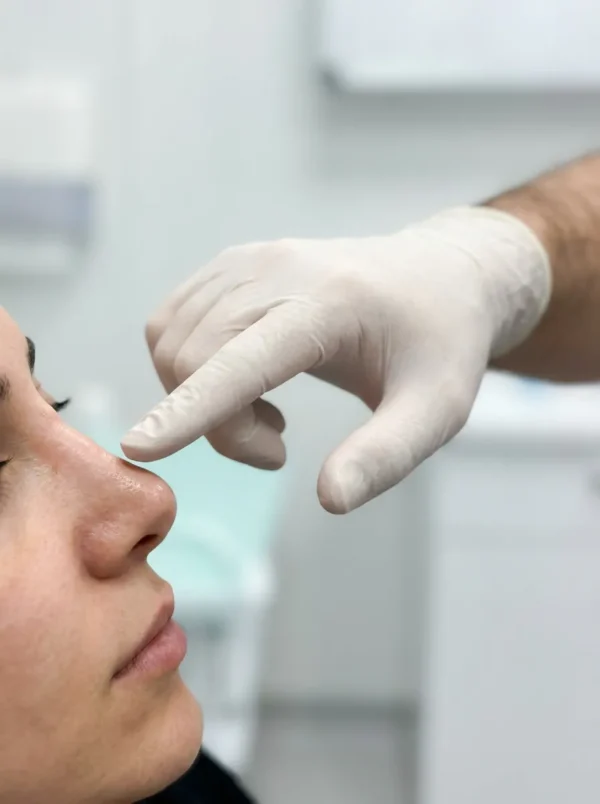


Extensive Rhinoplasty
- Açıklama
- Değerlendirmeler (0)
Açıklama
Extensive Rhinoplasty: Mastering Complexity in Nasal Reconstruction and Aesthetics
The Pinnacle of Facial Plastic Surgery: Understanding Extensive Rhinoplasty
The Pinnacle of Facial Plastic Surgery: Understanding Extensive Rhinoplasty Get an expert opinion.
Your initial assessment is free.
Extensive Rhinoplasty is not merely a cosmetic enhancement; it is a sophisticated surgical endeavor that addresses profound structural, functional, and aesthetic challenges within the nose. Unlike a standard primary rhinoplasty, which might focus on a minor hump or a slight tip refinement, an extensive procedure involves significant reconstruction. This often includes repairing severe trauma, correcting congenital deformities, or performing high-complexity Revision Rhinoplasty where the underlying nasal framework has been compromised.
In the hands of a world-class expert like Prof. Dr. Selçuk İnanlı, extensive rhinoplasty becomes a blend of surgical precision and artistic vision. With decades of experience and a background that includes observation at Harvard University’s Facial Plastic Surgery Department, Dr. İnanlı approaches each case with a deep understanding of both the Ear, Nose, and Throat (ENT) anatomy and the aesthetic nuances required for facial harmony. This article explores the multifaceted world of extensive nasal surgery, detailing the techniques, expectations, and the vital role of structural integrity in achieving a life-changing result.
Defining the Scope of Extensive Rhinoplasty
Defining the Scope of Extensive Rhinoplasty Get an expert opinion.
Your initial assessment is free.
What differentiates an extensive rhinoplasty from a routine one? The answer lies in the degree of manipulation required for the nasal bones, cartilage, and soft tissue. This procedure is typically indicated for patients with:
* Severe Nasal Deviation: Where the entire axis of the nose is shifted, often causing significant breathing obstruction.
* Saddle Nose Deformity: A collapse of the nasal bridge, usually resulting from previous trauma or over-resection in a prior surgery.
* Complex Revision Cases: When a patient has undergone multiple previous surgeries, leading to scar tissue buildup and a lack of natural cartilage for support.
* Congenital Anomalies: Such as cleft lip nasal deformities that require total reconstruction of the nasal base and tip.
* Traumatic Reconstruction: Repairing fractures and displacements caused by high-impact accidents.
In these scenarios, the surgeon cannot simply “file down” the bone. Instead, they must rebuild the nose from the ground up, often utilizing autologous grafts (the patient’s own tissue) to restore height, width, and projection.
The Critical Role of Functional Surgery: Breathing and Structure
The Critical Role of Functional Surgery: Breathing and Structure Get an expert opinion.
Your initial assessment is free.
A beautiful nose is of little value if it does not function correctly. One of the primary pillars of extensive rhinoplasty is the restoration of the airway. Many patients seeking this level of intervention suffer from a deviated septum, turbinate hypertrophy, or internal nasal valve collapse.
During an extensive procedure, Septoplasty is frequently performed in conjunction with aesthetic reshaping. The nasal septum is the central wall of cartilage and bone that divides the nostrils. If this wall is severely crooked, it must be straightened and reinforced. In extensive cases, the septum may even be removed, straightened outside the body (extracorporeal septoplasty), and re-implanted to ensure a clear breathing passage. This functional foundation is what allows for a stable aesthetic outcome over the long term.
Structural Reconstruction: The Use of Grafts
Structural Reconstruction: The Use of Grafts Get an expert opinion.
Your initial assessment is free.
One of the most complex aspects of extensive rhinoplasty is the necessity of grafting. When the natural nasal cartilage is insufficient—either due to genetics or previous surgical removal—the surgeon must harvest cartilage from other parts of the body.
Costal (Rib) Cartilage Grafts
Costal (Rib) Cartilage Grafts Get an expert opinion.
Your initial assessment is free.
Rib cartilage is the gold standard for major reconstructions. It provides a robust and straight source of material that can be carved into spreader grafts, strut grafts, and dorsal onlays. Because it is the patient’s own tissue, the risk of rejection is non-existent, and the long-term stability is excellent. Prof. Dr. Selçuk İnanlı utilizes advanced carving techniques to ensure these grafts do not warp over time, a common concern in less experienced hands.
Conchal (Ear) Cartilage Grafts
Conchal (Ear) Cartilage Grafts Get an expert opinion.
Your initial assessment is free.
For softer refinements, particularly in the nasal tip or the ala (nostrils), cartilage from the ear bowl may be used. While not as strong as rib cartilage, its natural curvature makes it ideal for restoring the contours of the nose tip without leaving visible scars, as the harvest site is hidden behind the ear.
Spreader Grafts and Functional Support
To prevent the middle third of the nose from collapsing—a condition known as inverted V deformity—spreader grafts are placed between the septum and the upper lateral cartilages. This not only maintains the aesthetic “dorsal aesthetic lines” but also keeps the internal nasal valve open, which is the narrowest part of the human airway.
Aesthetic Mastery and the Golden Ratio
While functionality is the foundation, the aesthetic goal of extensive rhinoplasty is to create a nose that looks natural and fits the patient’s unique facial features. This is where the concept of the golden ratio comes into play.
Prof. Dr. Selçuk İnanlı analyzes the face as a whole, considering the relationship between the forehead, the eyes, the lips, and the chin. An extensive surgery often involves changing the nasolabial angle (the angle between the nose and the upper lip) and the nasofrontal angle (the transition from the forehead to the nose). By adhering to these mathematical principles of beauty, the surgeon can ensure that even a majorly reconstructed nose does not look “operated on,” but rather appears as though it always belonged on the patient’s face.
Revision Rhinoplasty: Navigating the Scar Tissue
A significant portion of extensive rhinoplasty cases are actually Revision Rhinoplasty procedures. These are notoriously difficult because the surgeon is dealing with fibrosis (scar tissue), altered anatomy, and often a lack of structural support.
In a revision setting, the surgery is as much about “cleaning up” as it is about “building up.” The surgeon must carefully dissect through layers of scar tissue to identify what remains of the original framework. Often, the previous surgeon may have removed too much bone or cartilage, leading to a pinched tip or a collapsed bridge. The extensive approach requires the use of structural grafting to replace what was lost, ensuring the skin has a solid frame to drape over. This prevents further contraction and deformity as the patient heals over the subsequent years.
Technological Advancements: Piezo and Micrometric Surgery
Modern technology has revolutionized the way extensive rhinoplasty is performed. One of the most significant advancements is Piezo Rhinoplasty.
Traditional methods of breaking or rasping nasal bones involved hammers and chisels, which could cause significant trauma to the surrounding soft tissues, leading to extensive bruising and swelling. The Piezo device uses ultrasonic vibrations to selectively cut bone while leaving blood vessels, nerves, and skin completely unharmed.
In an extensive procedure, where the surgeon might need to perform multiple osteotomies (bone cuts) to straighten a severely crooked nose, the precision of Piezo technology is invaluable. It allows for micrometric accuracy, meaning the surgeon can shape the bone with the delicacy of a sculptor. This leads to:
* Less postoperative pain.
* Reduced bruising and edema (swelling).
* Faster overall recovery times.
* More predictable bone healing.
The Patient Journey: From Consultation to Final Result
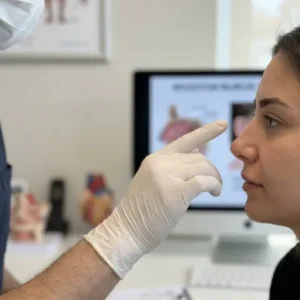
Undergoing an extensive rhinoplasty is a major decision that requires thorough preparation. The process begins with a comprehensive consultation where Prof. Dr. Selçuk İnanlı uses high-resolution imaging and physical examination to map out the surgical plan.
Pre-Operative Planning
Patients are advised to stop smoking and avoid certain medications that can increase bleeding. Because extensive cases take longer in the operating room (often 4 to 6 hours), ensuring the patient is in peak physical health is paramount. Digital simulations may be used to discuss realistic goals, though it is always emphasized that the internal anatomy dictates the final possibility.
The Surgical Experience
Extensive rhinoplasty is performed under general anesthesia. Depending on the complexity, the surgeon may use an open approach, which involves a small incision across the columella (the tissue between the nostrils). This provides maximum visibility, allowing the surgeon to see the structural defects clearly and place grafts with millimetric precision.
The Recovery Phase
Recovery from an extensive procedure is a marathon, not a sprint. While the initial cast and sutures are usually removed within 7 to 10 days, the internal healing continues for much longer.
* Weeks 1-2: Most visible swelling and bruising subside. Patients can usually return to light work.
* Months 1-3: The major swelling disappears, and the patient begins to see the new shape of their nose.
* Months 6-12: The fine details of the nasal tip become more apparent as the skin shrinks to fit the new framework.
* Year 1-2: In extensive and revision cases, final healing can take up to two years, especially if rib grafts were used or if the skin is particularly thick.
The Importance of Skin Quality in Extensive Cases
The skin is the final “envelope” that covers the surgical work. In extensive rhinoplasty, skin thickness plays a massive role in the outcome. Patients with very thick skin may find that it takes much longer for the definition of the grafts to show through the swelling. Conversely, patients with very thin skin require the surgeon to be incredibly precise, as any minor irregularity in the underlying bone or cartilage will be visible. In some cases, the surgeon may use temporalis fascia (tissue from the temple) or diced cartilage in fascia (DCF) to provide a smooth transition and a layer of cushioning under the skin.
Psychological Impact of Nasal Reconstruction
The nose is the central feature of the face, and its appearance is deeply tied to self-esteem and identity. For patients who have lived with a severe deformity or a “failed” previous surgery, the psychological burden can be heavy.
Extensive rhinoplasty often provides a profound sense of relief. It is not just about vanity; it is about feeling “normal” and being able to breathe without effort. Prof. Dr. Selçuk İnanlı and his team prioritize patient communication, ensuring that expectations are managed and that the patient feels supported throughout the emotional ups and downs of the long recovery process.
Why Choose Istanbul for Your Procedure?
Istanbul has emerged as the global capital for complex rhinoplasty. This is due to the high volume of cases handled by specialists here, leading to an unparalleled level of expertise. Prof. Dr. Selçuk İnanlı’s clinic in Fulya, Şişli, attracts patients from across the globe who require more than just a standard nose job.
The combination of world-class medical facilities, advanced technology like Piezo surgery, and the artistic heritage of the region makes it the ideal destination for those seeking the best possible outcome for their extensive nasal reconstruction.
Long-Term Success and Stability
The hallmark of a successful extensive rhinoplasty is longevity. A nose that looks good at six months but collapses at three years is a surgical failure. By using structural grafting and focusing on the mechanical integrity of the nasal tripod, Dr. İnanlı ensures that the nose remains stable for decades. This involves reinforcing the lateral crura (the sides of the tip) and ensuring the septal support is anchored firmly to the maxillary bone.
When these principles are followed, the patient can enjoy both the aesthetic beauty and the functional freedom of their new nose for the rest of their life. The journey through extensive rhinoplasty is complex and requires patience, but the results—a harmonious face and a clear airway—are truly transformative.
Sıkça Sorulan Sorular
What exactly defines a rhinoplasty as ‘extensive’ compared to a standard one?
An extensive rhinoplasty involves significant structural changes rather than just minor cosmetic refinements. It typically requires the use of extra-nasal grafts, such as rib or ear cartilage, to rebuild a collapsed or severely deviated framework. These cases often include complex revision surgeries, repair of major traumatic injuries, or correction of congenital deformities. Because the surgeon must manipulate bone, cartilage, and soft tissue on a much larger scale, the procedure takes longer and requires a higher level of expertise in both functional ENT surgery and aesthetic plastic surgery.
How long is the recovery period for an extensive rhinoplasty procedure?
While the initial recovery—including the removal of the cast and the fading of major bruising—takes about 7 to 10 days, the full healing process for extensive cases is longer than standard ones. Because of the significant structural work and potential use of grafts, internal swelling can persist for a significant amount of time. Patients will see about 70-80% of their result within three months, but the final refinement, especially at the nasal tip, can take between 12 to 24 months to fully stabilize and for the skin to shrink-wrap over the new structure.
Is it always necessary to use rib cartilage in an extensive rhinoplasty?
Not always, but rib cartilage is often the preferred choice when the patient’s own septal cartilage is missing or too weak to provide the necessary support. In many revision cases or severe ‘saddle nose’ deformities, the rib provides a plentiful and strong source of material to create spreader grafts, dorsal onlays, and columellar struts. If the required reconstruction is less severe, ear cartilage or processed donor tissue might be used, but autologous rib cartilage remains the gold standard for long-term structural stability in complex reconstructions.
Can extensive rhinoplasty fix chronic breathing problems?
Yes, improving nasal function is a primary goal of extensive rhinoplasty. These procedures often involve correcting a severely deviated septum (Septoplasty), reducing enlarged turbinates, and reinforcing collapsed nasal valves. By rebuilding the internal framework, the surgeon can widen the airway and ensure that the patient can breathe comfortably through their nose. This functional correction is integrated into the aesthetic plan to ensure that the nose not only looks better but works significantly better than before.
Why should I choose a surgeon with an ENT background for this surgery?
A surgeon who is also an Ear, Nose, and Throat (ENT) specialist, like Prof. Dr. Selçuk İnanlı, has an intimate understanding of the internal anatomy and physiology of the nose. Extensive rhinoplasty is not just about the external appearance; it is about maintaining the health of the sinus cavities and the efficiency of the airway. An ENT-trained plastic surgeon is uniquely qualified to handle the complexities of the nasal septum and valves, ensuring that the aesthetic changes do not compromise the patient’s ability to breathe, which is a common risk in complex surgeries.

Değerlendirmeler
Henüz değerlendirme yapılmadı.