
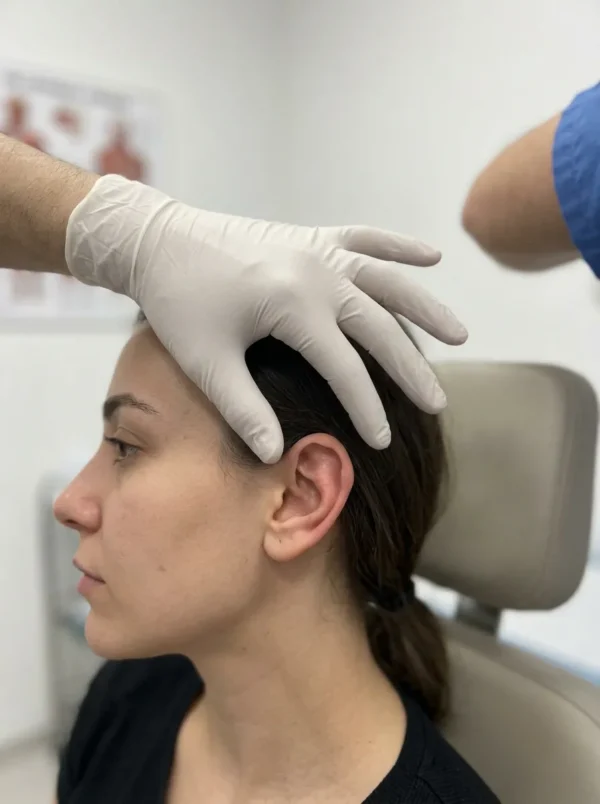



Ear Cartilage Correction
- Açıklama
- Değerlendirmeler (0)
Açıklama
Ear Cartilage Correction: A Comprehensive Guide to Otoplasty and Aesthetic Ear Reshaping
The Science and Art of Ear Cartilage Correction
The Science and Art of Ear Cartilage Correction Get an expert opinion.
Your initial assessment is free.
Ear cartilage correction, medically referred to as otoplasty or ear reshaping, is a specialized surgical procedure designed to modify the size, shape, and position of the ears. For many individuals, the ears are a source of significant self-consciousness, particularly when they are prominent, asymmetrical, or misshapen due to congenital factors or trauma. This procedure is not merely about aesthetics; it is a blend of precise medical science and artistic vision, aimed at creating a harmonious facial profile.
In the hands of an experienced specialist like Prof. Dr. Selçuk İnanlı, who is a member of the European Academy of Facial Plastic Surgery (EAFPS), ear cartilage correction becomes a transformative experience. The complexity of the ear’s structure, consisting primarily of intricate folds of auricular cartilage, requires a deep understanding of both anatomy and the long-term behavior of living tissues. Whether addressing a lack of the antihelical fold or reducing an overdeveloped conchal bowl, the goal is always to achieve a result that looks entirely natural and remains stable for a lifetime.
Understanding Auricular Anatomy
Understanding Auricular Anatomy Get an expert opinion.
Your initial assessment is free.
To appreciate the nuances of ear cartilage correction, one must first understand the anatomy of the external ear, known as the pinna or auricle. The ear is composed of a single, continuous piece of elastic cartilage covered by a thin layer of skin. Unlike other parts of the body where bone provides the framework, the ear relies entirely on the structural integrity and shape of this cartilage.
Key landmarks include the helix (the outer rim), the antihelix (the inner curved fold), and the tragus (the small prominence in front of the ear canal). The concha is the bowl-like depression that leads to the ear canal. In cases where the ear appears to stick out, it is often because the antihelix is flat or the conchal cartilage is excessively large. Correcting these specific anatomical variations is the primary focus of otoplasty ear correction surgery. By strategically weakening, folding, or removing portions of this cartilage, a surgeon can reposition the ear closer to the head and redefine its contours.
Common Reasons for Seeking Ear Cartilage Correction
Common Reasons for Seeking Ear Cartilage Correction Get an expert opinion.
Your initial assessment is free.
There are numerous reasons why patients, both children and adults, seek surgical intervention for their ears. While the most common reason is the aesthetic concern of prominent ears, other functional and reconstructive needs often arise.
Prominent and Protruding Ears
Prominent and Protruding Ears Get an expert opinion.
Your initial assessment is free.
Prominent ears, often called “bat ears,” occur when the ears sit more than 2 centimeters away from the side of the head. This is usually caused by a failure of the antihelical fold to develop properly during gestation or an overgrowth of the conchal cartilage. For children, this condition can lead to psychological distress and bullying. Understanding what you need to know about prominent ear aesthetics is crucial for parents deciding when to intervene. Surgery is typically recommended after the age of 5 or 6, once the ear has reached approximately 85-90% of its adult size.
Asymmetry and Congenital Deformities
Asymmetry and Congenital Deformities Get an expert opinion.
Your initial assessment is free.
No two ears are perfectly identical, but significant asymmetry can be distracting. Ear cartilage correction can address cases where one ear is noticeably different in shape or position than the other. Beyond asymmetry, congenital conditions such as Stahl’s ear (a pointed appearance), cryptotia (the top of the ear is hidden under the scalp skin), and microtia (underdeveloped ear) require advanced reconstructive techniques. In these instances, the surgeon may need to use cartilage grafts from other parts of the body, such as the ribs, to rebuild the ear’s framework.
Traumatic Injuries and Revision
Traumatic Injuries and Revision Get an expert opinion.
Your initial assessment is free.
Trauma to the ear, such as lacerations or “cauliflower ear” common in contact sports, can severely distort the cartilage. Over time, untreated hematomas can lead to the formation of new, irregular cartilage, causing permanent deformity. Furthermore, some patients seek revision otoplasty if a previous surgery resulted in over-correction (the “pinned back” look) or if the ears have returned to their original position. Prof. Dr. Selçuk İnanlı specializes in these complex cases, utilizing his extensive experience in Revision Rinoplasti and facial reconstruction to restore natural aesthetics.
The Surgical Process: Techniques in Cartilage Reshaping
The methodology of ear cartilage correction has evolved significantly over the decades. Modern techniques focus on being “cartilage-sparing,” meaning they aim to reshape the cartilage rather than simply removing large sections of it. This approach minimizes scarring and prevents the sharp, unnatural edges often seen in older surgical methods.
Cartilage Scoring and Weakening
One of the most effective ways to reshape the ear is through cartilage scoring. Cartilage has an inherent “memory” or springiness. By making microscopic incisions on one side of the cartilage, the surgeon can break this tension, allowing the cartilage to bend naturally into a new shape. This technique is frequently used to create a soft, rounded antihelical fold.
Permanent Suturing (Mustarde and Furnas Techniques)
To hold the newly shaped cartilage in place, surgeons use permanent, non-absorbable sutures. The Mustarde technique involves placing sutures to create the antihelical fold, while the Furnas technique uses sutures to pull the conchal bowl closer to the mastoid bone (the bone behind the ear). These sutures act as an internal scaffold, providing the necessary support while the body’s natural healing process stabilizes the new position. Many patients ask, is prominent ear surgery painful? Generally, the discomfort is well-managed with standard pain relief, and the use of these precise suturing techniques reduces trauma to the surrounding tissues.
Conchal Resection
In cases where the conchal bowl is excessively deep, a small crescent-shaped piece of cartilage may be removed. This is done through an incision hidden in the natural crease behind the ear, ensuring that the scar is virtually invisible. By reducing the volume of the concha, the entire ear can sit more flush against the head without looking distorted.
Psychological Impact and Timing
The psychological benefits of ear cartilage correction cannot be overstated. For many, the ears are a source of lifelong insecurity. Studies have shown that correcting prominent ears can lead to a significant increase in self-esteem and social confidence, particularly in school-aged children.
When considering the procedure, timing is essential. Determining what age you can get otoplasty surgery involves assessing both physical development and emotional maturity. While the surgery is common in children, many adults undergo the procedure later in life, often expressing regret that they did not do it sooner. Adult cartilage is less pliable than that of a child, but modern surgical techniques are highly effective across all age groups.
The Recovery Journey: What to Expect
Recovery from ear cartilage correction is a gradual process that requires patience and adherence to post-operative instructions. Immediately following the surgery, a bulky dressing is applied to protect the ears and maintain their new position.
The First Week
During the first few days, patients may experience mild swelling, bruising, and a sensation of numbness. It is crucial to keep the head elevated and avoid any pressure on the ears. The initial dressing is usually removed within 3 to 7 days, revealing the preliminary results. While the ears will appear swollen at this stage, the change in position is immediately apparent.
Short-Term Protection
After the large dressing is removed, patients are typically required to wear a soft headband, especially at night. This prevents the ears from being accidentally pulled forward during sleep. Most children can return to school within a week, provided they avoid strenuous physical activity and contact sports. Adults often return to work within a few days, depending on their comfort level.
Long-Term Results and Stability
While the primary healing occurs within the first month, the cartilage continues to settle and the scars continue to fade for up to a year. Because the incisions are placed behind the ear or within natural folds, they become nearly impossible to detect over time. The results of ear cartilage correction are permanent; once the cartilage has healed in its new position, it will not return to its original shape.
Why Choose Prof. Dr. Selçuk İnanlı?
Selecting a surgeon for ear cartilage correction is a decision that impacts both your appearance and your health. Prof. Dr. Selçuk İnanlı brings over 30 years of experience to the field of plastic surgery. His background as an ENT (Ear, Nose, and Throat) specialist, combined with his sub-specialization in Yüz Plastik Cerrahisi (Facial Plastic Surgery), provides him with a unique perspective on both the form and function of the ear.
As a professor who has observed and practiced at prestigious institutions like Harvard University, Dr. İnanlı utilizes the most advanced micrometric and cartilage-sparing techniques. His clinic in Fulya, Şişli, is a center of excellence for patients seeking natural-looking results in rhinoplasty, facelift, and otoplasty. Choosing a surgeon who is board-certified by the EAFPS ensures that you are receiving care that meets the highest international standards of safety and aesthetic quality.
The Future of Ear Aesthetics
As surgical techniques continue to refine, the focus of ear cartilage correction is shifting toward even less invasive methods. Techniques such as incisionless otoplasty, which uses needles to place sutures through the skin, are being explored for specific cases. However, for the majority of patients, the traditional open approach remains the gold standard due to its reliability and the surgeon’s ability to directly visualize and reshape the cartilage framework.
Whether you are a parent seeking to protect your child from social hardship or an adult looking to finally achieve the facial harmony you’ve always desired, ear cartilage correction offers a safe, effective, and permanent solution. By combining medical expertise with an artistic eye, surgeons like Prof. Dr. Selçuk İnanlı continue to redefine what is possible in facial plastic surgery, helping patients look and feel their absolute best.
Sıkça Sorulan Sorular
What is the ideal age for a child to undergo ear cartilage correction?
The ideal age for ear cartilage correction, or otoplasty, is typically between 5 and 6 years old. By this age, the ear cartilage has reached about 90% of its adult size and is sufficiently developed to hold sutures, yet it remains pliable enough for easy reshaping. Performing the surgery before a child enters primary school can prevent the psychological distress and potential bullying associated with prominent ears. However, it is important that the child is emotionally ready and able to follow basic post-operative instructions, such as wearing a protective headband.
Are the results of ear cartilage correction permanent, or can the ears ‘spring back’?
The results of ear cartilage correction are considered permanent. During the procedure, the surgeon uses permanent internal sutures and sometimes techniques like cartilage scoring to break the cartilage’s ‘memory’ and hold it in its new position. Once the healing process is complete—usually within a few months—the body creates its own fibrous tissue that maintains the shape. While there is a very small risk (less than 5%) of partial recurrence if a suture breaks or if there is trauma during the early healing phase, the vast majority of patients enjoy lifelong results.
Will there be visible scarring after the ear reshaping surgery?
One of the primary concerns for patients is scarring; however, in a professionally performed ear cartilage correction, scars are virtually invisible. The surgical incisions are strategically placed in the natural crease behind the ear (the postauricular sulcus) or occasionally within the inner folds of the ear’s front surface. Because these areas are naturally hidden, the resulting thin, linear scars are not noticeable to others. Over time, these scars fade from pink to a faint white line that blends in with the surrounding skin.
How long is the recovery period before I can return to normal activities?
Most patients can return to sedentary activities, such as school or office work, within 5 to 7 days after the procedure. A protective headband must be worn 24/7 for the first week, and then only at night for an additional 3 to 6 weeks to protect the ears during sleep. Strenuous exercise, heavy lifting, and contact sports should be avoided for at least 4 to 6 weeks to ensure the cartilage is fully stable and to prevent any accidental trauma to the surgical site. Swelling and redness usually subside significantly within the first two weeks.
Can ear cartilage correction improve hearing or is it strictly cosmetic?
Ear cartilage correction (otoplasty) is strictly an aesthetic and reconstructive procedure; it does not improve or change the patient’s hearing. The surgery focuses on the external ear (the pinna), while the mechanisms for hearing are located in the middle and inner ear. However, by repositioning the ear or opening up a constricted conchal bowl, the procedure can sometimes make it easier to wear hearing aids or earphones. If a patient has hearing loss, this would need to be addressed by an audiologist or an ENT specialist through different medical interventions.


Değerlendirmeler
Henüz değerlendirme yapılmadı.