
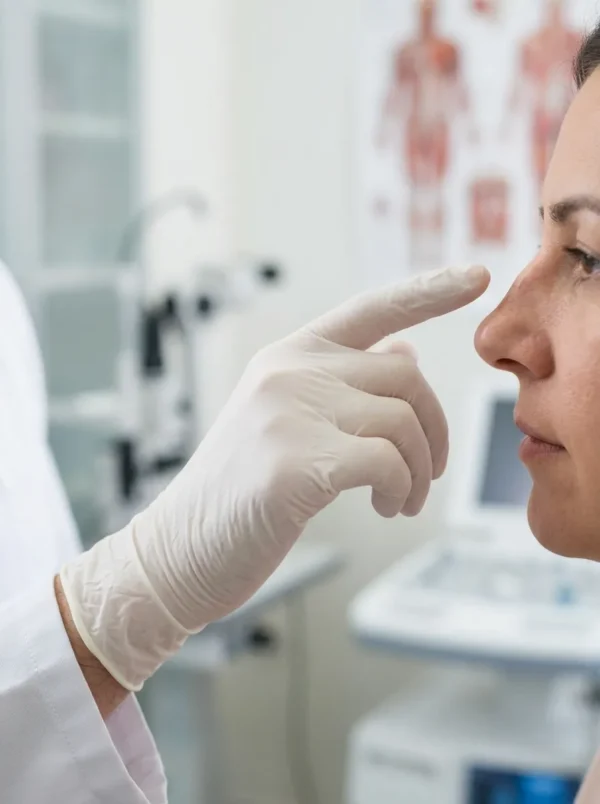


Deviation
- Açıklama
- Değerlendirmeler (0)
Açıklama
Comprehensive Guide to Nasal Deviation: Symptoms, Diagnosis, and Advanced Surgical Solutions
Understanding Nasal Deviation and Its Impact on Health
Understanding Nasal Deviation and Its Impact on Health Get an expert opinion.
Your initial assessment is free.
Nasal deviation, specifically known as nasal septum deviation, is a common anatomical condition where the thin wall (the septum) between your nostrils is displaced to one side. In many people, the nasal septum is slightly off-center, but when the deviation is severe, it can block one side of the nose and reduce airflow, causing significant difficulty in breathing. This condition is not merely a cosmetic concern; it is a functional impairment that affects the overall quality of life, sleep patterns, and respiratory health.
The nasal septum is composed of both bone and cartilage. It serves as the primary support structure for the bridge of the nose and ensures that air is distributed evenly through the nasal passages. When a deviation occurs, the unequal distribution of air leads to a variety of physiological issues. For some, the condition is present from birth (congenital), while for others, it is the result of a physical injury or trauma to the face. Regardless of the cause, understanding the nuances of this condition is the first step toward effective treatment.
The Anatomy of the Nasal Septum
The Anatomy of the Nasal Septum Get an expert opinion.
Your initial assessment is free.
To appreciate the complexity of deviation, one must understand the anatomy of the nose. The septum consists of three main parts: the vomer bone, the perpendicular plate of the ethmoid bone, and the quadrangular cartilage. These components must align perfectly to maintain two symmetrical nasal cavities. When they are misaligned, the body often compensates through a process called turbinate hypertrophy.
Turbinates are structures inside the nose that humidify and warm the air we breathe. When one side of the nose is narrowed due to a deviation, the turbinates on the opposite side often enlarge to try and regulate airflow. This paradoxically results in both sides of the nose feeling congested. Patients often report a sensation of “switching” congestion, which is a classic sign of a deviated septum combined with compensatory turbinate growth.
Types of Septal Deviation
Types of Septal Deviation Get an expert opinion.
Your initial assessment is free.
Not all deviations are the same. Specialists like Prof. Dr. Selçuk İnanlı categorize them based on their shape and location:
- C-shaped Deviation: The septum curves to one side, obstructing one nostril while leaving the other wide.
- S-shaped Deviation: The septum curves in a way that obstructs both nostrils at different depths, often the most complex to repair.
- Septal Spurs: Small, sharp shelf-like protrusions of bone or cartilage that can poke into the sensitive lining of the nasal wall, causing localized pain and frequent nosebleeds.
- Caudal Deviation: This occurs at the very tip of the nose, where the cartilage tilts into one nostril, often causing visible asymmetry of the nasal tip.
Symptoms and Complications of Untreated Deviation
Symptoms and Complications of Untreated Deviation Get an expert opinion.
Your initial assessment is free.
The primary symptom of a deviated septum is nasal congestion, but the secondary effects can be much more debilitating. Chronic mouth breathing is a common consequence, which leads to a dry mouth, sore throat, and an increased risk of dental issues. When the nasal passages are restricted, the body cannot filter or humidify air effectively, leading to a higher incidence of upper respiratory infections.
Breathing Difficulties and Sleep Apnea
Breathing Difficulties and Sleep Apnea Get an expert opinion.
Your initial assessment is free.
One of the most serious complications is the link between deviation and sleep disorders. If you are struggling with insufficient breathing causes, it is highly likely that your sleep quality is suffering. A deviated septum can contribute to obstructive sleep apnea (OSA) or chronic snoring. During sleep, the narrow airway becomes even more restricted as muscles relax, leading to interrupted breathing patterns and daytime fatigue.
Chronic Sinusitis and Headaches
Chronic Sinusitis and Headaches Get an expert opinion.
Your initial assessment is free.
A misaligned septum can interfere with the drainage of the sinuses. When mucus cannot exit the sinus cavities freely, it becomes a breeding ground for bacteria, leading to chronic sinusitis. Furthermore, the pressure exerted by a deviated septum against the lateral nasal wall can trigger rhinogenic headaches, which are often misdiagnosed as migraines or tension headaches.
Causes of Nasal Septum Deviation
There are two primary pathways through which a person develops a deviation:
Congenital Factors
In some cases, the deviation occurs during fetal development and is apparent at birth. Sometimes the pressure of the birth canal during delivery can also cause a slight shift in the nasal structures of a newborn. As the child grows, the deviation may become more pronounced as the bone and cartilage develop at different rates.
Trauma and Injury
Physical trauma is the most common cause of acquired deviation. This can happen during contact sports, car accidents, or simple falls. Even an injury that occurred in childhood and was forgotten can manifest as a severe breathing problem in adulthood. Because the nose is the most prominent feature of the face, it is highly susceptible to fractures. If a nasal fracture is not set correctly, the septum will heal in a crooked position.
Diagnosis: How Specialists Evaluate the Nose
When you visit a clinic for a suspected deviation, a comprehensive evaluation is required. Prof. Dr. Selçuk İnanlı, an expert in both the functional and aesthetic aspects of the nose, utilizes advanced diagnostic tools to ensure an accurate assessment. The process typically includes:
* Nasal Endoscopy: A thin, flexible tube with a camera (endoscope) is inserted into the nostrils to view the internal structures of the nose in high definition. This allows the doctor to see the exact point of obstruction and the state of the turbinates.
* Physical Examination: The doctor will check the external symmetry of the nose and the strength of the nasal valves.
* Imaging (CT Scan): In complex cases, especially those involving chronic sinusitis, a CT scan of the paranasal sinuses provides a detailed map of the bone and soft tissue structures.
Septoplasty: The Gold Standard Treatment
The only definitive way to correct a deviated septum is through a surgical procedure called Septoplasty. Unlike Rhinoplasty, which focuses on the external appearance, a septoplasty is a functional surgery performed entirely through the nostrils to straighten the internal wall.
The Procedure Explained
During a Septoplasty, the surgeon makes an incision inside the nose to lift the mucosa (the protective lining) away from the bone and cartilage. The deviated portions of the cartilage or bone are then reshaped, repositioned, or in some cases, removed. Once the septum is straightened, the mucosa is laid back down and secured with sutures or internal splints.
For many patients, the Septoplasty procedure and recovery is a life-changing event. The surgery is typically performed under general anesthesia and takes between 30 to 90 minutes depending on the complexity. Because the incisions are internal, there are no visible scars on the face.
Combining Septoplasty with Other Procedures
It is very common for patients to have both a functional and an aesthetic issue. In such cases, a Septorhinoplasty is performed. This combined approach addresses the internal deviation while also refining the external shape of the nose. Understanding the differences between rhinoplasty and septoplasty is crucial for setting realistic expectations. While septoplasty fixes the “engine” (breathing), rhinoplasty fixes the “bodywork” (appearance).
Additionally, if the patient suffers from enlarged turbinates, a turbinoplasty or radiofrequency turbinate reduction may be performed simultaneously to ensure the widest possible airway.
Recovery and Aftercare Following Deviation Surgery
The success of a Septoplasty depends heavily on the post-operative care. While the surgery itself is relatively quick, the internal tissues need time to stabilize in their new, straight position. Understanding the recovery period of septoplasty is essential for a smooth transition back to daily life.
Immediate Post-Op Period
Immediately after surgery, patients may have internal splints or soft packing inside the nose. These are used to support the septum and prevent bleeding. While these are in place, you will need to breathe through your mouth. Most modern techniques, including those favored by Prof. Dr. Selçuk İnanlı, utilize silicone splints with built-in airways to allow some level of nasal breathing even during the first few days.
Long-term Healing Tips
- Elevation: Keep your head elevated, even while sleeping, for at least the first week to minimize swelling.
- No Nose Blowing: You must avoid blowing your nose for at least two weeks. Instead, use saline sprays to gently clear the passages.
- Avoid Strenuous Activity: Heavy lifting and intense exercise can increase blood pressure and cause nosebleeds. Stick to light walking for the first 14 days.
- Protect the Nose: Be extremely careful when dressing or moving around to avoid any accidental bumps to the nose.
The Role of Piezo Technology in Deviation Correction
In modern surgical practice, Piezo (Ultrasonic) Rhinoplasty and Septoplasty have revolutionized how we treat deviation. Traditional methods involve using hammers and chisels to break bone, which can cause significant trauma to surrounding soft tissues. Piezo technology uses ultrasonic vibrations to precisely cut and shape bone without damaging the skin, nerves, or blood vessels. This results in less bruising, less swelling, and a faster recovery for the patient.
Why Expert Intervention is Essential
The nose is a delicate organ where millimeters make a difference. A failed or poorly executed Septoplasty can lead to a condition called septal perforation (a hole in the septum) or a “saddle nose” deformity if too much support is removed. Choosing a surgeon with extensive experience, such as a Board-Certified ENT specialist, ensures that both the structural integrity and the functional capacity of the nose are preserved.
Prof. Dr. Selçuk İnanlı brings decades of experience, including specialized training at Harvard University and recognition by the European Academy of Facial Plastic Surgery (EAFPS). His approach combines the precision of an ENT surgeon with the artistic vision of a plastic surgeon, ensuring that patients achieve the best possible respiratory and aesthetic outcomes.
Living Without Nasal Obstruction
The benefits of correcting a deviation extend far beyond just “breathing better.” Patients often report a significant boost in energy levels because their bodies are finally receiving adequate oxygenation during the day and night. Athletic performance often improves, as nasal breathing is more efficient than mouth breathing during physical exertion. Furthermore, the reduction in chronic headaches and sinus infections leads to fewer sick days and a more active social life.
If you find yourself constantly reaching for nasal decongestant sprays or struggling to get a restful night’s sleep, it is time to investigate whether a deviated septum is the root cause. Modern medicine offers safe, effective, and minimally invasive ways to straighten the path to better health.
Addressing a deviation is an investment in your long-term well-being. By restoring the natural symmetry of your nasal passages, you are not just fixing a physical curve; you are opening the door to a healthier, more vibrant life. Whether through a standalone Septoplasty or a comprehensive Septorhinoplasty, the goal is a nose that functions as beautifully as it looks.
Sıkça Sorulan Sorular
Can a deviated septum get worse over time?
While the physical structure of a deviated septum doesn’t technically ‘grow’ more crooked, the symptoms often worsen as you age. This is due to the natural changes in nasal tissues, such as the loss of skin elasticity and the weakening of nasal cartilage, which can make a previously manageable deviation much more obstructive. Additionally, the compensatory growth of turbinates (turbinate hypertrophy) continues over time, further narrowing the airway and making breathing increasingly difficult as the years pass.
Is Septoplasty surgery painful?
Most patients are surprised to find that Septoplasty is not a particularly painful procedure. Because it is performed under general anesthesia, you feel nothing during the surgery. Post-operatively, rather than sharp pain, most people describe a sensation of pressure, congestion, and a ‘fullness’ similar to a heavy cold. Prescription or over-the-counter pain relievers are usually sufficient to manage any discomfort during the first few days, and the removal of internal splints typically brings immediate relief.
Will my insurance cover the cost of deviation surgery?
In many cases, yes. Because a deviated septum is a functional medical condition that impairs breathing and can lead to chronic health issues like sleep apnea or sinusitis, Septoplasty is often considered medically necessary. However, if you choose to combine the procedure with a cosmetic Rhinoplasty to change the external appearance of your nose, the aesthetic portion of the surgery is typically not covered. It is important to consult with your insurance provider and your surgeon to understand the specific coverage details.
How long do I need to take off work after a Septoplasty?
Most patients can return to a sedentary office job within 7 to 10 days following a Septoplasty. By this time, the initial swelling has subsided, and any internal splints are usually removed. However, if your job involves heavy physical labor, lifting, or a high risk of facial impact, you may need to wait 3 to 4 weeks before returning to full duties. It is vital to follow your surgeon’s specific timeline to ensure the septum heals in its new, straightened position without complications.
Can a deviated septum cause visible facial asymmetry?
Yes, a severe deviation can affect the external appearance of the nose. A ‘caudal’ deviation, which occurs at the front of the septum, can cause the tip of the nose to tilt to one side or make one nostril look significantly larger than the other. Additionally, if the bridge of the nose is involved in the deviation, the entire nose may appear crooked or ‘C-shaped’ from a front view. In these cases, a Septorhinoplasty is usually recommended to correct both the internal breathing path and the external symmetry.




Değerlendirmeler
Henüz değerlendirme yapılmadı.