


Failed Rhinoplasty Correction
- Açıklama
- Değerlendirmeler (0)
Açıklama
Failed Rhinoplasty Correction: The Ultimate Guide to Revision Surgery
Understanding Failed Rhinoplasty Correction
Understanding Failed Rhinoplasty Correction Get an expert opinion.
Your initial assessment is free.
A failed rhinoplasty is one of the most emotionally and physically taxing experiences a patient can undergo. Rhinoplasty is widely considered the most complex of all aesthetic surgeries because the nose is a three-dimensional structure located in the center of the face, where even a single millimeter of change can drastically alter the overall appearance. When the initial surgery does not meet the patient’s expectations—either due to aesthetic dissatisfaction or functional breathing issues—a Revision Rhinoplasty becomes necessary.
Failed rhinoplasty correction, also known as secondary or tertiary rhinoplasty, is a specialized procedure aimed at repairing the damage from previous operations. It requires a surgeon with an extraordinary level of expertise, a deep understanding of nasal anatomy, and the artistic vision to restore harmony to the face. Prof. Dr. Selçuk İnanlı, with his extensive background in Otorhinolaryngology and Facial Plastic Surgery, specializes in these high-stakes corrections, helping patients regain their confidence and their health.
Why Does Rhinoplasty Fail?
Why Does Rhinoplasty Fail? Get an expert opinion.
Your initial assessment is free.
There are numerous reasons why a primary nose job might result in a failure. These reasons are generally categorized into surgical technique errors, unpredictable healing processes, and patient-specific factors.
Surgical Technique Errors
Surgical Technique Errors Get an expert opinion.
Your initial assessment is free.
In many cases, the primary surgeon may have been overly aggressive or, conversely, too conservative. Over-resection of the nasal bridge can lead to a “saddle nose” deformity, while removing too much cartilage from the tip can cause the nose to collapse or look pinched. On the other hand, under-resection might leave a residual hump or a tip that remains too bulbous. Understanding the Reasons for Needing Revision Rhinoplasty is the first step toward a successful correction.
Healing and Scar Tissue
Healing and Scar Tissue Get an expert opinion.
Your initial assessment is free.
The body’s response to surgery is not always predictable. Some patients develop excessive scar tissue (fibrosis), which can distort the new shape of the nose. In other cases, the cartilage may warp or shift during the months following the procedure. This is why surgeons emphasize that the final result of a rhinoplasty isn’t truly visible until at least one year has passed.
Functional Complications
Functional Complications Get an expert opinion.
Your initial assessment is free.
A beautiful nose is useless if it doesn’t function properly. Many failed rhinoplasties result in nasal valve collapse or a worsened deviated septum, leading to chronic breathing difficulties. A successful correction must address these internal structures to ensure the patient can breathe freely.
The Complexity of Revision Surgery
The Complexity of Revision Surgery Get an expert opinion.
Your initial assessment is free.
Correcting a failed nose job is significantly more difficult than the primary surgery. The surgeon is no longer working with pristine anatomy; instead, they must navigate scar tissue, weakened cartilage, and often a lack of structural support. This is why it is critical to consult a specialist like Prof. Dr. Selçuk İnanlı, who has the experience to handle the “surprises” that often arise once the surgery begins.
The Role of Cartilage Grafting
In many revision cases, there is not enough native septal cartilage left to rebuild the nose. In these instances, the surgeon must harvest cartilage from other parts of the body. Ear cartilage is often used for tip work, while rib cartilage (costal cartilage) is the gold standard for rebuilding the nasal bridge and providing strong structural support. Prof. Dr. Selçuk İnanlı utilizes advanced grafting techniques to ensure the new structure is both stable and aesthetically pleasing.
Advanced Technologies: Piezo Rhinoplasty
To minimize further trauma to the nasal bones, many experts now utilize Piezo Rhinoplasty. This ultrasonic technology allows the surgeon to reshape the bone with extreme precision without damaging the surrounding soft tissue or blood vessels. This results in less bruising, less swelling, and a more controlled recovery process, which is vital in a revision scenario.
Common Deformities Addressed in Correction
When a patient seeks a failed rhinoplasty correction, they usually present with one or more of the following common deformities:
1. The Pollybeak Deformity
This occurs when the area just above the tip (the supratip) remains too high, giving the nose a profile similar to a parrot’s beak. It can be caused by excessive scar tissue or the failure to lower the septal cartilage sufficiently.
2. Saddle Nose Deformity
Resulting from the over-aggressive removal of the nasal bridge, the nose appears “collapsed” or scooped out. This requires significant structural rebuilding, usually with rib grafts.
3. Inverted V Deformity
This happens when the middle vault of the nose collapses, creating a visible upside-down “V” shape where the nasal bones meet the cartilage. This is not only an aesthetic issue but often causes significant breathing obstruction.
4. Alar Retraction and Notching
If too much cartilage is removed from the nostrils, the edges can pull upward (retraction), exposing more of the nostril’s interior and creating an unnatural look.
The Consultation: Setting Realistic Expectations
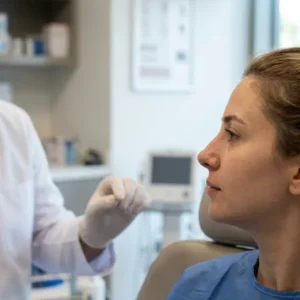
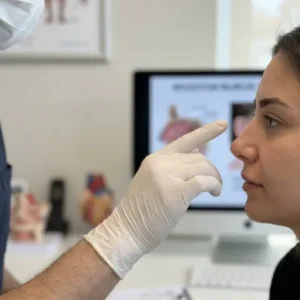
Before undergoing a What is Revision Rhinoplasty? procedure, a thorough consultation is mandatory. Prof. Dr. Selçuk İnanlı performs a comprehensive evaluation of the internal and external nasal structures. This includes high-resolution imaging and a physical examination to determine the thickness of the skin and the strength of the remaining cartilage.
It is important for patients to understand that the goal of a revision is improvement, not perfection. Because of the scar tissue and previous damage, there are limits to what can be achieved. However, in the hands of a world-class surgeon, the results can be life-changing, restoring both the form and function of the nose.
The Surgical Procedure: Open vs. Closed
While some minor corrections can be done using the closed technique (incisions inside the nostrils), the vast majority of failed rhinoplasty corrections require an open approach. The open technique involve a small incision across the columella (the tissue between the nostrils), which allows the surgeon to fully “unveil” the nasal structure. This provides the visibility necessary to precisely place grafts and reconstruct the nasal framework.
Recovery After Failed Rhinoplasty Correction
The recovery for a revision procedure is often longer than for a primary rhinoplasty. Because the blood supply has been altered by previous surgeries, swelling (edema) may persist for a longer duration.
* The First Week: The patient wears a nasal splint and internal packing. Bruising around the eyes is common but usually fades within 10 days.
* The First Month: Most of the major swelling subsides, and patients can return to work and light social activities.
* One Year and Beyond: The final refinement of the nasal tip and the softening of scar tissue can take up to 18-24 months. Patience is the most important virtue during this period.
Choosing the Right Surgeon for Your Correction
Selecting a surgeon for a revision is a decision that should not be taken lightly. You are looking for a specialist who combines the precision of a scientist with the eye of an artist. When Choosing a Rhinoplasty Doctor, consider their board certifications, their experience specifically in revision cases, and their reputation in the medical community.
Prof. Dr. Selçuk İnanlı is a member of the European Academy of Facial Plastic Surgery (EAFPS) and has spent decades perfecting his craft. His approach is holistic, ensuring that the nose not only looks beautiful but supports healthy, unobstructed breathing.
Psychological Impact and the Path to Healing
A failed surgery can lead to significant psychological distress, including anxiety, depression, and a loss of self-esteem. Many patients feel hesitant to trust another surgeon. A key part of the correction process is rebuilding that trust. A professional clinic environment, transparent communication, and a clear surgical plan are essential for the patient’s emotional recovery. Once the physical correction is complete, patients often describe a sense of “closure,” finally being able to move past a difficult chapter in their lives.
Structural Integrity: The Foundation of Success
In revision surgery, the surgeon must often function as an architect. If the “foundation” of the nose has been compromised, the “roof” (the skin and aesthetics) will never look right. By using structural grafting, the surgeon creates a framework that can withstand the forces of scar contraction over time. This ensures that the results are not just good for the first few months, but remain stable and beautiful for a lifetime.
The Importance of Timing
One of the hardest parts of dealing with a failed rhinoplasty is the wait. Surgeons generally recommend waiting at least 12 months before undergoing a correction. This is because the tissues need to soften, the blood supply needs to stabilize, and the full extent of the previous surgery’s results must be clear. Operating too early on inflamed or scarred tissue significantly increases the risk of further complications.
Final Thoughts on Nasal Reconstruction
While the journey toward a successful failed rhinoplasty correction can be long, it is a journey worth taking. Modern surgical techniques, combined with the expertise of a dedicated specialist like Prof. Dr. Selçuk İnanlı, make it possible to correct even the most severe deformities. By focusing on structural integrity, functional health, and aesthetic harmony, revision surgery offers a second chance at the results you originally desired.
If you are struggling with the results of a previous nose job, remember that you are not alone. There are solutions available, and with the right surgical partner, you can achieve a nose that feels and looks like it belongs to you.
Sıkça Sorulan Sorular
How long should I wait after a failed rhinoplasty before seeking a correction?
It is generally recommended to wait at least 12 months after your primary surgery before undergoing a failed rhinoplasty correction. This waiting period is crucial because it takes a full year for the nasal tissues to heal completely, for the swelling to subside, and for the scar tissue to mature. Operating too soon can lead to unpredictable results and increased surgical risks, as the surgeon needs a stable foundation to perform the reconstruction effectively.
Is it always necessary to use rib cartilage in revision rhinoplasty?
Not always, but it is very common. The necessity of using rib cartilage depends on how much septal cartilage remains from your previous surgery. If the primary surgery was aggressive and left the nose without enough structural support, rib (costal) cartilage is often the best choice because it is strong, abundant, and provides the necessary framework to rebuild a collapsed bridge or a drooping tip. Other options include ear cartilage, though it is softer and better suited for tip refinement rather than structural support.
Will a revision rhinoplasty fix my breathing problems as well as the appearance?
Yes, a primary goal of failed rhinoplasty correction is to restore or improve nasal function. Many failed surgeries result in internal issues such as a deviated septum, nasal valve collapse, or enlarged turbinates. A specialist like Prof. Dr. Selçuk İnanlı, who is an ENT (Ear, Nose, and Throat) expert, will prioritize the internal airway during the procedure. By rebuilding the nasal valves and straightening the internal structures, the surgeon ensures that the patient can breathe comfortably while also achieving their aesthetic goals.
What are the risks associated with a secondary rhinoplasty compared to the primary one?
Revision rhinoplasty is inherently more complex and carries slightly higher risks than primary surgery. These risks include prolonged swelling, potential skin issues due to compromised blood supply from previous incisions, and the possibility of further scarring. There is also the challenge of working with distorted anatomy. However, choosing a highly experienced surgeon who specializes in revision cases significantly minimizes these risks and increases the likelihood of a successful, stable outcome.
Can Piezo technology be used in a failed rhinoplasty correction?
Yes, Piezo (ultrasonic) rhinoplasty is an excellent tool for revision cases. Because revision surgery often involves working with bones that have already been weakened or fractured, the precision of Piezo technology is invaluable. It allows the surgeon to reshape the nasal bones using ultrasonic vibrations rather than traditional hammers and chisels. This precision protects the delicate soft tissues and blood vessels, which is especially important in revision cases where the tissue may already be scarred or have reduced blood flow.



Değerlendirmeler
Henüz değerlendirme yapılmadı.