


Graft-assisted Revision Rhinoplasty
- Açıklama
- Değerlendirmeler (0)
Açıklama
Graft-assisted Revision Rhinoplasty: The Ultimate Guide to Restoring Nasal Function and Form
Understanding Graft-assisted Revision Rhinoplasty: A Masterclass in Nasal Reconstruction
Understanding Graft-assisted Revision Rhinoplasty: A Masterclass in Nasal Reconstruction Get an expert opinion.
Your initial assessment is free.
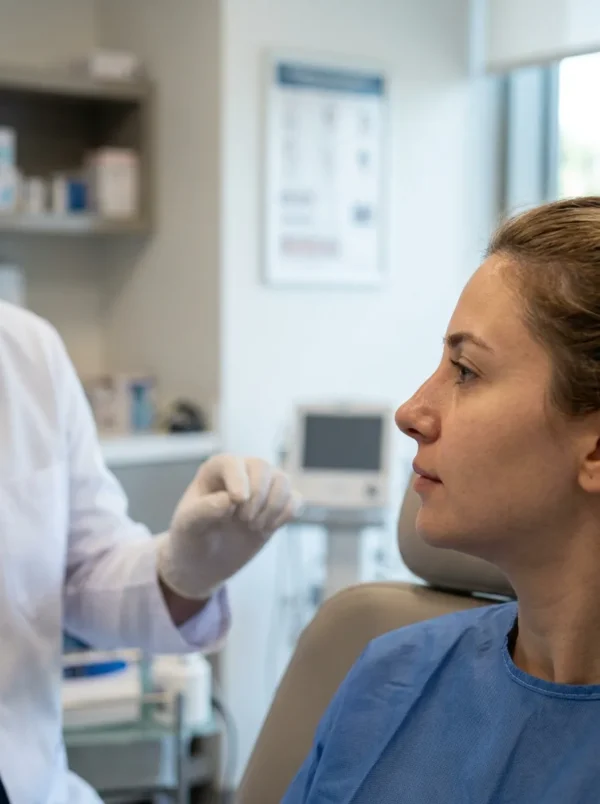
Revision rhinoplasty, also known as secondary rhinoplasty, is widely considered one of the most challenging procedures in the entire field of plastic and reconstructive surgery. When a primary nose job fails to meet a patient’s expectations—whether due to aesthetic dissatisfaction, structural collapse, or functional breathing issues—the solution often lies in Graft-assisted Revision Rhinoplasty. This specialized approach utilizes biological materials, typically the patient’s own cartilage, to rebuild the nasal framework and restore harmony to the face.
In the hands of an expert like Prof. Dr. Selçuk İnanlı, revision surgery is not merely about fixing a mistake; it is about meticulous reconstruction. Patients seeking this procedure often face complex challenges such as scar tissue, depleted septal cartilage, and compromised nasal airways. To navigate these hurdles, the surgeon must have a profound understanding of nasal anatomy and the artistic vision to create a natural-looking result. Understanding what is revision rhinoplasty and why it requires a different skillset than primary surgery is the first step for any patient considering this journey.
Why Primary Rhinoplasty May Require Revision
Why Primary Rhinoplasty May Require Revision Get an expert opinion.
Your initial assessment is free.
There are numerous reasons for needing revision rhinoplasty. In some cases, the primary surgeon may have been too aggressive, removing too much bone or cartilage, leading to a “pinched” tip or a saddle nose deformity. Conversely, under-correction can leave the nose looking bulky or asymmetrical. Beyond aesthetics, functional failure is a significant driver for revision. If the internal or external nasal valves collapse, the patient will experience chronic difficulty breathing, which significantly impacts their quality of life.
Graft-assisted Revision Rhinoplasty addresses these issues by providing the necessary structural “lumber” to rebuild the nose. Because the original septal cartilage is often exhausted during the first surgery, the surgeon must look to other donor sites, such as the ear or the rib, to find high-quality grafting material.
The Role of Grafts in Revision Surgery
The Role of Grafts in Revision Surgery Get an expert opinion.
Your initial assessment is free.
In the context of nasal surgery, a graft is a piece of tissue moved from one part of the body to another to provide support, volume, or shape. In revision rhinoplasty, grafts are the foundation of the reconstructive process. Without them, the skin and soft tissues of the nose would have no structure to drape over, potentially leading to further collapse and scarring.
Types of Autologous Grafts
Types of Autologous Grafts Get an expert opinion.
Your initial assessment is free.
Autologous grafts—those taken from the patient’s own body—are the gold standard in Graft-assisted Revision Rhinoplasty. They carry the lowest risk of infection or rejection compared to synthetic materials. The three primary sources are:
- Septal Cartilage: This is the preferred source because it is straight and strong. However, in revision cases, it is frequently unavailable or insufficient.
- Ear Cartilage (Conchal Graft): Ear cartilage is softer and more curved. It is excellent for contouring the nasal tip or repairing the alar rims but often lacks the strength needed for major structural support.
- Rib Cartilage (Costal Graft): For significant reconstructions, rib cartilage is the ultimate resource. It provides an abundant supply of strong, straight material capable of rebuilding an entire nasal bridge or supporting a severely collapsed tip.
Structural vs. Contour Grafts
Structural vs. Contour Grafts Get an expert opinion.
Your initial assessment is free.
In Graft-assisted Revision Rhinoplasty, grafts are categorized by their function. Structural grafts, such as spreader grafts or columellar struts, are designed to hold the nose in a specific position and keep the airways open. Contour grafts, such as onlay grafts or shield grafts, are used to refine the visual appearance, smoothing out irregularities or defining the tip.
Advanced Techniques in Graft-assisted Revision Rhinoplasty
Advanced Techniques in Graft-assisted Revision Rhinoplasty Get an expert opinion.
Your initial assessment is free.
Modern surgery has moved away from the “reductive” models of the past toward a “structural” philosophy. Instead of just cutting away tissue, surgeons like Prof. Dr. Selçuk İnanlı focus on reinforcing the nasal skeleton. This is particularly important when dealing with the revision rhinoplasty Istanbul patient base, where diverse ethnic backgrounds and high expectations require a tailored approach.
The Spreader Graft: The Pillar of Breathing
One of the most critical components of Graft-assisted Revision Rhinoplasty is the spreader graft. These are thin strips of cartilage placed between the septum and the upper lateral cartilages. Their primary role is to widen the internal nasal valve, which is the narrowest part of the airway. Many patients who suffer from breathing issues after their first surgery have a collapsed internal valve; the spreader graft acts as a permanent internal stent to keep the pathway clear.
The Columellar Strut and Tip Support
A common aesthetic complaint in revision cases is a “droopy” or poorly projected tip. The columellar strut graft is inserted into the columella (the strip of tissue between the nostrils) to provide a firm base for the nasal tip. When combined with septal extension grafts, the surgeon can precisely control the rotation and projection of the nose, ensuring that the results are both stable and aesthetically pleasing over the long term.
Shield Grafts and Alar Batten Grafts
For patients with a “pinched” look, alar batten grafts are used to support the side walls of the nostrils. This prevents the nostrils from collapsing inward during inhalation. Meanwhile, a shield graft is often placed at the very tip of the nose to create better definition and a more refined silhouette, especially in patients with thick skin.
The Surgical Journey: What to Expect
Undergoing Graft-assisted Revision Rhinoplasty is a significant commitment. Because of the complexity involved, the surgery typically lasts longer than a primary procedure, often ranging from three to five hours. Most revision cases are performed using the open rhinoplasty technique, which involves a small incision across the columella. This provides the surgeon with maximum visibility and access to the underlying structures, which is essential for precise graft placement.
Pre-operative Planning and Consultation
The most important part of the process is the consultation. Prof. Dr. Selçuk İnanlı utilizes advanced imaging and a thorough physical examination to assess the quality of the skin, the amount of remaining cartilage, and the degree of functional impairment. Patients must have realistic expectations. While revision surgery can achieve dramatic improvements, the presence of scar tissue from previous operations means that absolute perfection is a difficult goal; the focus is on significant improvement and restoration.
The Recovery Process
Recovery from Graft-assisted Revision Rhinoplasty is similar to primary surgery but may involve more prolonged swelling. Because the tissues have been traumatized before, the lymphatic drainage system takes longer to recover.
* Week 1: The external splint and sutures are removed. There will be visible bruising and swelling around the eyes and nose.
* Month 1: Most of the major swelling subsides, and patients can return to social activities. However, the nose will still feel “stiff.”
* Month 6-12: The fine details of the revision begin to emerge as the skin shrinks and wraps around the new graft-supported framework.
* Year 1-2: The final result is usually achieved after two years, as the internal healing process in revision cases is exceptionally slow.
Risks and Considerations in Revision Surgery
It is natural for patients to ask, is a revision rhinoplasty risky? While all surgery carries risks, revision procedures have a slightly higher incidence of complications such as skin necrosis, graft visibility, or persistent asymmetry. This is why choosing a surgeon with board certification and specific expertise in facial plastic surgery is non-negotiable. Prof. Dr. Selçuk İnanlı, with his extensive background in both ENT and plastic surgery, is uniquely equipped to manage these risks, ensuring that both the form and function of the nose are addressed simultaneously.
Managing Scar Tissue
One of the biggest enemies of a successful revision is fibrosis (scar tissue). In some patients, the body’s healing response is overly aggressive, which can blur the sharp lines created by the grafts. Surgeons may use steroid injections or specific post-operative massages to help manage the way the scar tissue settles over the new framework.
The Psychology of Revision Rhinoplasty
Patients seeking a second or third surgery often experience significant emotional distress. They may feel a loss of identity or deep regret over their initial decision. A successful Graft-assisted Revision Rhinoplasty does more than just fix a nose; it restores self-confidence. The psychological relief of being able to breathe clearly and look in the mirror without focusing on a surgical deformity is profound. This holistic view of patient care is a hallmark of the practice at the Selçuk İnanlı clinic.
Why Rib Cartilage is the Future of Revision Rhinoplasty
In recent years, the use of rib cartilage has revolutionized the field. Previously, surgeons were hesitant to use rib due to concerns about “warping” (the cartilage curving over time) or the pain of the donor site incision. However, modern techniques, including the use of oblique split grafts and meticulous carving, have virtually eliminated the warping issue. Furthermore, the donor site incision is now very small (usually 1-2 cm) and heals with minimal discomfort. For a patient with a severely collapsed nose, rib cartilage provides the only reliable way to achieve a lasting, structural recovery.
The Importance of the Golden Ratio
In Graft-assisted Revision Rhinoplasty, the surgeon is not just a technician but an artist. Prof. Dr. Selçuk İnanlı utilizes the principles of the Golden Ratio to ensure that the revised nose fits the unique proportions of the patient’s face. This involves calculating the ideal nasolabial angle, the width of the nasal base relative to the intercanthal distance (the space between the eyes), and the height of the bridge. By using grafts to hit these precise mathematical targets, the surgeon creates a result that looks natural and “un-operated.”
Choosing the Right Surgeon for Your Revision
When the stakes are this high, the choice of surgeon is the single most important factor. You need a specialist who understands the intricacies of Graft-assisted Revision Rhinoplasty. Look for a doctor who:
* Has a high volume of revision cases in their portfolio.
* Is a member of prestigious organizations like the European Academy of Facial Plastic Surgery (EAFPS).
* Provides a comprehensive plan that addresses both breathing and aesthetics.
* Utilizes advanced technology like Piezo (ultrasonic) rhinoplasty when appropriate to minimize trauma to the bone.
Prof. Dr. Selçuk İnanlı combines decades of academic knowledge with a refined surgical touch, making his clinic a global destination for patients seeking to correct the results of previous surgeries. Whether you are dealing with a minor contour irregularity or a major structural failure, the application of autologous grafts can provide the solution you need to finally put your rhinoplasty journey to rest.
Final Thoughts on Structural Integrity
The goal of Graft-assisted Revision Rhinoplasty is to create a nose that not only looks beautiful today but remains stable for decades. By focusing on structural reinforcement rather than just cosmetic camouflage, surgeons can ensure that the nose does not collapse again as the patient ages. The use of spreader grafts, strut grafts, and rib cartilage represents the pinnacle of modern nasal surgery, offering hope and healing to those who thought their nasal issues were permanent. Through patience, expertise, and the right surgical approach, the path to a functional and attractive nose is always possible.
Sıkça Sorulan Sorular
How long should I wait after my first surgery before getting a revision?
It is generally recommended to wait at least 12 to 18 months after your primary rhinoplasty before undergoing a revision. This timeframe is crucial because the nose continues to change as swelling subsides and scar tissue matures. Operating too early can be dangerous, as the surgeon may be working on unstable tissues, making it difficult to achieve a precise result. Waiting allows the skin to soften and the final shape of the primary surgery to become fully apparent, providing a clear roadmap for the revisionist.
Is it painful to have cartilage taken from the rib or ear?
While the idea of a second donor site can be intimidating, the pain is typically well-managed with modern techniques. For an ear graft, the incision is hidden in the natural crease behind the ear, and discomfort is minimal. For a rib graft, a small incision is made just under the breast fold. While there may be some soreness when coughing or laughing for the first few days, most patients find the discomfort manageable with standard pain medication. The long-term benefit of having high-quality structural material far outweighs the temporary discomfort of the donor site.
What are the chances of needing a third surgery after a revision?
The goal of an expert surgeon is to make the revision the final procedure. However, revision rhinoplasty is inherently complex due to existing scar tissue and compromised blood supply. While the success rate is high in the hands of a specialist like Prof. Dr. Selçuk İnanlı, a small percentage of patients (around 5-10%) may require minor touch-ups. Using graft-assisted techniques significantly reduces the risk of major failure by providing a strong, permanent structural foundation that resists the contracting forces of scar tissue.
Will my nose look ‘fake’ if I use rib cartilage grafts?
On the contrary, rib cartilage grafts often lead to a more natural look because they allow the surgeon to restore the nose to its proper anatomical proportions. A ‘fake’ look usually results from over-resection (removing too much), which causes the nose to look pinched or collapsed. By using rib cartilage to rebuild a strong bridge and a well-supported tip, the surgeon can create a silhouette that harmonizes with your facial features. The skill of the surgeon in carving the graft is the key to ensuring it remains invisible under the skin.
Can revision rhinoplasty fix breathing problems caused by the first surgery?
Yes, correcting functional issues is one of the primary goals of graft-assisted revision rhinoplasty. Many primary surgeries inadvertently cause the nasal valves to collapse or fail to address a deviated septum properly. By using spreader grafts to open the internal nasal valve and batten grafts to support the external valve, the surgeon can significantly improve airflow. In many cases, patients find that their breathing after a successful revision is better than it was even before their very first surgery.



Değerlendirmeler
Henüz değerlendirme yapılmadı.