What should we pay attention to when getting a facelift?
What Should We Pay Attention to When Getting a Facelift? A Comprehensive Guide by Prof. Dr. Selçuk İnanlı
The quest for eternal youth is as old as humanity itself, but in the modern era, medical science has provided us with highly sophisticated tools to turn back the clock. A facelift, or rhytidectomy, remains the gold standard for correcting the visible signs of aging in the face and neck. However, undergoing such a transformative procedure requires significant thought, research, and preparation. When patients ask, “What should we pay attention to when getting a facelift?” they are embarking on a journey that involves understanding surgical techniques, assessing surgeon qualifications, and committing to a rigorous recovery process. In this exhaustive guide, we will explore every nuance of the procedure to ensure you make an informed decision.
The Philosophy of Facial Rejuvenation
Facial aging is a multi-dimensional process. It involves the loss of skin elasticity, the downward migration of fat pads, and the weakening of the underlying muscular structures. A successful facelift is not merely about pulling the skin tight; it is about restoring the anatomical components to their youthful positions. Prof. Dr. Selçuk İnanlı, an ENT and Facial Plastic Surgery Specialist, emphasizes that the goal of modern aesthetics is a natural look. The “wind-tunnel” look of the past has been replaced by techniques that focus on the SMAS (Superficial Musculo-Aponeurotic System) and deep-plane structures to provide longevity and harmony.
Before deciding on surgery, it is essential to understand when is a facelift necessary. Generally, candidates are individuals who notice sagging in the mid-face, deep creases below the lower eyelids, deep folds along the nose leading to the corner of the mouth (nasolabial folds), and the presence of jowls caused by loss of muscle tone in the lower face.
Choosing the Right Surgeon: The Most Critical Decision
The success of your surgery depends largely on the hands that perform it. When researching what to pay attention to, the surgeon’s credentials should be at the top of your list. You should look for a specialist who is not only a general plastic surgeon but has specific expertise in facial plastic surgery.
Board Certification and International Recognition
Prof. Dr. Selçuk İnanlı is a prime example of the level of expertise you should seek. As an ENT Specialist certified by the European Academy of Facial Plastic Surgery (EAFPS), he possesses an intimate knowledge of the complex anatomy of the head and neck. Passing the EAFPS Board exams is a testament to a surgeon’s commitment to international standards of excellence. Furthermore, an academic background, such as being a Professor, indicates that the surgeon stays updated with the latest scientific advancements and contributes to the global medical community.
Experience and Specialization
A surgeon who performs ten different types of body surgeries may not have the same refined touch as one who focuses on the face. Facial structures are delicate and contain vital nerves and vessels. Experience in rhinoplasty, eyelid aesthetics, and revision surgery often complements facelift expertise, as these procedures are frequently combined for a total facial rejuvenation. Always ask to see a portfolio of “before and after” photos to ensure the surgeon’s aesthetic style aligns with your goals.
Understanding Facelift Techniques
Not all facelifts are created equal. Depending on your age, skin quality, and the degree of sagging, different techniques may be employed. Understanding these options is a key part of what you should pay attention to during your consultation.
The SMAS Facelift
The SMAS facelift is one of the most common techniques. The SMAS is the layer of tissue that covers, surrounds, and attaches to the deeper tissues and structures of the face and neck. By tightening this layer rather than just the skin, the surgeon can achieve a more durable and natural result. This technique effectively addresses jowls and sagging in the lower face.
The Deep Plane Facelift
For more advanced signs of aging, the Deep Plane Facelift is often preferred. This method involves repositioning the entire unit of skin and SMAS together. It is particularly effective at lifting the mid-face and smoothing the nasolabial folds. Because it releases the ligaments that hold the facial tissues in a sagging position, it offers some of the most dramatic yet natural-looking results in facial plastic surgery.
The Mini-Facelift
Often called a “weekend lift,” the Mini-Facelift is suitable for younger patients with mild sagging. It involves shorter incisions, usually around the ears, and focuses on the lower face and jawline. While the recovery is faster, it does not address the neck or mid-face as comprehensively as a Facelift Surgeries approach.
Pre-Operative Considerations and Health Assessment
Once you have chosen your surgeon and technique, the next thing to pay attention to is your own physical health. A facelift is a major surgical procedure performed under general anesthesia or deep sedation, requiring your body to be in peak condition for healing.
Medical History and Medications
During your consultation at the Terrace Fulya Residence clinic in Şişli, a thorough medical history will be taken. You must be transparent about any chronic conditions like hypertension or diabetes. Certain medications and supplements, such as aspirin, ibuprofen, Vitamin E, and herbal teas, can increase the risk of bleeding and must be stopped at least two weeks before the operation.
The Role of Smoking
Smoking is perhaps the single greatest risk factor in facelift surgery. Nicotine constricts blood vessels, significantly reducing the blood supply to the skin flaps created during surgery. This can lead to skin necrosis (tissue death), poor scarring, and infection. Patients must understand the negative effects of smoking and quit entirely for at least 4 to 6 weeks before and after the procedure.
What to Expect During the Recovery Process
Preparation for the aftermath is just as important as the surgery itself. Knowing recovery process after a facelift steps will help you manage your expectations and ensure a smooth healing journey.
The First 48 Hours
Immediately after the surgery, your face will be wrapped in bandages to minimize swelling and bruising. You may have small drainage tubes to prevent fluid buildup. It is normal to feel some tightness and discomfort, which can be managed with prescribed pain medication. Keeping your head elevated, even while sleeping, is crucial during this phase.
The First Week
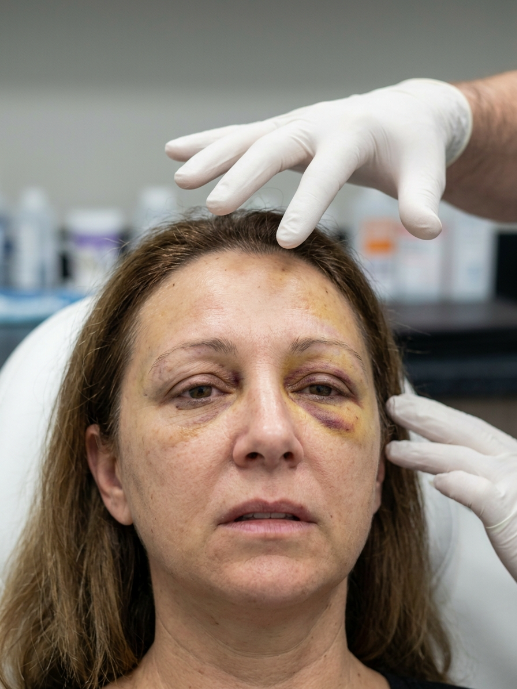
During the first week, swelling and bruising will reach their peak. You will return to the clinic for your first post-operative check-up, where bandages and possibly some sutures will be removed. You should avoid any strenuous activity and focus on resting. Prof. Dr. Selçuk İnanlı advises patients to avoid salty foods, as sodium can exacerbate edema (swelling).
Weeks Two to Four
By the end of the second week, most of the visible bruising will have faded, and many patients feel comfortable returning to work or social activities, often using makeup to conceal any remaining redness. However, internal healing continues. You must still avoid heavy lifting, intense exercise, and excessive sun exposure.
Potential Risks and Complications
While complications are rare when the surgery is performed by a board-certified expert like Prof. Dr. Selçuk İnanlı, no surgery is without risk. Being aware of these risks is part of what you should pay attention to.
- Hematoma: A collection of blood under the skin is the most common complication. It usually requires prompt surgical drainage to prevent pressure on the skin.
- Nerve Injury: Temporary weakness in facial muscles can occur if the motor nerves are affected during the lift. Permanent injury is extremely rare in the hands of a skilled surgeon.
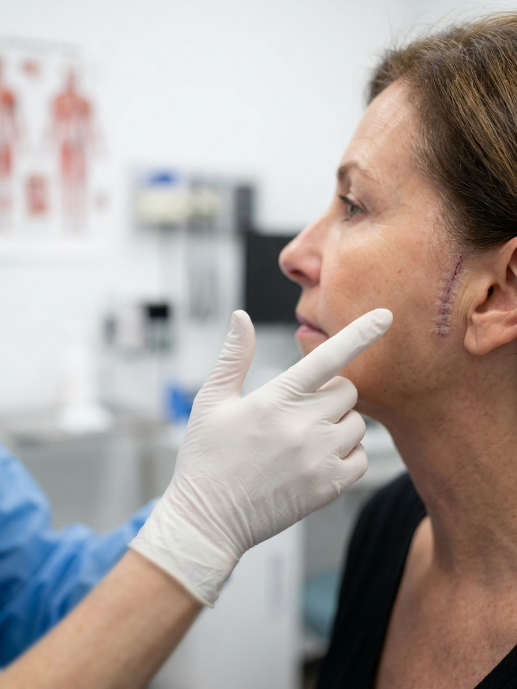
- Scarring: While incisions are hidden within the hairline and the natural contours of the ear, some patients may develop hypertrophic scars. Proper wound care and following post-op instructions are vital.
- Infection: Rare but possible, usually managed with antibiotics.
Combining Facelift with Other Procedures
Often, a facelift alone may not address all the concerns of an aging face. To achieve a truly harmonious result, many patients choose to combine their lift with other aesthetic operations. This is a strategic point to pay attention to during your planning.
Eyelid Aesthetics (Blepharoplasty)
A facelift does not correct sagging upper eyelids or bags under the eyes. Eyelid aesthetics can be performed simultaneously to brighten the gaze and complement the rejuvenated lower face.
Neck Lift and Platysmaplasty
In many cases, a facelift is incomplete without a neck lift. This involves tightening the platysma muscle to eliminate “turkey neck” and restore a sharp, youthful jawline. This is often integrated into the SMAS or Deep Plane techniques.
Fat Injections and Fillers
As we age, we lose volume in the cheeks and temples. While a facelift repositions tissue, it does not replace lost volume. Fat injections (using the patient’s own fat) or dermal fillers can be used to restore that youthful fullness, creating a multi-layered rejuvenation.
The Importance of Sun Protection and Skincare
Your investment in a facelift should be protected. Post-operative skin is sensitive and prone to hyperpigmentation. Long-term results depend heavily on your commitment to sun protection. Using a broad-spectrum SPF 50+ sunscreen and wearing hats is non-negotiable. Additionally, a medical-grade skincare routine can help maintain skin quality and prolong the effects of the surgery.
Why Istanbul for Your Facelift?
Istanbul has become a global hub for Health Tourism, and for good reason. Clinics like that of Prof. Dr. Selçuk İnanlı offer world-class surgical expertise combined with high-tech facilities and the renowned hospitality of Turkey. The Ministry of Health regulates these clinics strictly, ensuring they meet international standards and hold the Health Tourism Authorization Certificate.
Choosing a surgeon in Istanbul allows patients to access senior expertise, such as a Harvard University Facial Plastic Surgery Observer, at a competitive value. However, the focus should always be on quality and safety rather than price alone. When you choose a specialist who views surgery as “the physician’s philosophy of art coming to life on living tissues,” you are choosing excellence.
Final Preparations for Surgery
In the days leading up to your operation, ensure you have a support system in place. You will need someone to drive you home and stay with you for the first 24 hours. Prepare a “recovery station” with plenty of pillows, easy-to-eat soft foods, and any medications your surgeon has prescribed. Mentally preparing for the temporary changes in your appearance during the first few weeks of healing is also essential. Patience is the key to seeing the beautiful, final results of your transformation.
Facelift surgery is a powerful tool for self-confidence and rejuvenation. By paying attention to the surgeon’s qualifications, the surgical technique, the risks, and the commitment required for recovery, you set the stage for a successful outcome. With the guidance of an expert like Prof. Dr. Selçuk İnanlı, your journey toward a more youthful and vibrant version of yourself can be safe, professional, and life-changing.
Sıkça Sorulan Sorular
What is the ideal age to consider a facelift?
There is no “perfect” age for a facelift, as the aging process varies significantly between individuals based on genetics, lifestyle, and sun exposure. Most patients seek a facelift in their late 40s to 60s when sagging and jowls become prominent. However, younger patients with significant tissue laxity may benefit from a mini-lift, while older patients may require a more comprehensive deep-plane approach. The decision should be based on anatomical needs rather than the number on a birth certificate.
How long do the results of a facelift typically last?
While a facelift cannot stop the clock, it effectively turns it back by 10 to 15 years. The longevity of the results depends on the surgical technique used (deep-plane lifts generally last longer than skin-only lifts), the patient’s skin quality, and post-operative lifestyle choices. Maintaining a stable weight, avoiding smoking, and practicing diligent sun protection are the best ways to ensure your results last as long as possible.
Will there be visible scarring after the procedure?
A skilled facial plastic surgeon like Prof. Dr. Selçuk İnanlı places incisions in the most discreet locations possible. Typically, incisions are hidden within the natural hairline and the contours of the ear. Over time, these scars fade into thin, nearly invisible lines. Following the surgeon’s scar management protocol, which may include silicone gels or specific massage techniques, is essential for optimal healing and minimal visibility.
How long is the total downtime before I can go out in public?
Most patients feel ready to return to work and light social activities within 10 to 14 days. By this point, major swelling has subsided, and any remaining bruising can usually be camouflaged with makeup. However, it takes several months for all residual swelling to resolve and for the tissues to fully settle into their new positions. You should wait at least 4 to 6 weeks before attending major events like weddings or professional photoshoots.
Can a facelift be performed without general anesthesia?
While some minor procedures like a mini-facelift can be performed under local anesthesia with deep sedation, most comprehensive facelifts are performed under general anesthesia. This ensures the patient is completely comfortable and still, allowing the surgeon to work with precision on the deep layers of the face. The safety of modern anesthesia, managed by a professional anesthesiology team, makes this a standard and safe practice for major aesthetic surgeries.