Why Should I Have Piezo Rhinoplasty?
Piezo rhinoplasty is a fine technique that gives the surgeon more flexibility and control. Side effects are limited, and less swelling and bruising are seen. In some cases, it can be said that there is almost no bruising. The hammer and chisel technique used in classical rhinoplasty can cause damage to the nasal bone and unintentional fractures. With the piezo device, this situation is prevented. The piezo technique allows the nose to be shaped in a way elegantly. In some patients, even breaking the nasal bones can be prevented.
The technique is also in line with the new trend of conservative rhinoplasty, the philosophy of reshaping rather than destructively removing tissue during surgery, which is so widespread in conventional methods. The piezo technique can be used to reshape the nasal bone without breaking it, as well as to protect the nasal bridge.
Why Doesn’t Every Surgeon Use the Piezo Technique?
Piezo rhinoplasty is not very common because most surgeons are still unfamiliar with this advanced equipment. They are also unfamiliar with how to adapt and replace the classical rhinoplasty procedure with Piezotome technology. It is also known that piezo equipment is expensive.
Who Can Have Piezo Rhinoplasty?
The piezo technique is designed to reshape the nasal bone. For this reason, it is only available for patients who need reduction/deviation or adjustment of the nasal bones. It has procedures that include reducing the hooknose, adjusting bone irregularities, and narrowing the bridge of the nose.
Piezo rhinoplasty cannot be preferred instead nasal tip and cartilage interventions, which include suture and graft procedures. In the piezo technique, the cartilage is not reshaped. Therefore, if there is a need for tip rhinoplasty, piezo is not suitable.
It’s also important to consider that piezo rhinoplasty should be performed with an open method. It cannot be applied with the closed method, that is, through the nose. This is because the device is not long enough and visualization of the bones is needed for the piezo technique.
After Piezo Rhinoplasty: Healing
Mild pain may be felt after the piezo operation. Early days of the recovery period, it is necessary to use a nasal splint. This splint is removed after about 1 week. During the removal of the splint, bruising is barely seen, even no bruising can be seen sometimes.
However, since minimal changes are made during rhinoplasty, it may take about a year for the final result to be seen. It is worth preferring the piezo technique as it is painless and has few side effects, and provides comfort in the first recovery period.
If you consider having rhinoplasty surgery, contact us right away to get a free consultancy service from Prof. Dr. Selçuk İnanlı.
Why Should You Have Piezo Rhinoplasty: The Future of Nasal Surgery with Prof. Dr. Selçuk İnanlı
The Evolution of Nasal Aesthetics: From Traditional to Ultrasonic
For decades, the field of rhinoplasty relied on instruments that, while effective, were relatively blunt. Surgeons used osteotomes, hammers, and chisels to reshape the nasal bones. While these tools allowed for significant transformations, they often resulted in collateral damage to the surrounding soft tissues, blood vessels, and nerves. This led to the characteristic post-operative bruising and swelling that many patients feared. However, the introduction of ultrasonic technology has revolutionized this process. If you are wondering why should you have piezo rhinoplasty, the answer lies in the intersection of high-tech precision and medical safety.
Piezo rhinoplasty, also known as ultrasonic rhinoplasty, utilizes high-speed ultrasonic vibrations to cut and reshape bone without affecting the skin, mucosa, or soft tissues. This selective action is the cornerstone of modern facial plastic surgery. By choosing this method, patients are opting for a procedure that respects the delicate anatomy of the face while achieving structural results that were previously difficult to guarantee with traditional tools. Under the expertise of Prof. Dr. Selçuk İnanlı, an ENT specialist certified by the European Academy of Facial Plastic Surgery (EAFPS), this technology is used to create harmonious, natural, and functional outcomes.
Understanding the Piezoelectric Mechanism
The term “Piezo” refers to the piezoelectric effect, where electrical energy is converted into ultrasonic mechanical vibrations. These vibrations occur at a specific frequency that interacts only with mineralized tissues like bone. When the tip of the Piezo device touches the nasal bone, it acts like a microscopic saw or file, allowing the surgeon to sculpt the bone with the lightness of a paintbrush.
One of the primary reasons to choose Piezo Rhinoplasty is this micrometric control. In traditional surgery, a bone fracture might propagate in an unintended direction. With ultrasonic vibrations, the bone is carved exactly where the surgeon intends. This prevents irregularities, “step-off” deformities, and unintended asymmetries. For patients seeking the highest level of detail in their nasal profile, this technology is indispensable.
Top Reasons Why Should You Have Piezo Rhinoplasty
1. Unmatched Precision and Predictability
In nasal surgery, millimeters matter. A tiny deviation can change the entire aesthetic of the face. Piezoelectric inserts allow for the thinning of a wide nasal bridge or the smoothing of a dorsal hump with extreme accuracy. Because the surgeon can see the bone clearly and manipulate it without the force required by a hammer, the predictability of the final shape is significantly higher. This is particularly important when aiming for the golden ratio and rhinoplasty, ensuring the nose fits the unique proportions of the patient’s face.
2. Protection of Soft Tissues
Traditional tools do not discriminate between bone and soft tissue. If a chisel slips, it can tear the overlying skin or damage the internal lining of the nose (mucosa). The Piezo device is designed to stop vibrating if it touches soft tissue. This means the blood vessels, nerves, and delicate membranes remain intact. By preserving these structures, the surgeon ensures that the blood supply to the nose is maintained, which is vital for healthy healing.
3. Significant Reduction in Bruising and Swelling
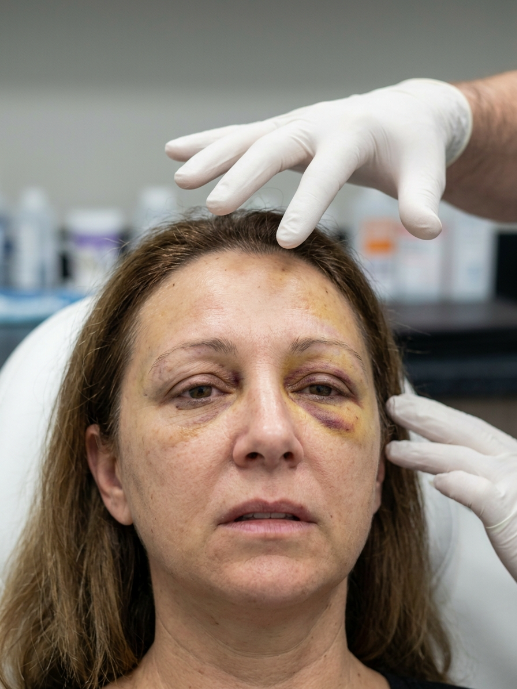
The “black eyes” often associated with a nose job are primarily caused by trauma to the blood vessels during bone breaking. Since ultrasonic rhinoplasty does not damage these vessels, post-operative bruising is minimal, and in many cases, non-existent. This leads to a much more comfortable rhinoplasty recovery process. Patients can return to their social lives much faster than those who undergo traditional surgery.
4. Faster Recovery and Less Pain
Trauma to the tissue is the main source of post-operative pain. Because Piezo technology is minimally invasive regarding soft tissue, the inflammatory response is reduced. Most patients report feeling pressure rather than sharp pain during the first few days. The reduction in edema (swelling) also means that the internal nasal passages remain more open, allowing for better breathing immediately after the procedure.
5. Superior Results in Revision Rhinoplasty
If a patient has had a previous nose surgery and is unhappy with the results, the bone structure is often weakened or irregular. Revision Rhinoplasty is one of the most challenging procedures in plastic surgery. The precision of Piezo allows Prof. Dr. Selçuk İnanlı to carefully correct previous mistakes without further compromising the bone. You can learn more about these complex cases on the Revision Rhinoplasty page.
The Role of the Surgeon: Why Expertise Matters
While the tool is revolutionary, the results depend entirely on the hand that holds it. Prof. Dr. Selçuk İnanlı is not only a surgeon but a philosopher of art in the context of living tissue. With a career spanning back to 1989 and specialized training at Harvard University, he combines academic depth with international surgical experience.
His approach to nasal aesthetics involves a comprehensive analysis of the patient’s facial structure, skin thickness, and respiratory function. A nose should not only look beautiful; it must function perfectly. As a certified ENT Specialist, Dr. İnanlı ensures that the internal structures, such as the septum and turbinates, are addressed alongside the external appearance. This dual focus on form and function is why he is a sought-after specialist in Istanbul.
Deep Dive into the Technical Advantages
Micrometric Sculpting
The Piezo device comes with various tips, each designed for a specific task. Some are used for cutting (osteotomy), while others are for filing (scraping). This allows the surgeon to perform micrometric rhinoplasty, where the bone is smoothed down in layers thinner than a human hair. This eliminates the risk of palpable ridges or “bumps” that can sometimes appear after the swelling goes down in traditional cases.
Thermal Safety
The ultrasonic tips are constantly cooled with a sterile saline spray. This prevents the bone from overheating, which can lead to bone necrosis or delayed healing. The irrigation also keeps the surgical field clear of blood, giving the surgeon a perfect view of the anatomy. Clear visualization is the key to avoiding complications.
Stable Structural Changes
In traditional methods, the “fracturing” of the bone can lead to instability if the fractures are not perfectly controlled. Piezo rhinoplasty allows for precise “weakening” of the bone in specific lines, ensuring that when the nose is narrowed, the bones move into their new positions smoothly and stay there securely. This reduces the risk of the bone “shifting” during the healing phase.
The Patient Journey: What to Expect
The Consultation Phase
Every successful surgery begins with a thorough consultation. During this time, Prof. Dr. Selçuk İnanlı uses digital imaging to show patients what their potential results might look like. This is the time to discuss the “why” behind the surgery—whether it is to remove a hump, refine the tip, or correct a deviated septum. The surgeon evaluates the skin quality, as thick or thin skin can affect how the underlying bone changes will appear.
The Day of Surgery
Piezo rhinoplasty is typically performed under general anesthesia. The procedure can take anywhere from 2 to 4 hours, depending on the complexity. Because there is less bleeding, the surgeon can work more efficiently. Once the bone is reshaped using the ultrasonic device, the soft tissues are redraped, and a small splint is applied to the nose.
The Immediate Recovery
In the first 24 to 48 hours, patients are advised to keep their heads elevated. Unlike traditional surgery, where patients might wake up with significant bruising, Piezo patients usually have only mild redness. The absence of heavy packing in the nose (often replaced by internal silicone splints) makes the first few days much more tolerable.
The Long-Term Outcome
While the initial swelling subsides in a few weeks, the nose continues to refine itself for up to a year. Because the bone was sculpted so precisely, the long-term results of ultrasonic rhinoplasty tend to be more stable. The fine details of the bridge and the transition between the bone and cartilage remain crisp and well-defined.
Anatomical Considerations: Bone and Cartilage
The nose is a complex structure of bone (in the upper third) and cartilage (in the lower two-thirds). Piezo rhinoplasty focuses on the bony part. However, a skilled surgeon must also manage the cartilaginous framework. If the bone is narrowed but the cartilage is left wide, the nose will look disproportionate.
Prof. Dr. Selçuk İnanlı utilizes the Piezo device to create a seamless transition between the bone and the cartilage. By precisely shaping the nasal process of the maxilla and the nasal bones themselves, he provides a sturdy foundation for the rest of the nasal tip work. This holistic approach is essential for preventing the “operated look” and achieving a result that looks like the patient was born with it.
Psychological Impact and Quality of Life
The decision to undergo a nose job is often deeply personal. For many, a prominent hump or a wide bridge has been a source of self-consciousness for years. The psychological benefits of a successful rhinoplasty are well-documented, including increased self-esteem and social confidence.
When patients choose Piezo rhinoplasty, they often feel more at ease because the fear of a “violent” surgery is removed. Knowing that the procedure is performed with sound waves rather than forceful impacts provides a level of psychological comfort. Furthermore, seeing a “cleaner” face in the mirror just one week after surgery—without the trauma of heavy bruising—helps patients bond with their new look much faster.
Why Istanbul and Prof. Dr. Selçuk İnanlı?
Istanbul has become the global hub for health tourism, particularly for facial aesthetics. However, the abundance of clinics means that patients must be discerning. Choosing a surgeon like Prof. Dr. Selçuk İnanlı provides several guarantees:
- Board Certification: He is certified by the European Board in Facial Plastic Surgery.
- ENT Expertise: As an Ear, Nose, and Throat specialist, he understands the complex physiology of breathing.
- International Standards: The clinic is approved by the Ministry of Health of the Republic of Turkey and adheres to international safety protocols.
- Artistic Vision: He views each surgery as a unique piece of art, tailored to the individual’s ethnic background and facial harmony.
Whether you are coming from within Turkey or from abroad, the clinic provides comprehensive services, ensuring that your journey to a more confident self is smooth and professional.
Functional Harmony: Breathing and Beauty
A common mistake in cosmetic surgery is focusing solely on the external appearance while ignoring the internal function. A beautiful nose is useless if the patient cannot breathe through it. Piezo rhinoplasty allows the surgeon to address functional issues like bone spurs or nasal deviations with the same precision used for aesthetic changes.
During the procedure, Dr. İnanlı can use the ultrasonic device to remove internal bone obstructions that cause nasal congestion. This means that many patients wake up not only with a more attractive nose but with the ability to breathe better than they have in years. This combination of ENT surgery and plastic surgery is the gold standard of care.
Summary of the Piezo Advantage
To conclude the technical discussion, the transition to ultrasonic tools represents a shift toward “biological” surgery—surgery that respects the body’s tissues. The main takeaways for any prospective patient are:
- Safety: No damage to vessels or nerves.
- Aesthetics: Smoother lines and better symmetry.
- Recovery: Half the downtime of traditional methods.
- Stability: Better long-term structural integrity.
If you are looking for a permanent solution to your nasal concerns, the choice of technology is just as important as the choice of surgeon. Piezo rhinoplasty offers a refined, modern approach that minimizes the risks while maximizing the beauty of the outcome.
Sıkça Sorulan Sorular
What is the main difference between Piezo and traditional rhinoplasty?
The primary difference lies in the tools used to shape the nasal bones. Traditional rhinoplasty uses manual instruments like hammers and chisels, which can be less precise and cause trauma to the surrounding soft tissues, leading to significant bruising and swelling. Piezo rhinoplasty uses ultrasonic vibrations that selectively target bone, leaving skin, blood vessels, and nerves completely intact. This results in much higher precision, a more predictable aesthetic outcome, and a significantly faster recovery period with minimal post-operative bruising.
Is Piezo rhinoplasty more expensive than traditional methods?
Generally, Piezo rhinoplasty may have a slightly higher cost due to the advanced technology and specialized equipment required. The ultrasonic device and its single-use sterile tips are high-cost medical components. However, many patients find the investment worthwhile because it reduces the need for revision surgeries, minimizes time taken off work due to faster recovery, and offers a much more comfortable post-operative experience. The price is also influenced by the surgeon’s expertise and the specific needs of the patient’s nasal anatomy.
Who is the ideal candidate for ultrasonic rhinoplasty?
The ideal candidate is anyone looking to reshape the bony structures of their nose, such as reducing a dorsal hump, narrowing a wide nasal bridge, or correcting bone-related asymmetries. It is also excellent for patients who are concerned about bruising and want a quick return to their social life. However, if the patient’s concerns are purely related to the nasal tip (which is made of cartilage), the Piezo device may not be the primary tool used, though it is often combined with other techniques for a total refinement.
Does Piezo rhinoplasty hurt more than the traditional method?
Actually, most patients report that Piezo rhinoplasty is less painful than traditional methods. The reduction in pain is due to the lack of trauma to the soft tissues and the preservation of the blood supply. Since there is less inflammation and swelling, the pressure felt during the first few days of recovery is significantly diminished. While some discomfort is normal after any surgery, the ‘gentle’ nature of ultrasonic vibrations makes the healing process much smoother for the majority of patients.
Can Piezo technology be used in revision rhinoplasty?
Yes, Piezo technology is highly advantageous in revision rhinoplasty. In secondary cases, the nasal bones are often irregular, scarred, or weakened from the first procedure. Using a hammer and chisel in such delicate conditions can be risky. The ultrasonic device allows the surgeon to carefully ‘file’ and smooth the bone with extreme control, correcting deformities without causing further damage. Prof. Dr. Selçuk İnanlı often utilizes this technology to achieve successful results in complex revision cases where precision is the only way to restore harmony.