Who is a suitable candidate for an eyebrow lift?
An eyebrow lift, also referred to as a forehead lift, is a cosmetic surgery that aims to elevate the eyebrows and enhance a more youthful look. It is suitable for individuals who have sagging or drooping eyebrows. Being in good overall health is a prerequisite for undergoing this procedure. It is also important to have realistic expectations regarding the anticipated outcomes.
Who is a Suitable Candidate for an Eyebrow Lift? A Comprehensive Guide to Brow Rejuvenation
Understanding the Aesthetic Importance of the Eyebrow Area
The face is often the first thing people notice, and the upper third of the face—comprising the forehead and the eyebrows—plays a pivotal role in expressing emotions and indicating vitality. Over time, the effects of gravity, heredity, and environmental factors can lead to a heavy, sagging appearance in this region. This is where the eyebrow lift, or brow lift, becomes a transformative procedure. But before opting for surgery, one must ask: who is a suitable candidate for an eyebrow lift?
An eyebrow lift is not merely a cosmetic enhancement; it is a functional and aesthetic restoration of the brow’s natural position. For many, the descent of the brow can lead to a persistent look of fatigue, anger, or sadness, even when they feel perfectly rested and happy. By repositioning the tissues and muscles of the forehead, a surgeon like Prof. Dr. Selçuk İnanlı can create a more youthful, refreshed, and open expression. Understanding the nuances of this procedure is the first step toward determining if you are the right fit for this surgical intervention.
The Anatomy of Aging in the Upper Face
To understand suitability, we must first look at why the brow falls. The forehead is supported by the frontalis muscle, which is responsible for raising the eyebrows. Conversely, muscles like the corrugator supercilii and procerus work to pull the brow downward and inward, often creating the vertical “11” lines between the eyes.
As we age, the skin loses its collagen and elastin fibers. The underlying fat pads diminish or shift, and the bone structure itself can undergo subtle changes. These factors contribute to brow ptosis (sagging). When the eyebrows drop, they often push excess skin down onto the upper eyelids, which can be mistaken for an eyelid problem. This is why a thorough evaluation is necessary to distinguish between the need for Eyelid Aesthetics and a brow lift.
Who is a Suitable Candidate for an Eyebrow Lift?
Determining candidacy involves a blend of physical assessment, medical history, and aesthetic goals. Generally, a suitable candidate is someone experiencing specific anatomical changes that cannot be addressed by non-invasive treatments like Botox or dermal fillers alone.
1. Significant Brow Ptosis (Drooping)
If your eyebrows have migrated below the supraorbital rim (the bony ridge above the eye socket), you are likely a strong candidate. This drooping often creates a “hooded” look, where the brow appears to hang over the eyes. This can sometimes even impair peripheral vision, making the lift a functional necessity as well as a cosmetic one.
2. Deep Forehead Furrows and Frown Lines
Candidates often present with deep horizontal creases across the forehead or prominent vertical lines between the eyebrows. These lines are frequently caused by the overactivity of the forehead muscles as they struggle to keep the sagging brow elevated. A brow lift relaxes these muscles and smooths the overlying skin.
3. Realistic Aesthetic Expectations
Suitability is not just physical; it is psychological. A good candidate understands that an eyebrow lift will not change their entire facial structure but will enhance their existing features. They are looking for a “refreshed” version of themselves rather than a completely different look. During a consultation, Prof. Dr. Selçuk İnanlı emphasizes the importance of maintaining a natural appearance while achieving rejuvenation.
4. Good Overall Physical Health
As with any surgical procedure, being in good health is paramount. Candidates should be non-smokers (or willing to quit for a significant period) and have no underlying medical conditions that could impair healing. Since the procedure often involves anesthesia, a healthy cardiovascular system and stable blood pressure are essential.
5. Sufficient Skin Elasticity
While the goal is to remove or reposition sagging skin, the remaining skin must have enough elasticity to adapt to the new contours of the forehead. Patients with severely sun-damaged or extremely thin skin may require a modified approach to ensure the results are long-lasting and the scarring is minimal.
Distinguishing Between a Brow Lift and a Facelift
It is common for patients to confuse various rejuvenation procedures. While a brow lift focuses strictly on the upper third of the face, Facelift Surgeries address the lower two-thirds, including the cheeks, jowls, and neck. Many suitable candidates for a brow lift find that their aging is localized to the forehead, while others may benefit from a combination of procedures to achieve total facial harmony.
If your primary concern is the “sad” look of the eyes or the “angry” lines between the brows, the eyebrow lift is the specific solution. However, if you also have significant sagging in the mid-face, your surgeon might suggest a multi-stage approach. Understanding the is an eyebrow lift a commonly preferred procedure question often leads to the realization that it is frequently performed alongside other surgeries for a synergistic effect.
The Role of Gender in Brow Lift Candidacy
Men and women have different anatomical ideals for the brow. For women, a suitable candidate often seeks a brow that sits slightly above the orbital rim with a graceful arch toward the outer tail. For men, the ideal brow is usually lower and flatter, sitting right on the bony ridge.
A skilled surgeon must tailor the technique to the patient’s gender to avoid feminizing a male face or creating an overly aggressive “surprised” look on a female face. Men with receding hairlines also require specialized techniques to ensure that surgical scars are well-hidden within natural skin creases rather than the hair-bearing scalp.
Different Techniques for Different Candidates
Not every candidate requires the same surgical approach. The choice of technique depends on the patient’s hairline, the degree of sagging, and the specific areas of concern.
Endoscopic Brow Lift
This is the most common technique for modern candidates. It involves small incisions hidden within the hair and the use of a tiny camera (endoscope). It is ideal for candidates with moderate sagging who want a shorter recovery time and minimal scarring.
Temporal or Lateral Brow Lift
Suitable for candidates whose primary concern is the outer portion of the brow. This technique helps lift the “tail” of the eyebrow, opening up the eyes and addressing “crow’s feet” to some extent.
Pretrichial or Trichophytic Lift
Ideal for candidates with a high forehead. The incision is made right at the hairline, allowing the surgeon to lift the brow while simultaneously shortening the forehead. This is a highly specialized approach that requires meticulous suturing.
To learn more about these methods, you can explore the various techniques used in brow lift procedures available today.
The Impact of Lifestyle and Habits on Candidacy
Your daily habits play a significant role in whether you are a suitable candidate.
* Smoking: Nicotine constricts blood vessels, which can lead to poor wound healing and increased risk of skin necrosis. Candidates must be committed to abstaining from smoking for at least four weeks before and after surgery.
* Sun Exposure: Chronic sun damage weakens the skin’s structural integrity. While a lift can still be performed, the quality of the skin will affect the final aesthetic outcome.
* Weight Stability: Significant fluctuations in weight after surgery can alter the results. Ideal candidates are usually at a stable, healthy weight.
The Consultation Process with Prof. Dr. Selçuk İnanlı
The most definitive way to know if you are a suitable candidate is through a professional consultation. Prof. Dr. Selçuk İnanlı, an expert in Facial Plastic Surgery, utilizes his extensive background in Otorhinolaryngology to assess both the form and function of the face.
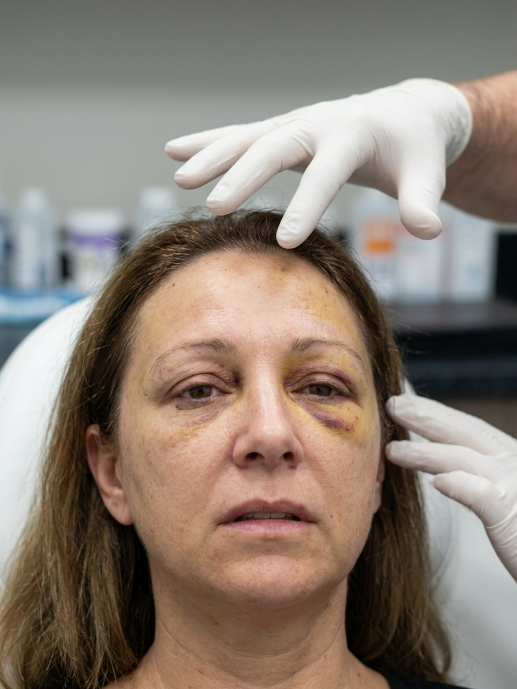
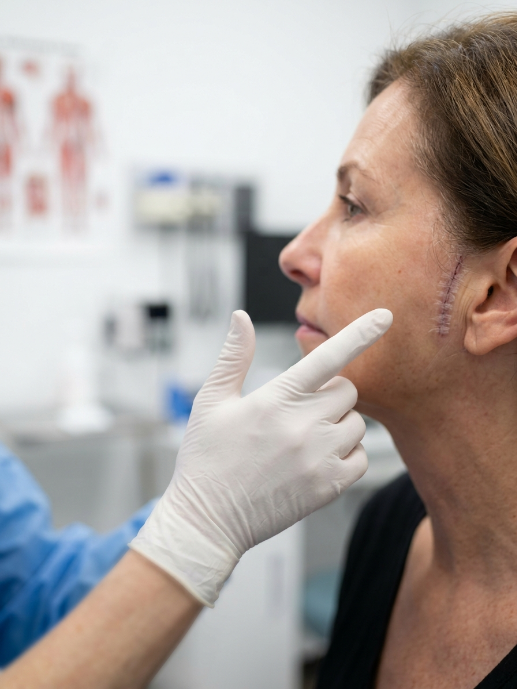
During the consultation, he will perform a physical examination, often using the “manual lift test” to show you what a potential result might look like. He will also review your medical history and discuss your goals in detail. This ensures that the surgical plan is customized to your unique facial anatomy, ensuring that the results are harmonious with your other features, such as your nose and chin.
Recovery and Long-term Expectations
Being a suitable candidate also means being prepared for the recovery process. Most patients can return to work within 7 to 10 days, though residual swelling and bruising may take a few weeks to fully resolve. The results of a surgical eyebrow lift are long-lasting, often enduring for a decade or more. However, the natural aging process will continue, so maintaining a good skincare regimen and protecting the skin from the sun is essential for preserving the surgical outcome.
In conclusion, if you feel that your forehead makes you look older or more tired than you feel, and you are in good health with realistic expectations, you are likely an excellent candidate for an eyebrow lift. This procedure offers a powerful way to reclaim a youthful, energetic appearance and boost your self-confidence through the expert hands of a board-certified specialist.
Sıkça Sorulan Sorular
At what age should I consider an eyebrow lift?
There is no ‘perfect’ age for an eyebrow lift, as the aging process varies significantly between individuals due to genetics and lifestyle. Most candidates are between the ages of 40 and 65, as this is when brow ptosis typically becomes noticeable. However, younger patients with naturally low brows or heavy foreheads may also be suitable candidates. The decision is based more on the anatomical condition of the forehead than the chronological age of the patient.
How do I know if I need a brow lift or an eyelid lift (blepharoplasty)?
This is a common question during consultations. Many patients believe they have excess eyelid skin when the real issue is actually a sagging brow pushing skin downward. A simple test is to manually lift your eyebrow to its ideal position; if the ‘excess’ eyelid skin disappears, a brow lift may be the primary solution. In many cases, patients are suitable candidates for both procedures performed simultaneously to achieve the best possible rejuvenation of the eye area.
Will an eyebrow lift leave visible scars?
Modern techniques, especially the endoscopic brow lift, are designed to minimize visible scarring. Incisions are typically small and hidden within the hairline. Even with a pretrichial lift, where the incision is at the hairline, the scars are meticulously placed to fade into the natural transition between the forehead and the scalp. Prof. Dr. Selçuk İnanlı takes great care in incision placement and suturing techniques to ensure that any scarring is virtually imperceptible once fully healed.
Are the results of an eyebrow lift permanent?
While an eyebrow lift cannot stop the natural aging process, its results are very long-lasting. Most patients enjoy the benefits of their surgery for 10 to 15 years. Factors such as sun protection, a healthy lifestyle, and skin quality will influence how long the results last. Over time, the brow may begin to settle slightly, but it will almost always remain in a higher and more youthful position than it would have been without the surgical intervention.
What are the risks associated with brow lift surgery?
Like any surgery, an eyebrow lift carries some risks, including infection, scarring, and reaction to anesthesia. Specific to this procedure, there is a very small risk of temporary or permanent numbness in the forehead or scalp, as well as minor hair loss at the incision sites. Choosing a highly experienced, board-certified surgeon like Prof. Dr. Selçuk İnanlı significantly reduces these risks, as he employs precise surgical methods and comprehensive post-operative care to ensure patient safety.