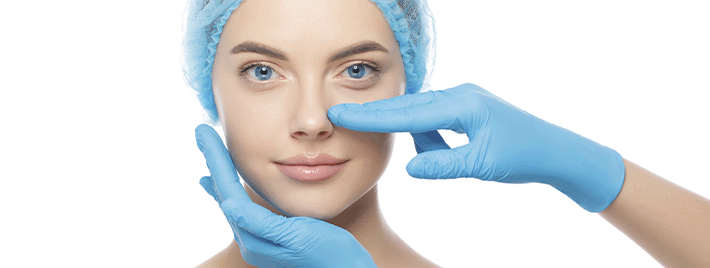
What is Rhinoplasty? Frequently Asked Questions About Rhinoplasty
The nose is one of the most striking and characteristic features of the face. Rhinoplasty, commonly known as nose job surgery, is a surgical procedure performed to improve the shape, size, or function of the nose. In addition to aesthetic concerns, it also offers a medical solution for individuals experiencing respiratory problems.
Rhinoplasty operations performed by expert surgeon Prof. Dr. Selçuk İnanlı aim to provide both a natural appearance and functionally allow for easier breathing.
Why is Rhinoplasty Performed?
Rhinoplasty isn’t just about appearance. Rhinoplasty is chosen for many different reasons:
- Harmonizing the nose shape with facial features
- Correction of drooping nose tip, nasal hump or asymmetry
- Correction of irregularities in the size or shape of the nostrils
- Repair of congenital deformities
- Correction of nasal structure deformities following trauma or accident
- Elimination of breathing difficulties caused by deviation or other structural problems in the internal structure of the nose
Who is it suitable for?
Rhinoplasty is suitable for both male and female patients. However, certain criteria must be considered:
- The nose development process must be completed (usually 16 years and older for women and 17 years and older for men)
- The person’s general health condition must be suitable for the operation.
- You should have realistic expectations
- There must be a negative impact on quality of life due to physical appearance or breathing problems.
Note: The change after rhinoplasty may vary depending on the person’s facial structure and skin thickness.
What are the Types of Rhinoplasty?
Prof. Dr. Selçuk İnanlı determines the most appropriate rhinoplasty technique based on the needs and expectations of his patients:
1. Closed Rhinoplasty
It is a surgical technique that is performed through incisions made inside the nostrils and leaves no visible scars from the outside.
2. Open Rhinoplasty
A small incision is made in the lower part of the nose to provide a wider field of view. While we perform closed rhinoplasty, we always prefer open rhinoplasty. It’s safer and allows the surgeon to access all areas. Therefore, it’s the most reliable method for both the patient and the surgeon.
3. Revision (Secondary) Rhinoplasty
It is a corrective operation performed on patients who have previously undergone rhinoplasty surgery but are dissatisfied or have persistent structural problems.
What is the Rhinoplasty Surgery Process?
- Examination and Planning: Facial structure, nasal anatomy, and expectations are evaluated in detail. 3D simulation technologies are used if necessary.
- Surgery: Using the chosen surgical method, the necessary corrections are made to the nasal structure. The surgery takes a minimum of 2-3 hours.
- Recovery: Mild bruising and swelling may occur after the surgery. The exact recovery process varies from person to person; the nasal splint is usually removed within the first week, and it may take several months for the swelling and swelling to completely subside.
What Should You Pay Attention to After Rhinoplasty?
- Avoid blows to the nose in the first weeks.
- It is recommended to keep the head area elevated.
- The surgeon’s advice should be taken into account for the use of glasses.
- Smoking and alcohol consumption can negatively affect the healing process.
- Control examinations should not be disrupted.
A Safe and Natural Rhinoplasty Experience
Prof. Dr. Selçuk İnanlı takes a holistic approach to addressing aesthetic and functional needs. The goal is to achieve a natural, balanced nose that complements your facial structure while also ensuring healthy breathing.
If you would like to get detailed information about rhinoplasty and benefit from an expert opinion for a personal evaluation, you can fill out the contact form or call our clinic.
Preparation Process Before Rhinoplasty Surgery
One of the most crucial steps in a successful rhinoplasty is proper preoperative planning. At Selçuk İnanlı Clinic, the personalized analysis and preparation process proceeds as follows:
- A detailed 3D analysis of the face and nose structure is performed.
- Respiratory functions are evaluated; deviation (nasal curvature), if any, is detected.
- The patient’s expectations and health status are discussed in detail.
- Necessary laboratory and health checks are provided.
- It is recommended to quit smoking and alcohol consumption at least 2 weeks in advance.
- Blood thinning medications are temporarily stopped under the supervision of a doctor .
Thanks to the preparation process, the most ideal planning is provided in terms of both aesthetic appearance and functional results.
What Problems Does Rhinoplasty Provide Solutions to?
Rhinoplasty doesn’t just mean changing the shape. It also solves many structural problems that make daily life difficult:
A prominent hump on the bridge of the nose;
a drooping or wide nose tip
; asymmetrical nostrils;
a nose that is disproportionate or incompatible with facial features;
deformities following trauma, fractures, or congenital deformations;
complaints such as difficulty breathing, nasal congestion, and snoring.
Prof. Dr. Selçuk İnanlı makes a detailed evaluation of each patient and offers the most appropriate aesthetic and functional solutions.
Post-Rhinoplasty Recovery Process and Things to Consider
The recovery process after rhinoplasty can vary from person to person. However, the general steps are as follows:
First 24 Hours:
- The head area should be kept elevated
- There may be mild pain, swelling and bruising.
- Cold compress application is recommended
First Week:
- The splints and tapes placed on the nose are removed.
- Edema and bruising around the eyes are reduced
- Mild nasal congestion is normal
First Month:
- The majority of the nose begins to take shape.
- Avoid strenuous physical activities
- Be careful against impacts
1 Year – 2 Years:
- The nose is completely fitted, the final appearance is achieved.
- Residual edema and mild asymmetries are corrected.
- The healing period is at least 1 year for thin skin and 2 years for thick skin, taking skin thickness as a reference.
Following your doctor’s recommendations during the recovery process directly affects the success of the operation.
Common Misconceptions About Rhinoplasty
“Rhinoplasty is only performed on women.”
It’s a misconception. Creating a natural, masculine nose is also possible for male patients.
“With every rhinoplasty surgery, the shape of the nose changes completely.”
False. The goal is to preserve the nose’s natural structure and harmonize it with the face.
“Rhinoplasty causes long-term pain.”
False. Modern techniques allow for minimal pain and rapid recovery.
Natural and Functional Results
Rhinoplasty is a complex surgical procedure that combines experience and artistry. Prof. Dr. Selçuk İnanlı plans the rhinoplasty procedure by taking both your aesthetic expectations and health needs into account.
Having international experience in his field, İnanlı offers personalized, natural results that are compatible with your facial features in his clinic in Istanbul.
You can contact us to get detailed information about rhinoplasty and benefit from the free preliminary evaluation opportunity.
What Should Be Considered Before Rhinoplasty Surgery?
It’s important for people considering rhinoplasty to prepare both physically and psychologically before the surgery. To ensure a healthy recovery and achieve the desired aesthetic result, the following steps should be followed:
Smoking and alcohol should be stopped at least two weeks before the surgery date. These substances slow down the healing process and increase the risk of complications.
Blood thinners, vitamin supplements, or herbal products should be reported to the doctor. They can be temporarily discontinued if necessary.
If you have the flu, a cold, or an active infection, the surgery date may be postponed.
Skin conditions such as acne and pimples on the face should be controlled.
Detailed blood tests and necessary imaging studies should be performed before the surgery.
Realistic expectations should be set, and detailed information about the entire process should be obtained from the doctor.
It should not be forgotten that rhinoplasty not only changes the physical appearance, but also has a direct impact on the person’s self-confidence and quality of life.
Who is Not Suitable for Rhinoplasty?
As with any surgical procedure, rhinoplasty may not be suitable for everyone. The following conditions may pose risks for rhinoplasty:
Individuals whose nose is not fully developed (young age group),
pregnant or breastfeeding women,
patients with bleeding disorders,
individuals with uncontrolled active infection or chronic disease, and
individuals with psychologically unrealistic expectations.
A surgeon who is an expert in his field evaluates all these factors and makes the most appropriate decision for the individual.
Why is Balance Important in Rhinoplasty and Facial Aesthetics?
Rhinoplasty isn’t just about beautifying the nose. The most important goal of a successful rhinoplasty is to maintain the overall harmony of facial features.
Because the nose is located at the center of the face, its proportionality with the forehead, eyes, cheeks, and chin greatly affects facial aesthetics. Therefore:
When disproportionate nasal structures are corrected, the face appears more symmetrical.
Corrections to the tip and bridge of the nose soften the facial expression.
A nose that is excessively small or unnatural can negatively impact overall aesthetics.
Prof. Dr. Selçuk İnanlı analyzes each patient’s facial structure in detail during the rhinoplasty process, aiming to achieve the most natural and balanced result.
Self-Confidence After Rhinoplasty and Its Effect on Social Life
Many individuals experience positive changes in both their appearance and social life after rhinoplasty. Common benefits after rhinoplasty include:
Increased self-confidence.
Posing more comfortably in photos.
Being more active in social environments.
Relaxation in daily activities due to increased breathing comfort.
A younger and more dynamic appearance thanks to the harmony of facial features.
Of course, each individual’s experience is different. However, with the right surgeon and personalized planning, rhinoplasty can significantly improve quality of life.
Advantages of Rhinoplasty in Istanbul
Türkiye, especially Istanbul, has become a major global center for plastic surgery in recent years. The key advantages of rhinoplasty in Istanbul include:
Expert surgeons with international experience,
fully equipped hospitals with modern technologies,
affordable prices,
health tourism packages for patients from abroad,
integrated services for accommodation, transportation, and the operation process, and
a high satisfaction rate for results that are natural and compatible with facial features.
Prof. Dr. Selçuk İnanlı has been providing services in the field of plastic surgery in Istanbul for many years and offers a safe healthcare experience to his patients from both Turkey and abroad.
Other Aesthetic Procedures That Can Be Combined with Rhinoplasty
In some cases, patients may choose not only rhinoplasty but also other procedures to complement their facial aesthetics. These types of combination procedures include:
Facial rejuvenation,
Chin aesthetics (mentoplasty),
Eyelid aesthetics (blepharoplasty)
, Facelift,
Fillers around the lips and nose
Combination procedures provide a holistic improvement in facial aesthetics and help achieve a more balanced appearance.
Frequently Asked Questions About Rhinoplasty
Is rhinoplasty a permanent procedure?
Yes, with the right surgical technique and appropriate healing process, the results are permanent. However, aging or trauma can cause changes in the nasal structure over time.
Are there any breathing problems after rhinoplasty?
Properly planned and executed rhinoplasty improves breathing quality. For patients experiencing respiratory problems, aesthetic and functional interventions are performed together.
How long does the recovery process take?
Basic improvement is observed within the first week. The majority of the nose takes shape within 3-6 months. Final results are generally seen after one year for thin skin and two years for thick skin.
When will the swelling and bruising after rhinoplasty go away?
It usually subsides significantly within the first 7-10 days. Mild swelling may persist for a few weeks. It may take 1-2 years for the final result to appear.
Is revision rhinoplasty possible?
Yes. Patients who have had a previous rhinoplasty but were not satisfied with the result can undergo a second rhinoplasty. However, revision surgeries require more precise planning.
Can I do sports after rhinoplasty?
Light walks can begin in 1-2 weeks. Heavy exercise and contact sports should be resumed for at least 6 weeks.
Does nose droop occur after rhinoplasty?
Proper surgical technique and a meticulous recovery process minimize the risk of nasal droop. Protecting the nasal tip support structures is particularly important.
Proper Planning, Natural Results with Selçuk İnanlı
Rhinoplasty directly impacts not only appearance but also a person’s quality of life. Prof. Dr. Selçuk İnanlı is the right address for rhinoplasty in Istanbul:
It performs personalized analysis with its expert team.
It creates the most appropriate plan for facial features.
It offers functional and aesthetic success together
. It aims for natural results that are compatible with facial features.
You can visit our contact page to get more information, make an appointment, or review previous patient experiences.
What is Rhinoplasty? Frequently Asked Questions About Rhinoplasty
Understanding the Art and Science: What is Rhinoplasty?
Rhinoplasty, commonly referred to as a “nose job,” is one of the most intricate and sophisticated procedures in the field of facial plastic surgery. It involves the surgical reshaping of the nose to improve its aesthetic appearance, enhance its functional performance, or both. Because the nose sits at the center of the face, even a millimeter of change can profoundly impact a person’s overall facial harmony and self-confidence.
As a world-class procedure, what is rhinoplasty nose surgery really about? It is the delicate balance between medical necessity and artistic vision. For many patients, the motivation is purely aesthetic, such as removing a dorsal hump or narrowing the nasal tip. For others, it is functional, aimed at correcting a deviated septum or other structural issues that impede breathing.
Prof. Dr. Selçuk İnanlı, an ENT and facial plastic surgery specialist certified by the European Academy of Facial Plastic Surgery (EAFPS), views the nose not just as an organ, but as a masterpiece where science meets art. With over three decades of experience, he emphasizes that a successful rhinoplasty should result in a nose that looks natural, functions perfectly, and complements the patient’s unique facial features.
The Dual Purpose: Aesthetic vs. Functional Rhinoplasty
While many people associate rhinoplasty only with cosmetic enhancement, the procedure is frequently performed to address health concerns.
Aesthetic Rhinoplasty
This focuses on the external appearance of the nose. Common goals include:
* Reducing the size of a large nose (Nasal Reduction).
* Straightening a crooked bridge.
* Reshaping a bulbous, drooping, or overly upturned nasal tip.
* Narrowing the width of the nostrils.
* Correcting the angle between the nose and the upper lip.
Functional Rhinoplasty (Septorhinoplasty)
Functional issues often stem from internal structural deformities. This is where what is septoplasty becomes relevant. While septoplasty specifically fixes the internal wall (septum), a septorhinoplasty combines this functional correction with external aesthetic changes. Conditions treated include:
* Deviated Septum: When the wall between nostrils is crooked, causing breathing difficulty.
* Turbinate Hypertrophy: Enlarged structures inside the nose that block airflow.
* Nasal Valve Collapse: Weakness in the nasal sidewalls that causes them to cave in during inhalation.
Advanced Surgical Techniques in Rhinoplasty
Modern medicine has introduced various techniques to make rhinoplasty safer and the results more predictable. The choice of technique depends on the patient’s anatomy and the surgeon’s philosophy.
1. Open Rhinoplasty
In this approach, a small incision is made across the columella (the tissue between the nostrils). This allows the surgeon to lift the skin and have a direct, unobstructed view of the nasal framework. It is preferred for complex cases, revision rhinoplasty, and significant structural changes.
2. Closed Rhinoplasty
All incisions are made inside the nostrils, meaning there are no visible external scars. This technique is often used for minor adjustments. While it offers a faster recovery, it provides less visibility for the surgeon compared to the open method.
3. Piezo (Ultrasonic) Rhinoplasty
One of the most revolutionary advancements is the use of ultrasonic energy. why you should have piezo rhinoplasty is a common question among modern patients. Unlike traditional methods that use hammers and chisels to break bone, Piezo surgery uses ultrasonic vibrations to precisely shape the nasal bones without damaging the surrounding soft tissues, nerves, or blood vessels. This results in significantly less bruising, swelling, and a much faster recovery period.
Specialized Categories of Rhinoplasty
Every face is different, and certain groups of patients require specialized approaches to ensure the best results.
Revision Rhinoplasty
When a primary surgery does not meet the patient’s expectations or causes new functional issues, a second or third procedure is required. revision rhinoplasty in Istanbul is a frequent choice for international patients. These cases are highly complex because the surgeon must work with scarred tissue and often lacks sufficient local cartilage, requiring grafts from the ear or ribs.
Ethnic Rhinoplasty
This refers to procedures performed on patients of non-Caucasian descent (Middle Eastern, African, Asian, etc.). The goal is to enhance the nose while preserving the patient’s ethnic identity and heritage. It often involves building up the nasal bridge and refining a thick-skinned nasal tip.
Male Rhinoplasty
Men’s noses typically have thicker skin and a stronger bone structure. The aesthetic goal for men is usually to maintain a masculine profile, avoiding a nose that is too small or overly upturned, which might look unnatural on a male face.
The Consultation and Planning Process
Success in rhinoplasty begins long before the first incision. Prof. Dr. Selçuk İnanlı utilizes a comprehensive analysis process to ensure patient satisfaction.
Facial Analysis and the Golden Ratio
The nose is analyzed in relation to the forehead, chin, and cheekbones. The concept of the Golden Ratio is often used to determine the ideal proportions. For instance, the angle between the nose and the lip (nasolabial angle) should ideally be between 90-95 degrees for men and 95-105 degrees for women.
Digital Imaging and Simulation
During the consultation, 3D imaging or digital simulations allow patients to see a preview of their potential results. This manages expectations and helps the surgeon and patient agree on the desired outcome.
Medical History and Physical Exam
The surgeon evaluates the thickness of the nasal skin, the strength of the cartilage, and the internal airway. Patients must disclose any history of smoking, allergies, or previous surgeries.
What to Expect During the Procedure
Anesthesia: Rhinoplasty is almost always performed under general anesthesia to ensure patient comfort and safety.
The Operation: Depending on the complexity, the surgery can last between 2 to 4 hours. The surgeon reshapes the bone and cartilage, potentially using grafts to provide support. Once the framework is refined, the skin is redraped over the new structure, and incisions are closed with fine sutures.
Splints and Packing: At the end of the surgery, a plastic or metal splint is placed on the outside of the nose to protect it. Internal silicone splints (Doyle splints) may be used to support the septum, allowing the patient to breathe immediately after surgery, unlike old-fashioned gauze packing.
The Recovery Journey: Day by Day
Recovery is a gradual process that requires patience. While the initial healing happens quickly, the final shape of the nose may take up to a year to fully stabilize.
* Days 1-3: The most swelling and bruising occur. Patients should rest with their heads elevated and use cold compresses around the eyes.
* Day 7: The external splint and sutures are removed. The nose will be swollen, but the new shape will be visible.
* Weeks 2-4: Most bruising disappears. Patients can usually return to work or school. However, strenuous exercise must be avoided.
* Months 3-6: Most of the edema (swelling) subsides, especially from the bridge. The tip remains slightly numb and firm.
* 1 Year: The final result is achieved. The skin has fully contracted, and all residual swelling is gone.
Risks and Safety Considerations
Like any major surgery, rhinoplasty carries certain risks, including infection, adverse reaction to anesthesia, or nosebleeds. However, in the hands of an experienced specialist like Prof. Dr. Selçuk İnanlı, these risks are minimized. Choosing a surgeon who is a member of prestigious organizations like the European Academy of Facial Plastic Surgery ensures that you are receiving care according to international safety standards.
Life After Rhinoplasty
Beyond the physical changes, the psychological impact of rhinoplasty is often profound. Patients report higher self-esteem and a more positive social outlook. When the functional aspects are addressed, the improvement in sleep quality and athletic performance due to better breathing is life-changing.
Why Choose Istanbul for Your Rhinoplasty?
Turkey, and specifically Istanbul, has become a global hub for medical tourism. This is due to the presence of highly skilled surgeons who perform a high volume of cases, combined with state-of-the-art hospital facilities and competitive pricing. Prof. Dr. Selçuk İnanlı’s clinic in Fulya, Istanbul, offers a boutique experience where patients receive personalized care from a surgeon recognized by the Ministry of Health for International Health Tourism.
Sıkça Sorulan Sorular
What is the ideal age for a rhinoplasty procedure?
The ideal age for rhinoplasty is generally after the nose has stopped growing, which typically occurs around age 15 or 16 for females and 17 or 18 for males. Operating before the growth plates have closed can interfere with facial development. However, there is no upper age limit for the procedure, provided the patient is in good overall health and has realistic expectations about the outcome.
How long does it take to see the final results of my nose job?
While you will see a significant difference immediately after the splint is removed on the seventh day, the final results take approximately 12 to 18 months to fully manifest. The bridge of the nose heals relatively quickly, but the nasal tip is the last area for the swelling to subside. Patients with thicker skin may experience a longer recovery period before the fine details of the surgical work become apparent.
Is rhinoplasty a painful surgery?
Surprisingly, most patients report that rhinoplasty is not as painful as they expected. Rather than sharp pain, most describe a feeling of ‘fullness’ or ‘congestion’ similar to a heavy cold. Post-operative discomfort is usually well-managed with standard pain relievers prescribed by the surgeon. The use of Piezo technology also reduces trauma to the tissues, leading to less post-operative pain compared to traditional methods.
Will I have visible scars after the procedure?
If you undergo a closed rhinoplasty, all incisions are made inside the nostrils, resulting in no visible external scarring. In an open rhinoplasty, a tiny incision is made on the columella (the narrow strip of tissue between the nostrils). This scar is typically very small and fades significantly over time, becoming virtually invisible to the naked eye after a few months of proper healing and sun protection.
Can I combine rhinoplasty with other facial procedures?
Yes, it is very common to combine rhinoplasty with other procedures to achieve better facial balance. A frequent combination is ‘profiloplasty,’ which involves a nose job and a chin implant (mentoplasty) to improve the side profile. Other patients may choose to have an eyelid aesthetic (blepharoplasty) or facial fillers performed at the same time to achieve a more comprehensive rejuvenation of the face.