Frequently Asked Questions About Facelift Surgery
Frequently Asked Questions About Facelift Surgery: A Comprehensive Guide
The Evolution of Facial Rejuvenation and the Modern Facelift
For decades, the concept of a facelift—clinically known as a rhytidectomy—was synonymous with a ‘pulled’ or unnatural appearance. However, the field of facial plastic surgery has undergone a paradigm shift. Today, under the expertise of surgeons like Prof. Dr. Selçuk İnanlı, the goal is no longer just to tighten the skin but to restore the underlying structures of the face to their youthful positions. This shift toward anatomical restoration provides results that are not only long-lasting but also remarkably natural.
As we age, our face undergoes complex changes. It is not merely a matter of skin sagging; it involves bone resorption, the redistribution and loss of subcutaneous fat, and the weakening of the muscular-aponeurotic system. Understanding these layers is critical for anyone considering Facelift Surgeries. This guide aims to address the most pressing concerns while providing an exhaustive overview of what modern surgical rejuvenation entails.
Understanding the Anatomy of Aging
The aging process of the face is multidimensional. To appreciate why a surgical facelift is often the most effective solution, one must understand the three primary components of facial aging:
1. Volume Loss and Fat Redistribution
In youth, fat is evenly distributed, creating smooth contours from the forehead to the jawline. As time passes, fat pads in the cheeks (the malar fat pads) begin to descend. This descent creates deep nasolabial folds (lines from the nose to the mouth) and leads to the formation of jowls along the jawline. Simultaneously, volume is lost in the temples and around the eyes, leading to a hollowed appearance.
2. Structural Laxity
The SMAS (Superficial Musculoaponeurotic System) is a layer of tissue that connects the facial muscles to the skin. In a youthful face, this layer is tight and resilient. Over time, gravity and the loss of collagen and elastin cause the SMAS to stretch and sag. This is the structural foundation that modern surgeons target to achieve a durable lift.
3. Skin Quality and Elasticity
The outermost layer, the skin, loses its ability to ‘snap back.’ Chronic sun exposure, lifestyle factors, and genetics accelerate the breakdown of the dermal matrix. While a facelift addresses the position of the skin, it is often paired with other treatments to address surface-level concerns like pigmentation and fine wrinkles.
Exploring Different Facelift Techniques
There is no ‘one-size-fits-all’ approach in the clinic of Prof. Dr. Selçuk İnanlı. Each procedure is tailored to the patient’s unique bone structure and degree of aging. Here are the primary techniques utilized in contemporary surgery:
The SMAS Facelift
The SMAS Facelift remains a gold standard. During this procedure, the surgeon lifts and tightens the SMAS layer before redraping the skin. By addressing the muscle layer, the tension is placed on the deep tissues rather than the skin itself. This prevents the ‘windblown’ look and ensures that the results can last for a decade or more.
The Deep Plane Facelift
The Deep Plane Facelift is an advanced technique where the surgeon enters a plane beneath the SMAS. This allows for the release of certain ligaments, enabling the entire midface and cheek area to be moved as a single unit. This technique is particularly effective for correcting heavy jowls and restoring volume to the midface without the need for excessive fillers. It is a highly specialized procedure that requires the anatomical precision of an ENT and Facial Plastic Surgery Specialist.
The Mini Facelift
For younger patients or those with moderate sagging primarily in the lower face, a Mini Facelift may be appropriate. This involves shorter incisions, usually limited to the area around the ears. While the recovery is faster, it does not address the neck or midface as comprehensively as a full rhytidectomy. It is often a way for patients to look 10 years younger with a facelift while minimizing surgical downtime.
Neck Lift (Platysmaplasty)
A facelift is almost always combined with a Neck Lift. The platysma muscle in the neck often separates as we age, creating ‘bands.’ By tightening these muscles and removing excess skin, the surgeon can restore a sharp, youthful cervicomental angle (the angle between the chin and the neck).
Candidacy: Who is the Ideal Patient?
Determining if you are a candidate for surgery involves more than just looking in the mirror. A successful outcome depends on several factors:
* Skin Elasticity: While the surgery removes excess skin, the remaining skin should still have some degree of natural resilience to heal well.
* Bone Structure: Strong cheekbones and a defined jawline provide a better ‘frame’ for the lifted tissues.
* Overall Health: Since the procedure is performed under general anesthesia, patients must be in good health. Conditions like uncontrolled hypertension or diabetes can increase the risk of complications.
* Realistic Expectations: A facelift is a restorative procedure, not a transformative one. It aims to make you look like a refreshed version of yourself, not a different person.
The Role of Lifestyle: Smoking and Healing
one of the most critical factors in surgical success is the patient’s lifestyle. We cannot overstate the negative effects of smoking after facelift surgery. Nicotine causes vasoconstriction, which reduces blood flow to the skin flaps. This can lead to skin necrosis (tissue death), poor scarring, and delayed healing. Patients are strictly advised to quit smoking at least 4 to 6 weeks before and after the operation.
The Surgical Journey: What to Expect
Pre-Operative Consultation
Your journey begins with a detailed consultation with Prof. Dr. Selçuk İnanlı. During this meeting, your facial structure is analyzed, and a surgical plan is mapped out. This is the time to discuss your medical history and any previous cosmetic interventions, such as dermal fillers or Botox.
The Procedure
The surgery typically takes between 3 to 6 hours, depending on the complexity and whether it is combined with other procedures like blepharoplasty (eyelid surgery) or a brow lift. Incisions are strategically placed along the hairline and around the ear to ensure that scars are virtually invisible once healed.
The Recovery Phase
Understanding the recovery process after a facelift is essential for a stress-free experience.
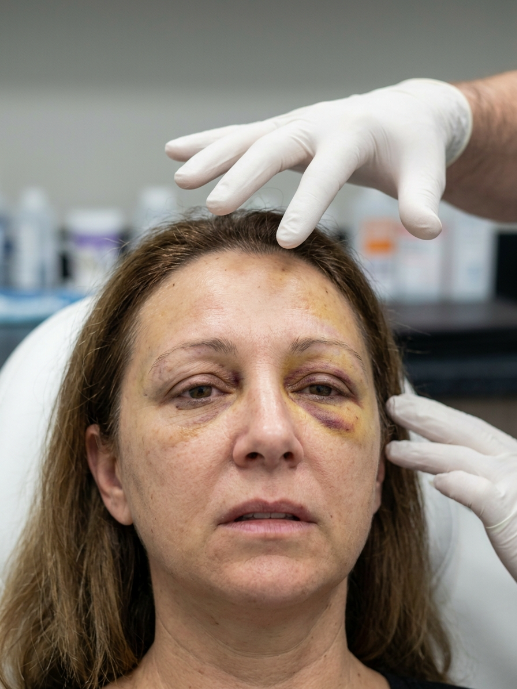
* Day 1-2: The face will be wrapped in a supportive bandage. Some swelling and bruising are normal.
* Week 1: Most patients feel well enough to move around the house. Sutures are typically removed between days 7 and 10.
* Week 2-3: Swelling begins to subside significantly. Many patients return to work at this stage, using makeup to conceal any lingering bruising.
* Month 1-3: The final contours begin to emerge. The tissues soften, and the incisions continue to fade.
Risks and Complications: A Transparent Approach
As with any major surgery, there are risks involved. These include hematoma (blood collection under the skin), infection, and temporary nerve weakness. However, choosing an experienced, board-certified surgeon significantly minimizes these risks. Prof. Dr. Selçuk İnanlı employs meticulous surgical techniques to ensure the safety and satisfaction of every patient.
Combining Facelift with Other Procedures
To achieve a truly harmonious result, many patients choose to combine their facelift with other operations:
* Eyelid Aesthetics: Addressing sagging eyelids and under-eye bags can brighten the entire face.
* Fat Transfer: Using the patient’s own fat to restore volume to the hollowed temples or cheeks.
* Rhinoplasty: Refining the nose to match the rejuvenated facial proportions.
By addressing the face as a whole, the surgeon ensures that no single feature looks ‘out of place’ compared to the others.
The Psychological Impact of Facial Rejuvenation
The benefits of a facelift extend beyond the physical. Many patients report a significant boost in self-confidence and a renewed sense of vigor. When your external appearance aligns with your internal energy, it can have a profound effect on your social and professional life. The goal is to eliminate the ‘tired’ look that often accompanies aging, allowing your natural vitality to shine through.
Why Choose Istanbul and Prof. Dr. Selçuk İnanlı?
Istanbul has become a global hub for Health Tourism, offering world-class medical facilities and highly skilled surgeons. Prof. Dr. Selçuk İnanlı, an ENT specialist certified by the European Academy of Facial Plastic Surgery (EAFPS), combines academic rigor with artistic vision. His philosophy—that aesthetics is the art of concentrating on the beautiful—is evident in the thousands of successful procedures he has performed.
Whether you are traveling from abroad or are a local resident, the clinic provides services backed by the Health Türkiye guarantee, ensuring that your surgical journey is safe, professional, and transformative.
Sıkça Sorulan Sorular
What is the best age to get a facelift surgery?
There is no specific ‘perfect’ age for a facelift, as the rate of aging varies significantly between individuals due to genetics, lifestyle, and environmental exposure. Most patients seek a facelift in their late 40s to 60s when skin laxity and jowling become more pronounced. However, ‘preventative’ mini-facelifts are becoming more common in younger patients, while healthy individuals in their 70s can still achieve excellent results. The primary indicator is the presence of structural sagging that non-surgical treatments like fillers can no longer adequately address.
How long do the results of a facelift typically last?
The results of a modern SMAS or Deep Plane facelift are long-lasting, typically ranging from 10 to 15 years. While the surgery effectively ‘sets back the clock,’ the natural aging process continues. Factors such as sun protection, a healthy diet, not smoking, and maintaining a stable weight will help preserve the surgical outcome. Many patients find that even as they continue to age, they always look younger than they would have without the procedure, as the underlying structural improvements are permanent.
Will I have visible scars after the procedure?
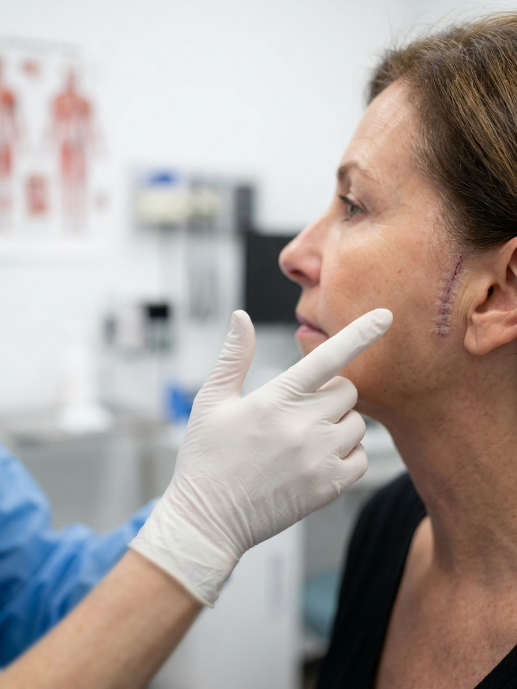
One of the hallmarks of a master facial plastic surgeon is the ability to hide incisions. In a facelift, incisions are typically placed within the hairline and in the natural contours of the ear (pre-auricular and post-auricular). Initially, these lines may appear slightly pink, but they generally fade to a thin, nearly invisible white line over 6 to 12 months. Prof. Dr. Selçuk İnanlı uses meticulous suturing techniques to ensure that tension is placed on deep tissues, which prevents the scars from widening or becoming prominent.
What is the difference between a facelift and a liquid facelift?
A surgical facelift is a permanent procedure that repositions deep facial tissues and removes excess skin, addressing the root cause of sagging. A ‘liquid facelift’ refers to the use of injectable dermal fillers and Botox to temporarily add volume and smooth wrinkles. While injectables are excellent for early signs of aging or for enhancing surgical results, they cannot lift heavy jowls or tighten a sagging neck. For patients with significant skin laxity, a liquid facelift often requires large volumes of filler, which can lead to an overfilled or ‘puffy’ look rather than a true lift.
When can I return to my normal exercise routine after surgery?
Recovery requires patience to ensure the best aesthetic outcome. Most patients can resume light walking within a few days of surgery, as this promotes circulation. However, strenuous activities, heavy lifting, and high-impact cardio must be avoided for at least 3 to 4 weeks. These activities increase blood pressure, which can lead to swelling or the formation of a hematoma. It is also important to avoid activities that require extreme neck movements or bending over until your surgeon gives you the final clearance.