What Are the Techniques Used in Brow Lift Procedures?
What Are the Techniques Used in Brow Lift Procedures?
The brow lift is a popular aesthetic surgery that is preferred by both young and middle-aged patients. Smooth eyebrows, combined with beautiful eyes, give the person an attractive and impressive expression. Although the ideal eyebrow shape differs for each individual, it is an unchanging fact that raised eyebrows add a more lively and youthful expression to the face. Thousands of people apply for eyebrow lifting procedures every year for this purpose.
What Is the Ideal Brow Shape?
As we mentioned above, there is no ideal eyebrow shape that is fitting for everyone. The shape of the eyebrows that will comply with the face shape and general facial features of each person may vary. Some people like short, thick, and straight eyebrows, some like thin and long, and some like natural-looking bushy eyebrows. Recently, the messy and upturned eyebrow image has become very popular. This image, which we first saw in supermodels, has become a trend all over the world because it looks more natural.
When it comes to shaping the eyebrows, there are options such as permanent make-up and eyebrow botox. On the other hand, surgical operations are more preferred because it gives the most effective and permanent results.
Which Techniques Are Used in Brow Lifting?
Brow lift procedures are divided into two groups as surgical and non-surgical. Non-surgical methods include botox, thread eyebrow lift, filler injection, Focus Ultrasound, and Scarlet S.
- Botox: Botox works by blocking the conduction in the nerve endings. Botox is injected into the edges, under, and above the eyebrows. In this way, a more lifted appearance is obtained in the eyebrows. Botox lasts for an average of 6 months.
- Thread Eyebrow Lift: After the area around the eyes is anesthetized with local anesthesia, the tissues under the skin are lifted using the threading technique.
- Fillers: It is one of the most practical eyebrow lifting procedures. With filler injection, eyebrows can be lifted to 1-1.5 mm.
- Focus Ultrasound: It is a new technology. With the ultrasound system, the subcutaneous tissues are stretched. It is a very permanent procedure that can last up to 1 year.
- Scarlet S: Also known as golden needle, this technique raises eyebrows using radiofrequency energy. An average of three sessions once a month, is required for effective results.
Non-surgical methods seem to be advantageous as there is no surgical incision and the procedure time is as short as 10-15 minutes. However, the disadvantage of these methods is that their permanence does not last as long as surgical methods.
Surgical eyebrow lifting techniques are forehead-temple lift surgery and endoscopic method.
- Forehead-Temple Lift Surgery: The only brow lift surgery method known until the endoscopic method was forehead lift surgery. Although impressive results can be obtained with this surgery, if the incision is not well hidden in the hairy area, it leaves noticeable surgical scars in the future.
- Endoscopic Method: It is a great advantage to open very small surgical incisions in the endoscopic method. In this way, the recovery time is shortened, and the scarring after the operation is eliminated. In this method, endoscopic instruments are used that pass through tiny incisions to shape the eyebrows.
If you consider having rhinoplasty surgery, contact us right away to get a free consultancy service from Prof. Dr. Selçuk İnanlı.
What Are the Techniques Used in Brow Lift Procedures?
The upper third of the face—the forehead and the eyebrows—plays a critical role in communicating our emotions and determining our overall appearance of vitality. Over time, factors such as gravity, genetic predisposition, and the natural aging process lead to the descent of the brow line, often resulting in a tired, angry, or sad expression. Understanding what are the techniques used in brow lift procedures is essential for any patient considering facial rejuvenation. This comprehensive guide explores the surgical and non-surgical methodologies employed by world-class specialists like Prof. Dr. Selçuk İnanlı to restore a youthful, energetic, and natural look to the face.
The Anatomy and Aging of the Brow and Forehead
Before delving into the specific techniques, it is crucial to understand the anatomical structures involved. The forehead is primarily controlled by the frontalis muscle, which is responsible for raising the eyebrows and creating horizontal forehead lines. Opposing this are the procerus and corrugator supercilii muscles, which pull the brows downward and inward, creating the vertical “11” lines between the eyes.
As we age, the skin loses its elasticity, and the fat pads beneath the skin diminish or shift. The supraorbital ridge (the bone above the eye socket) becomes more prominent as the soft tissue thins. This leads to brow ptosis, where the eyebrows fall below the orbital rim, sometimes even obstructing vision or exacerbating the appearance of sagging eyelids. Distinguishing between a need for a brow lift and an eyelid surgery is a hallmark of a skilled facial plastic surgeon.
Non-Surgical Brow Lift Techniques
For patients with mild to moderate sagging or those not yet ready for surgery, several non-invasive options exist. These techniques focus on muscle modulation and volume restoration.
Botulinum Toxin (The Chemical Brow Lift)
Botox and similar neurotoxins are the most common non-surgical tools. By strategically injecting the toxin into the muscles that pull the eyebrow down (the depressors), the frontalis muscle is allowed to lift the brow without opposition. This results in a subtle, temporary elevation of the lateral brow, often referred to as a “chemical lift.”
Dermal Fillers and Volume Restoration
In many cases, the brow appears to drop because it has lost volume. Injecting hyaluronic acid or other dermal fillers along the brow bone can provide structural support, “propping up” the skin and restoring the youthful convexity of the forehead. This technique is often combined with other dermal filler applications to achieve global facial harmony.
Thread Lifts
Suspension threads, made of biocompatible materials like PDO (Polydioxanone), can be inserted under the skin to physically lift and anchor the brow in a higher position. While the results are immediate, they are generally less permanent than surgical options, lasting between 12 to 18 months.
Surgical Brow Lift Techniques: A Detailed Overview
When non-surgical methods are insufficient, surgical intervention provides a definitive and long-lasting solution. There are several primary surgical approaches, each tailored to the patient’s hairline, forehead height, and specific aesthetic goals.
1. Endoscopic Brow Lift (The Modern Standard)
The endoscopic brow lift is currently the most popular technique due to its minimally invasive nature. It involves several small incisions (usually 3 to 5) hidden behind the hairline. A small camera, called an endoscope, is inserted to allow the surgeon to see and release the muscles and tissues through these tiny ports.
* Procedure: The surgeon releases the periosteum (the membrane covering the bone) and the depressor muscles. The entire forehead and brow complex are then shifted upward and secured using specialized anchors or sutures.
* Advantages: Minimal scarring, reduced risk of numbness, and a faster recovery compared to traditional methods. It is an excellent option for patients who are suitable candidates for an eyebrow lift but want to avoid large scars.
2. Coronal Brow Lift (The Traditional Method)
This is the classic technique, involving a single long incision that runs from ear to ear across the top of the head, well behind the hairline.
* Procedure: The skin is lifted, the underlying muscles are modified, and excess skin is removed before the incision is closed.
* Advantages: It provides the most significant amount of lift and is ideal for patients with very deep wrinkles or severe sagging. However, it can shift the hairline backward, making it less ideal for patients with high foreheads.
3. Pretrichial (Hairline) Brow Lift
For patients who already have a high forehead and do not want their hairline moved further back, the pretrichial lift is preferred.
* Procedure: The incision is made right at the edge of the hairline. This allows the surgeon to lift the brows while simultaneously shortening the forehead if necessary.
* Advantages: Excellent for forehead reduction and brow elevation. The scar is designed to allow hair to grow through it, making it nearly invisible over time.
4. Temporal (Lateral) Brow Lift
Often performed in conjunction with a facelift or eyelid surgery, the temporal lift focuses specifically on the outer third of the brow.
* Procedure: Small incisions are made in the temple area, hidden in the hair. This focuses on lifting the “tail” of the eyebrow, which is often the first part to sag.
* Advantages: It creates a more “cat-eye” or almond-shaped eye appearance and addresses the lateral hooding that often bothers patients.
5. Direct Brow Lift
In this technique, the incision is made directly above the eyebrow hair.
* Procedure: A small amount of skin and tissue is removed immediately above the brow.
* Advantages: It provides precise control over the brow shape. While it leaves a scar, it is often used for older patients with thick brow hair or for functional cases where vision is severely impaired.
6. Mid-Forehead Lift
This technique utilizes existing deep forehead wrinkles to hide the incision. It is particularly effective for men who have prominent forehead furrows and receding hairlines where a traditional incision would be too visible.
The Role of Technology: Piezo and High-Definition Imaging
In modern facial plastic surgery, specialists like Prof. Dr. Selçuk İnanlı utilize advanced tools to improve outcomes. While Piezo (ultrasonic) technology is most famous for rhinoplasty, the principles of tissue-sparing and precision are applied across all facial surgeries. High-definition endoscopes allow for better visualization of the supraorbital nerves, significantly reducing the risk of permanent numbness in the forehead after a lift.
Pre-Operative Planning: The Philosophy of Art and Science
Successful brow lifting is not just about height; it is about shape and harmony. A brow that is lifted too high or too evenly can create a “surprised” or “unnatural” look. The Golden Ratio and facial symmetry play a vital role in the planning phase. During the consultation, the surgeon assesses:
- Hairline Position: Determines whether a coronal, endoscopic, or pretrichial approach is best.
- Skin Quality: Thicker skin may require more robust internal fixation.
- Brow Symmetry: Most people have one brow higher than the other; the surgery aims to correct this imbalance.
- Bony Anatomy: The shape of the forehead bone determines how the skin will drape post-operatively.
Recovery and Aftercare: What to Expect
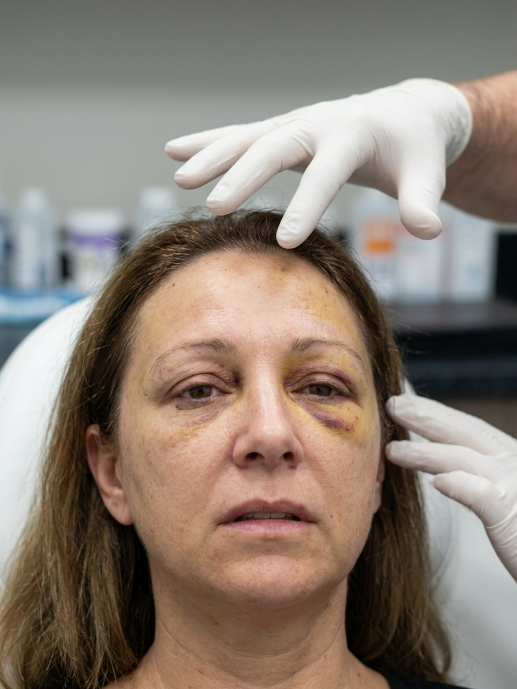
Understanding the recovery process is just as important as knowing what are the techniques used in brow lift procedures. Generally, patients can expect some degree of swelling and bruising, particularly around the eyes. This is a natural part of the healing process as the tissues settle into their new, elevated position.
* Week 1: Most swelling occurs. Sutures or clips are usually removed by day 7 to 10. Patients are advised to keep their head elevated and use cold compresses.
* Week 2: Bruising typically fades. Many patients return to work at this stage, using camouflage makeup if necessary.
* Full Result: While the lift is visible immediately, the final refinement of the forehead and brow area can take 3 to 6 months to fully manifest. For a detailed breakdown, see our guide on bruising and swelling after a forehead lift.
Why Choose a Specialist Like Prof. Dr. Selçuk İnanlı?
Choosing the right surgeon is the most critical decision in your aesthetic journey. Prof. Dr. Selçuk İnanlı is a world-class ENT and Facial Plastic Surgery Specialist, certified by the European Academy of Facial Plastic Surgery (EAFPS). With decades of experience and an academic background as a Professor, he combines surgical precision with an artistic eye. His philosophy is that nasal and facial aesthetics are where “science and art meet in beauty.”
Operating in Fulya, Istanbul, his clinic provides international standards of care, backed by the Turkish Ministry of Health’s Health Tourism Authorization Certificate. Whether you are seeking a subtle rejuvenation or a comprehensive facelift, the focus is always on achieving a result that looks like you—only refreshed and revitalized.
Combining Brow Lift with Other Procedures
It is very common to combine a brow lift with other facial surgeries to achieve a balanced result. If a patient only lifts the brow but has significant skin laxity in the lower face, the result may look incomplete.
* Blepharoplasty: Removing excess skin from the upper lids often goes hand-in-hand with a brow lift.
* Facelift: Addresses the jowls and neck, ensuring the entire face looks the same “age.”
* Fat Transfer: Adding volume to the temples and cheeks to complement the lifted brow.
Long-Term Maintenance of Results
While surgical techniques provide a permanent change to the tissue structure, they do not stop the clock on aging. To maintain the results of a brow lift, patients are encouraged to follow a healthy lifestyle, including:
* Strict Sun Protection: UV rays accelerate skin aging and can cause scars to darken.
* Skincare: Using retinoids and antioxidants to maintain skin elasticity.
* Non-Surgical Touch-ups: Occasional Botox treatments can help keep the depressor muscles from pulling the new lift down prematurely.
Final Thoughts on Brow Lift Techniques
The evolution of brow lift surgery has moved from aggressive, large-incision procedures to subtle, technologically advanced, and patient-specific techniques. By understanding what are the techniques used in brow lift procedures, patients can engage in more meaningful dialogues with their surgeons. Whether it is the minimal-incision endoscopic approach or the forehead-shortening pretrichial lift, the goal remains the same: a natural, youthful, and vibrant expression that reflects your inner energy.
Sıkça Sorulan Sorular
Who is the ideal candidate for a brow lift procedure?
The ideal candidate is typically an individual who experiencing drooping or ‘sagging’ of the eyebrows, which may create a tired or angry appearance. Candidates should be in good general health and have realistic expectations about the outcome. Often, these patients also have deep horizontal furrows on the forehead or vertical frown lines between the eyebrows. A consultation with a specialist like Prof. Dr. Selçuk İnanlı is necessary to determine if the issue is primarily the brow or if eyelid surgery is also required for the best aesthetic result.
How long does the recovery process take after a surgical brow lift?
Recovery varies depending on the specific technique used. For an endoscopic brow lift, most patients can return to non-strenuous work within 7 to 10 days. Swelling and bruising are common in the first week and may migrate down toward the eyes. Full healing, where all internal tissues settle and scars begin to fade significantly, usually takes several months. It is critical to follow post-operative instructions, such as keeping the head elevated and avoiding heavy lifting, to ensure a smooth and speedy recovery.
Are the results of a surgical brow lift permanent?
While a surgical brow lift provides long-lasting results that can last 10 to 15 years, it cannot stop the natural aging process. The tissues will continue to age, and gravity will still exert its influence over time. However, the brow will always be in a higher position than it would have been without the surgery. Maintaining a healthy lifestyle, avoiding smoking, and practicing consistent sun protection can significantly extend the longevity of your surgical results.
Can a brow lift be combined with eyelid surgery (blepharoplasty)?
Yes, combining a brow lift with blepharoplasty is extremely common and often recommended. In many cases, what appears to be excess skin on the upper eyelid is actually caused by a drooping brow pushing skin downward. By performing both procedures simultaneously, the surgeon can address the root cause of the sagging (the brow) and remove any true excess skin from the eyelid, resulting in a much more open, youthful, and harmonious eye area.
Will there be visible scarring after the procedure?
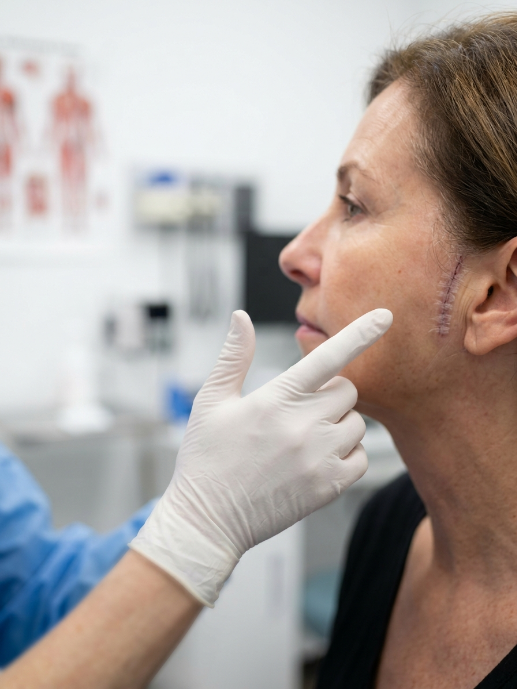
The visibility of scars depends entirely on the technique chosen. In an endoscopic brow lift, the small incisions are hidden completely within the hair, making them invisible once healed. In a pretrichial lift, the incision is at the hairline, but it is meticulously closed so that hair can grow through the scar, camouflaging it. Even in a coronal lift, the scar is placed well back in the scalp. A skilled surgeon like Prof. Dr. Selçuk İnanlı prioritizes incision placement to ensure that any resulting scars are as discreet as possible.