Will there be bruising and swelling after forehead lift surgery?
Will there be bruising and swelling after forehead lift surgery?
A forehead lift, often referred to as a brow lift, is a sophisticated surgical procedure designed to rejuvenate the upper third of the face. By repositioning the brow line and smoothing out deep furrows or horizontal wrinkles, this operation provides a more youthful, alert, and refreshed appearance. However, as with any invasive surgical intervention, the body’s natural response to tissue manipulation involves a healing phase characterized by bruising and swelling. For many patients considering this transformation, the primary concern is not the surgery itself, but the recovery period and the visible side effects that follow. Understanding the trajectory of these symptoms is crucial for managing expectations and ensuring a smooth transition back to daily life.
Understanding the Biological Response: Why Bruising and Swelling Occur
When a surgeon performs a forehead lift, several layers of tissue, including the skin, muscles, and sometimes the underlying fascia, are adjusted. This process inevitably disrupts small blood vessels and triggers the body’s inflammatory cascade. Swelling, or edema, is the accumulation of fluid in the interstitial spaces as the immune system sends white blood cells and nutrients to the site of the injury to begin the repair process.
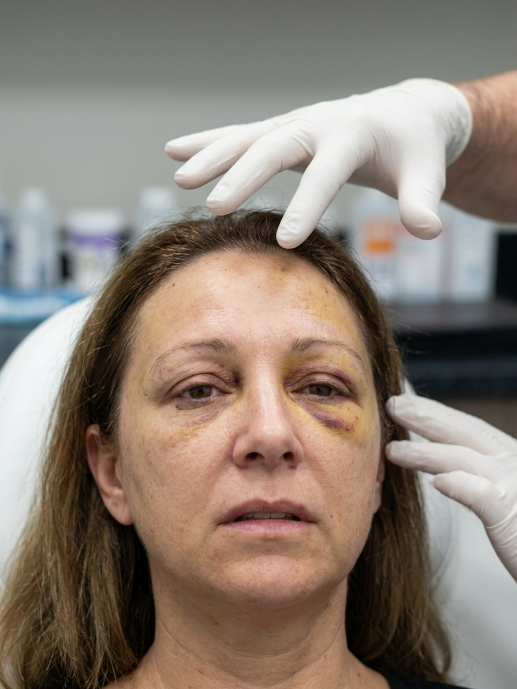
Bruising, clinically known as ecchymosis, occurs when blood escapes from the capillaries into the surrounding tissues. Because the forehead is located at the top of the face, gravity plays a significant role in where this fluid and blood migrate. It is very common for patients to notice that while the surgery was performed on the forehead, the most visible bruising and swelling often settle around the eyelids and upper cheeks. This is a normal part of the physiological process and does not indicate that anything is wrong with the surgical site itself.
The Role of Surgical Technique in Recovery
The severity of post-operative symptoms often depends on the specific forehead lift method chosen by the surgeon. Modern advancements have introduced various approaches, ranging from traditional open methods to minimally invasive endoscopic techniques.
Endoscopic Forehead Lift
The endoscopic brow lift is currently one of the most popular methods due to its smaller incisions and reduced tissue trauma. Because the surgeon uses a camera (endoscope) and specialized tools through tiny incisions hidden in the hairline, there is generally less disruption to the blood vessels. Consequently, patients undergoing an endoscopic lift typically experience less intense bruising and a faster resolution of swelling compared to more invasive techniques.
Traditional (Coronal) Forehead Lift
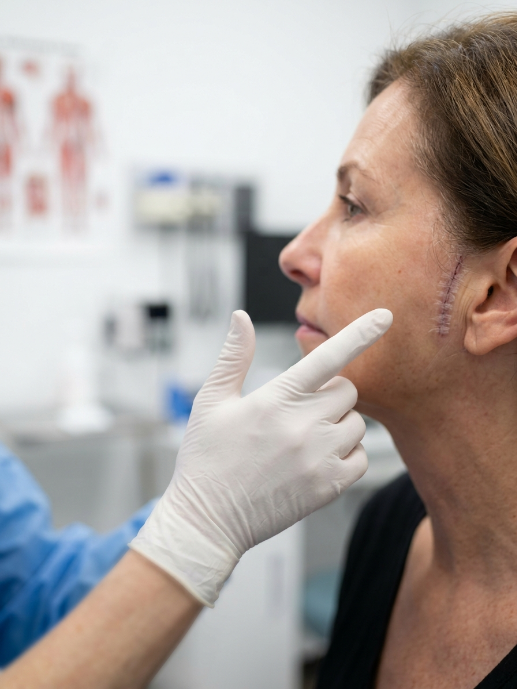
The coronal lift involves a longer incision made across the top of the head, behind the hairline. While this provides the surgeon with maximum visibility and control for significant corrections, it involves more extensive tissue elevation. As a result, the inflammatory response is usually more pronounced, leading to a longer period of visible recovery. However, for certain patients with specific anatomical needs, this remains the gold standard for achieving a permanent and dramatic result.
The Timeline of Bruising and Swelling
Recovery is a marathon, not a sprint. While every patient heals at a different rate based on their genetics, age, and overall health, there is a general timeline that most people follow after a forehead lift.
The First 48 Hours: The Peak of Inflammation
The first two days following surgery are typically when swelling is at its most significant. Patients often feel a sense of tightness across the forehead and around the eyes. It is during this window that the most proactive measures must be taken to minimize fluid accumulation. You may notice that the swelling increases slightly on the second morning compared to the first; this is a standard biological peak before the body begins to reabsorb the fluid.
Days 3 to 7: The Transition Phase
By the third or fourth day, the acute swelling begins to subside, but this is often when bruising becomes most apparent. The colors will shift from a deep purple or blue to a reddish-brown or green. Many patients are surprised to see that their eyelids look puffy or discolored during this week. This is simply the result of gravity-driven migration. By the end of the first week, most patients feel comfortable enough to move around their homes, though they may still prefer to avoid social engagements.
Weeks 2 to 3: Returning to Social Life
During the second week, the “rainbow” of bruising begins to fade into a light yellow or tan color, which can often be easily camouflaged with high-quality concealer. The bulk of the edema will have dissipated, though subtle swelling may persist, particularly at the incision sites or along the brow bone. By the end of the third week, the vast majority of patients look “socially acceptable,” meaning strangers would likely not notice that they recently had surgery.
Months 1 to 6: The Refinement Period
While the obvious side effects disappear quickly, residual, microscopic swelling can take several months to fully resolve. This is the period where the final contours of the brow become defined. Patients may notice slight fluctuations in swelling in the morning, which usually clears by the afternoon. The nerves are also healing during this time, which can lead to temporary sensations of itching or numbness.
Professional Strategies to Minimize Bruising and Swelling
Prof. Dr. Selçuk İnanlı emphasizes that patient compliance with post-operative instructions is just as important as the surgical technique itself. There are several clinically proven methods to help the body process the trauma of surgery more efficiently.
Cold Compresses and Cryotherapy
In the first 48 hours, applying cold compresses to the eye and forehead area (without putting direct pressure on the incisions) is the most effective way to constrict blood vessels and limit the spread of edema. It is recommended to apply cold for 20 minutes on and 20 minutes off during waking hours.
Elevation is Key
Gravity is your best friend or your worst enemy during recovery. Keeping the head elevated at a 30 to 45-degree angle—even while sleeping—is essential for the first week. This prevents fluid from pooling in the facial tissues and significantly reduces the duration of swelling.
Nutritional and Medicinal Support
Avoiding certain substances before and after surgery is vital. Blood thinners, including aspirin, ibuprofen, and certain herbal supplements like Vitamin E or Ginkgo Biloba, should be stopped at least two weeks prior to the operation to prevent excessive bruising. Some surgeons recommend Arnica Montana or Bromelain (pineapple enzyme) to help the body break down bruised tissue faster, though these should only be taken under professional guidance.
Avoiding Strain and Heat
Increasing your heart rate or blood pressure can lead to secondary bleeding or increased swelling. Patients should avoid heavy lifting, vigorous exercise, and bending over for at least two weeks. Similarly, heat causes vasodilation; therefore, saunas, hot showers, and direct sun exposure should be avoided during the initial healing phase.
Factors That Influence Your Personal Recovery Rate
No two patients are identical, and several variables can dictate whether you will be a “fast healer” or if your bruising and swelling will linger.
1. Skin Quality and Age
As we age, our skin becomes thinner and the capillary walls become more fragile. Older patients may find that bruising is more extensive and takes a few days longer to clear. Conversely, younger patients with more elastic skin might see a quicker resolution of edema.
2. Smoking and Nicotine Use
Smoking is one of the most detrimental factors in surgical recovery. Nicotine constricts blood vessels, reducing the oxygen supply to the healing tissues. This not only increases the risk of complications but significantly slows down the body’s ability to clear bruising. For a detailed look at these risks, patients should review the negative effects of smoking on facial procedures.
3. Individual Tendency to Bruise
Some individuals are simply more prone to bruising due to their unique vascular anatomy or platelete function. If you are someone who bruises easily from a minor bump, you should expect more visible discoloration after a forehead lift.
Comparing Forehead Lifts with Other Facial Procedures
It is common for patients to combine a brow lift with other facelift surgeries or eyelid aesthetics (blepharoplasty). When multiple procedures are performed simultaneously, the cumulative trauma to the face is higher, which naturally results in more significant bruising and swelling. However, the overall recovery time is often more efficient because the patient only undergoes one healing period rather than two separate ones.
For example, if a patient undergoes both a forehead lift and a face lift, the swelling may extend down to the jawline. In such cases, the use of compression garments may be recommended to help support the tissues and encourage lymphatic drainage.
When to Contact Your Surgeon
While bruising and swelling are expected, it is important to distinguish between normal recovery and potential complications. You should contact Prof. Dr. Selçuk İnanlı or your surgical team immediately if you experience:
* Sudden, asymmetric swelling: If one side of the forehead or one eye becomes significantly larger than the other, it could indicate a hematoma (a collection of blood that needs to be drained).
* Extreme pain: While tightness is normal, sharp or throbbing pain that is not relieved by prescribed medication is a red flag.
* Fever or chills: These are signs of a potential infection.
* Redness and warmth: If the surgical area becomes increasingly red, hot to the touch, or begins to drain pus.
Preparing for the “New You”
The psychological journey of recovery is just as important as the physical one. Seeing yourself in the mirror with bruising and swelling can be startling. It is helpful to remember that the face you see in the first week is not your final result. As the fluid drains and the discoloration fades, the refined, youthful architecture of your brow will begin to emerge.
By following the expert guidance of a board-certified specialist and allowing your body the time it needs to heal, the results of a forehead lift can provide lasting satisfaction and a significant boost in self-confidence. The temporary inconvenience of a few weeks of bruising is a small price to pay for a transformation that can last a decade or more. Proper preparation, a healthy lifestyle, and patience are the cornerstones of a successful surgical outcome in the hands of a master surgeon like Prof. Dr. Selçuk İnanlı.
Sıkça Sorulan Sorular
How long does the most severe swelling last after a forehead lift?
The peak of post-operative swelling typically occurs within the first 48 to 72 hours following the procedure. During this window, patients may experience significant puffiness around the forehead and eyes. After the third day, the swelling begins to subside gradually. Most visible, major edema disappears within 10 to 14 days, though subtle, residual swelling that only the patient and surgeon might notice can persist for several months as the tissues fully settle into their new position.
Is it normal for bruising to move down to my eyes and cheeks?
Yes, this is one of the most common occurrences in facial surgery recovery. Due to the effects of gravity, the blood and fluids that cause bruising and swelling in the forehead naturally migrate downward. It is very frequent for patients to develop ‘black eyes’ or yellowing around the mid-face even though no incisions were made in those areas. This migration is expected and usually resolves within two weeks as the lymphatic system processes the fluids.
What can I do to speed up the disappearance of bruises?
To help bruises fade faster, it is essential to avoid blood-thinning medications and supplements for at least two weeks before and after surgery. After the first 48 hours of cold therapy, some patients find that light, warm compresses (not hot) can help improve circulation and clear the remaining discoloration. Additionally, keeping the head elevated and staying hydrated supports the body’s natural healing mechanisms. Some surgeons also recommend topical or oral Arnica to assist with ecchymosis resolution.
When can I use makeup to cover the bruising?
Most patients are cleared to use camouflage makeup or concealer about 7 to 10 days after surgery, provided that the incision sites are sufficiently closed and any sutures have been removed. It is vital to use clean, hypoallergenic products and to apply them gently to avoid pulling on the healing tissues. Always consult with your surgeon before applying any products directly near the incision lines to prevent irritation or infection.
Does the surgical technique affect the amount of bruising I will have?
Absolutely. The specific technique used significantly impacts the level of tissue trauma. An endoscopic forehead lift, which utilizes small incisions and a camera, generally results in much less bruising and swelling than a traditional coronal lift. Because the endoscopic approach is less invasive and more precise in its handling of blood vessels, the inflammatory response is typically milder, allowing for a faster social recovery for the patient.